Fantastic Fest Closing Night Film The Swallow Sinks Under the Weight of Tone and Narrative Flaws

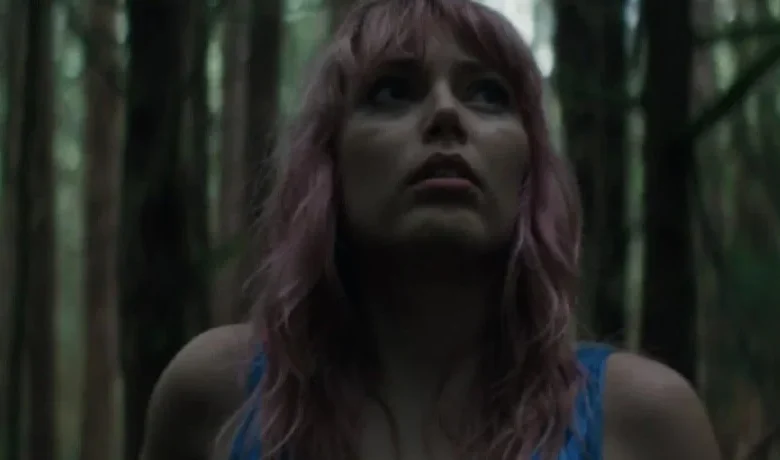
The intersection of body horror, eco-thriller tropes, and tongue-in-cheek creature features has long been a staple of the late-night festival circuit. Yet, executing a film that successfully bridges the gap between self-aware B-movie schlock and genuinely effective tension remains a significant challenge for even seasoned filmmakers. This was underscored at the conclusion of Fantastic Fest, where the closing night selection, The Swallow, struggled to find its footing. Directed by the established filmmaking duo Kevin Kölsch and Dennis Widmyer—known for their acclaimed breakout Starry Eyes and their subsequent 2019 adaptation of Stephen King’s Pet Sematary—the new environmental horror project has generated polarized reactions from critics and genre enthusiasts alike.
Despite featuring practical effects by industry veteran Tony Gardner, the film has faced considerable scrutiny for its erratic tone, thin characterizations, and a narrative trajectory that fails to capitalize on its high-concept premise. Industry observers and festival attendees have noted that while the creature design and physical effects met high expectations, the surrounding script and directorial choices prevented the feature from achieving its intended "dumb fun" aspiration.
Main Facts of the Production and Premise
The Swallow centers on a group of five young adults embarking on a camping trip that goes disastrously wrong. The ensemble includes Ziggy, portrayed by Grace Van Dien, whose lack of enthusiasm for the great outdoors is matched only by her platform footwear; her steady partner Vince, played by Kalama Epstein; best friend Katie, portrayed by Tayler Buck; Katie’s partner Rich, played by Jack Wright; and Katie’s visibly reluctant sister, Kim, played by Kayla DiVenere.
The plot sets into motion when Rich guides the group past a standard trail system and deeper into a restricted woodland area to revisit a childhood clearing. Disregarding a reinforced chain-link fence topped with barbed wire, the group breaches the restricted zone, unknowingly stepping into a territory dominated by an anomalous and lethal environmental hazard: a sentient, highly viscous, and mobile pit of mud. Rather than acting as standard terrain, the substance behaves as a predatory organism, instantaneously trapping and consuming biological matter upon contact.
While the fundamental premise echoes classic creature features such as The Blob and The Ruins, critics have pointed out that the execution leans heavily into the realm of low-budget pastiche without maintaining the necessary narrative discipline to sustain audience engagement.
Chronology of Development and Festival Debuts
The trajectory of The Swallow reflects the rapid-turnaround nature of contemporary indie genre financing and festival placement. Kölsch and Widmyer, who established a strong reputation within the independent horror community through their patient, atmospheric builds and psychological dread in previous works, approached this project with a distinct tonal shift.
- Pre-Production and Casting: Principal photography commenced following the casting of a young, recognizable ensemble cast, pairing rising genre talent such as Grace Van Dien with reliable supporting actors. The production placed a heavy emphasis on practical creature design, bringing in creature effects legend Tony Gardner to handle the visceral mechanics of the titular mud monster.
- Post-Production Finalization: Editing and sound design focused on enhancing the squelching, biological audio cues of the sentient terrain, positioning the film as a high-octane throwback to 1980s practical-effects-driven horror.
- Fantastic Fest Premiere: The film was selected as the prestigious closing night title for Fantastic Fest, a prominent genre film festival held annually in Austin, Texas. Closing night slots traditionally demand high-energy, crowd-pleasing spectacles that leave festival attendees energized. However, the screening of The Swallow yielded a mixed reception, with immediate critical discourse questioning whether the film’s tonal ambivalence detracted from its technical achievements.
Production Design and Practical Effects
The standout element of The Swallow—and the primary focus of critical praise—lies in the practical special effects supervision overseen by Tony Gardner. Gardner, whose extensive resume includes work on Chuck Russell’s acclaimed 1988 remake of The Blob, applied his decades of expertise to transforming ordinary-looking mud into a terrifying, dynamic antagonist.
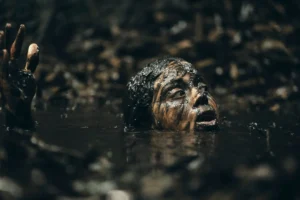
Within the narrative, the substance functions similarly to aggressive gastric fluids, dissolving organic material upon contact. When victims are pulled beneath the surface and subsequently partially resurface, the visual effects showcase peeled skin, exposed musculature, and distorted facial structures. Reviewers have drawn visual comparisons to Edvard Munch’s iconic painting The Scream, noting the unnervingly stretched and drooping facial prosthetics that give the victims an elongated, melting appearance.
Despite the technical prowess displayed in these sequences, industry analysts and reviewers have noted a disconnect between Gardner’s high-tier craftsmanship and the narrative framework supporting it. The visual shock value of characters disintegrating into biological sludge stands in sharp contrast to the comedic or lighthearted undertones Kölsch and Widmyer reportedly attempted to cultivate.
Critical Analysis and Genre Implications
The reception of The Swallow highlights an ongoing debate within modern horror cinema regarding the viability of the "so-bad-it’s-good" aesthetic when deliberately manufactured by filmmakers. When directors intentionally target a campy, low-budget aesthetic, critics argue that the resulting product often sacrifices the earnestness required to make audiences care about the characters’ survival.
Character development in The Swallow has been a primary target of critical evaluation. Observers note that the principal cast is largely defined by singular archetypes—the unenthusiastic protagonist, the stoner, the hormonal couple, and the reluctant sibling—leaving little room for emotional investment as the body count rises. Furthermore, structural diversions, such as Ziggy separating from the group for a solitary narrative detour, have been cited as pacing anomalies that stall the momentum of an already fragile plot.
From a commercial and critical perspective, the film’s performance at Fantastic Fest serves as a reminder of the risks involved when established auteurs pivot toward uncharacteristically loose, slapdash material. While directors like Kölsch and Widmyer retain significant goodwill within the horror community due to their past successes, The Swallow demonstrates that audience expectations for elevated genre filmmaking cannot be easily bypassed by relying solely on creature-feature nostalgia and gore.
Broader Impact on the Careers of Key Collaborators
The release and subsequent critical reception of The Swallow are unlikely to derail the established careers of its primary creators, but they may prompt a reassessment of future project selection.
For directors Kevin Kölsch and Dennis Widmyer, the project represents an experimental detour into fast-paced, high-concept creature horror that diverged sharply from the psychological depth of Starry Eyes and the studio-polished suspense of Pet Sematary. Industry analysts suggest that while stylistic experimentation is common among successful horror filmmakers, future endeavors may benefit from a return to tightly wound scripts that match their technical directing capabilities.
For lead actress Grace Van Dien and the supporting ensemble, participation in a high-profile festival closing film provides continued visibility within the genre circuit, where young talent frequently transitions between independent horror features and mainstream television or streaming projects. Similarly, Tony Gardner’s contributions reinforce his status as an indispensable figure in practical creature effects, proving that tactile artistry remains in high demand even as digital effects dominate modern filmmaking landscapes.
Ultimately, The Swallow occupies a complex space in contemporary horror historiography: a technically accomplished showcase of practical gore trapped within a narrative structure that failed to resonate consistently with its audience. As the film prepares for broader distribution, its reception will likely serve as a case study in the delicate balance required to successfully merge self-aware camp with traditional survival horror.
Related posts: