Two years after the catastrophic events that left the remains of the King of the Monsters submerged in Sagami Bay, Toho Studios has returned with Godzilla Minus Zero, a direct sequel to the Academy Award-winning 2005 sensation Godzilla Minus One. Directed once again by visionary filmmaker Takashi Yamazaki, the new installment expands upon the psychological and historical foundations of its predecessor, blending deeply resonant post-World War II human drama with large-scale apocalyptic monster warfare. Earning widespread critical acclaim, the film elevates the genre by integrating complex socio-political allegories with state-of-the-art visual effects, proving that modern blockbuster filmmaking can successfully prioritize narrative depth alongside spectacle.
The Continuing Narrative of Postwar Reconstruction
The storyline picks up in a fractured, rebuilding Japan. Former kamikaze pilot Kōichi Shikishima, portrayed by returning actor Ryunosuke Kamiki, has married Noriko, played by Minami Hamabe, and the couple is raising an orphaned toddler named Akiko, brought to life by Sae Nagatani. Meanwhile, Kenji Noda, reprised by Hidetaka Yoshioka, now serves as the director of the newly established Large-Scale Disaster Response Bureau. Noda is tasked with overseeing the arduous national recovery efforts and preparing the civilian infrastructure for potential recurring anomalies.
However, the fragile peace is abruptly shattered with the emergence of a new, highly aggressive aerial kaiju designated as "Ghidorah." The appearance of this golden, multi-headed titan immediately overwhelms the disaster response framework. In response, Noda mobilizes a specialized scientific task force, enlisting veteran biologist Kanji Murakami, played by Min Tanaka, and meteorologist Makoto Aoyama, portrayed by Masami Nagasawa. Despite the deployment of various conventional and tactical countermeasures, human defense strategies prove entirely futile against the airborne menace.
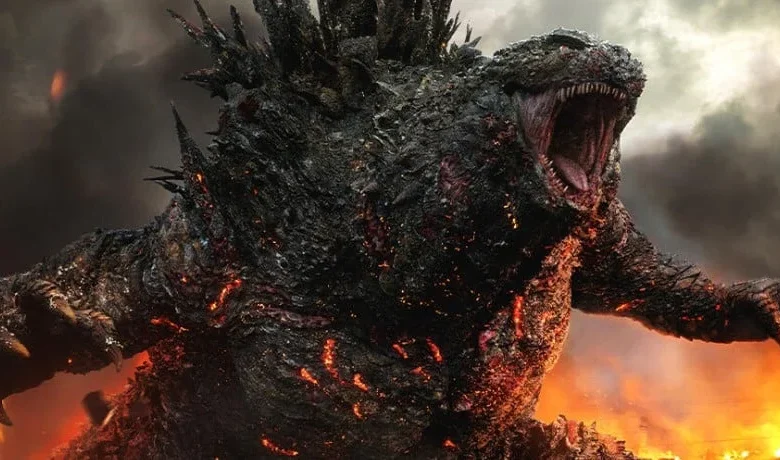
As Ghidorah systematically ravages surviving territories and threatens to plunge the nation into total annihilation, a dormant force stirs beneath the ocean. Godzilla resurfaces, larger and more formidable than before, setting the stage for an explosive confrontation that forms the core of the film’s climactic third act.
Chronology of Production and Cinematic Milestones
The developmental trajectory of Godzilla Minus Zero follows the unprecedented global success of Godzilla Minus One, which made history at the 96th Academy Awards by winning the Oscar for Best Visual Effects—a first for the nearly seventy-year-old franchise.
- Late 2023: Godzilla Minus One premieres internationally, garnering critical praise and massive box-office traction, grossing over $115 million worldwide against a modest budget estimated between $10 million and $15 million.
- Early 2024: The film secures its historic Academy Award victory, cementing Toho’s renewed confidence in prestige-driven, period-piece kaiju storytelling.
- Mid 2025: Principal photography and intensive post-production work commence under the direction of Takashi Yamazaki. The returning visual effects studio Shirogumi, led by returning supervisors Kiyoko Shibuya, Takayuki Ueki, and Eishin Okubo, begins rendering complex sequences involving both Godzilla and the newly introduced Ghidorah.
- Fall 2026: Godzilla Minus Zero receives its premiere, drawing immediate comparisons to its predecessor and pushing technical boundaries across IMAX and large-format theater screenings.
Thematic Depth and Historical Allegory
While the inclusion of Ghidorah shifts the narrative focus and delays Godzilla’s physical presence until later in the runtime, the structural delay serves a distinct thematic purpose. Whereas Godzilla Minus One functioned primarily as an allegorical parallel to the atomic bombings of Hiroshima and Nagasaki, Godzilla Minus Zero delves into the complex, lingering psychological aftermath of total defeat and national trauma.
The human element remains central to the narrative weight. Shikishima and Noriko strive to shield young Akiko from the harsh realities of their ruined environment, utilizing small moments of domestic normalcy to counter systemic despair. Conversely, the character of Kanji Murakami represents the darker fringes of postwar grief. Having lost his entire family to the American nuclear strikes, Murakami harbors deep resentment and contemplates dangerous geopolitical strategies, hoping to redirect Godzilla’s destructive path toward foreign soil.
Through these character arcs, Yamazaki examines themes of nationalism, generational guilt, institutional failure, and collective resilience. The geopolitical subtext is further complicated by foreign actors—specifically American military elements providing surplus hardware to Japanese forces under a pragmatic, detached operational philosophy—which adds layers of socio-political commentary rarely seen in mainstream creature features.
Technical Excellence and Visual Effects Innovation
Technically, Godzilla Minus Zero represents a significant leap forward in digital compositing and practical-digital hybrid filmmaking. Returning visual effects house Shirogumi has deployed advanced rendering techniques to enhance tactile realism. Audiences can discern individual water droplets during ocean-surface eruptions and observe intricate muscle-tear physics during close-quarters combat between Godzilla and Ghidorah amidst the ash-covered ruins of Ginza.
One of the film’s standout technical achievements involves a mid-air sequence where Shikishima pilots an aircraft through a village suspended in midair by Ghidorah’s localized gravitational manipulation. The scale and density of these destruction sequences require a level of visual fidelity that matches or exceeds major Hollywood studio productions, accomplished on a fraction of typical Western budgets. The seamless integration of practical miniatures, historical set design, and cutting-edge CGI underscores the operational efficiency and creative discipline of the Japanese VFX sector.
Industry Implications and Cultural Legacy
The release and critical reception of Godzilla Minus Zero carry broader implications for the global film industry. For decades, Western adaptations of the franchise—such as Roland Emmerich’s 1998 feature and the ongoing Legendary Pictures Monsterverse—have often prioritized kinetic, action-first spectacle over localized human stakes. Yamazaki’s approach demonstrates that audience investment is fundamentally tied to the vulnerability and depth of ant-sized civilian characters rather than endless urban destruction.
By anchoring high-concept science fiction in genuine historical trauma and cultural specificity, Toho has redefined the parameters of the kaiju genre. Industry analysts note that the commercial viability of prestige-budget international films continues to challenge Hollywood’s dominance, particularly as audiences increasingly embrace subtitles and culturally authentic storytelling. With Godzilla Minus Zero setting a new benchmark for critical and technical achievement within the franchise, the future of Toho’s flagship character remains secure under the guidance of a filmmaker who treats the property not merely as monster entertainment, but as serious cinematic art.