Freak War: A New Hybrid Trading Card Game Challenges Genre Complexity with Accessible Party Play

The landscape of tabletop gaming is currently witnessing a distinct shift toward accessible, rapid-fire experiences that bridge the gap between complex hobbyist systems and casual social play. A prime example of this trend is the emergence of Freak War, a card-based project created by cartoonist Nate Galbraith under the banner of Sheltonshire Games. The game distinguishes itself by stripping away the intensive learning curves and costly deck-building requirements typically associated with traditional Trading Card Games (TCGs), replacing them with the intuitive, high-energy mechanics found in popular party games like Exploding Kittens or the classic card game War.
The Genesis of a Hybrid Concept
The conceptual foundation of Freak War stems from a specific observational moment. Nate Galbraith, known professionally as sketchnate, observed children attempting to conduct makeshift Pokémon battles using standard playing cards. When the rules proved too cumbersome for their impromptu session, Galbraith suggested they revert to the core mechanics of War, where the highest card takes the pot. This interaction served as a catalyst for the development of a game that synthesizes the visual flair and evolution-based progression of collectible creature games with the straightforward, accessible combat loop of traditional card-playing staples.
The project has since evolved into a fully realized tabletop experience that accommodates up to four players, though it remains scalable for larger groups. By design, the game eliminates the necessity for extensive preparation, allowing participants to simply split a shuffled deck and begin playing. While deck customization remains an available feature for enthusiasts seeking a more tailored experience, it is entirely optional, marking a departure from the "pay-to-win" criticisms often levied against the broader TCG market.
Core Mechanics and Gameplay Modes
At its structural heart, Freak War functions on a simultaneous-play model. Participants deploy creature cards from their hands or the top of their draw pile, depending on the chosen ruleset. Combat is resolved by comparing attack values; the player with the highest numerical strength wins the round, effectively claiming the played cards to expand their personal deck—a mechanic mirroring the victory condition of traditional War.
The game incorporates two primary modes: "War," which emphasizes chaotic, fast-paced draws, and "Battle," which introduces a layer of tactical decision-making. These modes are further augmented by "King of the Hill" and team-based variations, providing replayability that scales with the number of players.
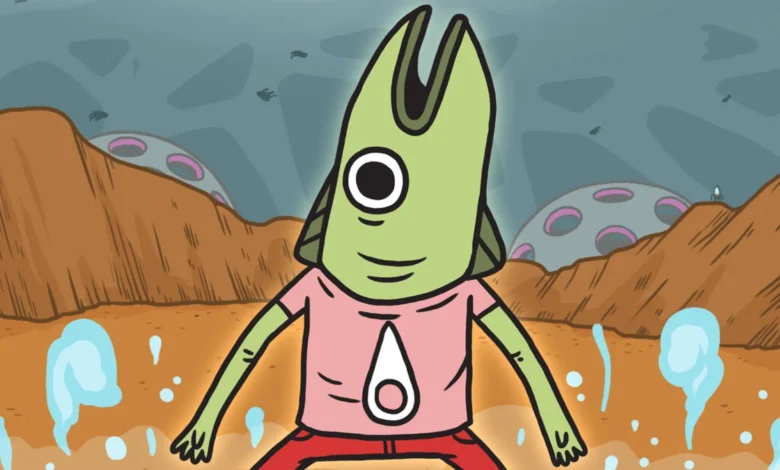
To prevent the gameplay from becoming overly repetitive, Galbraith integrated a robust system of modifier cards and creature effects. These elements introduce "take-that" mechanics—a staple of modern party gaming—where players can manipulate the strength of their own creatures or impede their opponents. Evolution cards, which allow creatures to transform into more powerful iterations, provide a nod to the Pokémon-inspired roots of the game, while meta-commentary on the genre is woven into the creature designs themselves, such as the "Fly Guy," whose effectiveness scales based on the presence of physical food near the gaming table.
The Lore and Artistic Direction
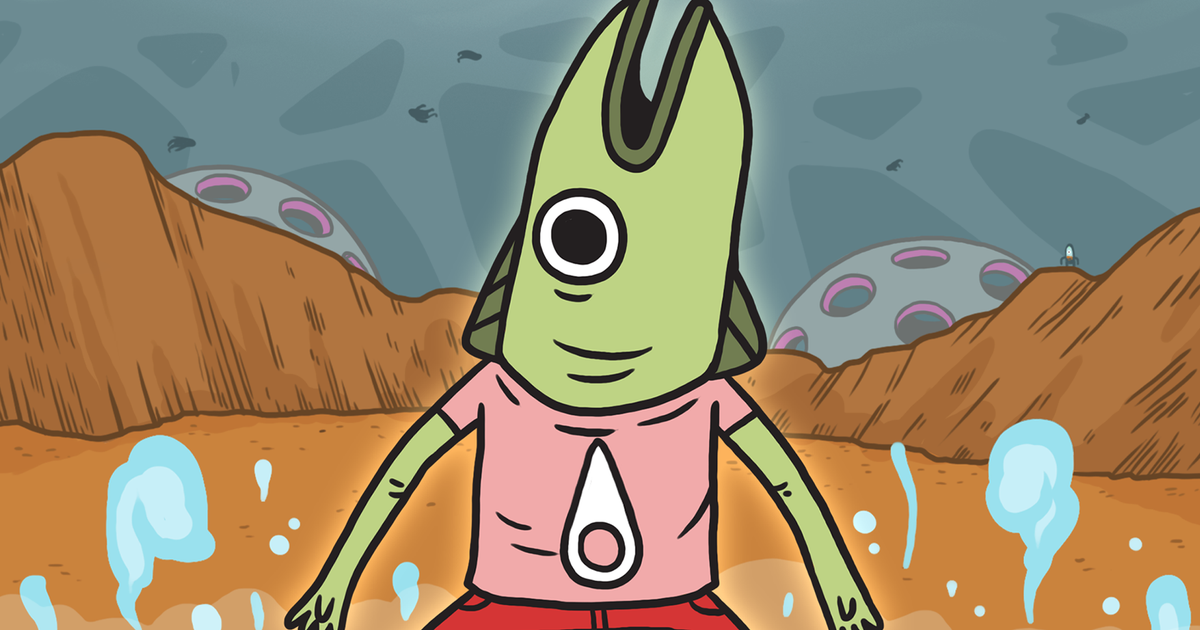
The visual identity of Freak War is central to its appeal. The game is set in a fictional universe altered by the emergence of a second sun, a cosmic event that has caused terrestrial animals to undergo bizarre mutations. This narrative framework allows for a diverse roster of characters, including fish-people with enhanced muscularity, time-traveling tigers, and various anthropomorphic entities.
The artistic direction, spearheaded by Galbraith, leans into the surreal and the whimsical. By subverting the "cute" aesthetic often associated with creature-battlers, the game introduces a sense of irony that resonates with an adult demographic while remaining approachable for younger players. This aesthetic choice is paired with a card layout that explicitly references the conventions of 1990s and 2000s TCGs, creating a nostalgic visual shorthand for players who are already familiar with the genre.
Crowdfunding and Financial Context
The project’s path to production is currently being facilitated through a Kickstarter campaign. As of the latest reporting, the game has successfully surpassed its initial funding threshold of $10,000. This milestone serves as a significant validation of the project’s market viability, particularly in an era where the tabletop crowdfunding space is increasingly crowded.
The campaign, which concludes on June 13th, offers various tiers of entry, with the base deck priced at approximately $20. This pricing strategy reflects a deliberate effort to lower the barrier to entry, positioning Freak War as an "impulse buy" or a secondary game for hobbyists who already own larger, more expensive collections. If the production timeline remains consistent, backers can expect the physical product to ship by June of the following year.
Industry Implications and Market Analysis
The success of Freak War serves as a case study for the "micro-TCG" or "party-TCG" sector. For years, the trading card game market has been dominated by industry titans like Magic: The Gathering and Pokémon, both of which require significant temporal and financial investment. The emergence of smaller, self-contained games indicates a growing consumer fatigue regarding the "living game" model, where players must constantly purchase new sets to remain competitive.

Industry analysts note that there is a persistent demand for games that offer the "flavor" of a TCG—the art, the collecting, and the creature-battling—without the professional tournament overhead. By leveraging the mechanics of party games, Freak War taps into a social utility that traditional TCGs often lack. While a standard TCG match might isolate two players for an hour, a party-TCG is designed to be inclusive, noisy, and brief.
Furthermore, the game’s reliance on simple mechanics like the game of War suggests a shift toward "retro-engineering" in game design. By taking a universally understood mechanic and overlaying it with modern creative assets, developers can mitigate the "rule-book fatigue" that often prevents casual players from engaging with new tabletop releases.
Broader Impact on the Tabletop Community
The reception of Freak War also highlights a reaction against the saturation of "cloned" party games. In recent years, the market has been flooded with adult-oriented card games that often rely on shock value or derivative humor. By focusing on whimsical lore, meta-humor, and accessible strategy, Galbraith is positioning his product as a "cleaner" alternative that does not sacrifice the chaotic, social atmosphere that makes party games popular.
While Freak War is unlikely to disrupt the established TCG industry, its existence represents a vital diversification of the tabletop ecosystem. It validates the idea that high-quality, creatively driven games do not necessarily require complex rule sets to be engaging. As the Kickstarter campaign moves toward its conclusion, the focus for Sheltonshire Games will shift from creative development to supply chain management and manufacturing, a common hurdle for independent creators.
The long-term success of the game will depend on whether it can sustain interest beyond the initial crowdfunding excitement. If the developers can successfully expand the creature roster and maintain the balance of the modifier cards, Freak War could serve as a model for future hybrid games that prioritize brevity and accessibility over the grind of traditional competitive play. For now, it stands as a testament to the enduring appeal of creature-based combat and the potential for innovative design to revitalize classic card-playing traditions.