The cinematic landscape of American crime dramas has undergone a profound evolution over the past half-century. Historically, films and television series within this genre have sought to deconstruct the seductive allure of the criminal underworld, often exploring the psychological mechanisms that draw ordinary individuals into lives of lawlessness. From the majestic, operatic gravity of Francis Ford Coppola’s legendary crime families to the slick, aspirational sheen of Martin Scorsese’s biographical masterpieces, the genre has frequently prioritized the charisma, power, and stylized rebellion of its protagonists. However, this prolonged romanticization has occasionally obscured a more visceral reality: the genuine, unvarnished terror that criminal enterprises inflict upon everyday citizens living ordinary, law-abiding lives.
James Gray’s latest directorial effort, Paper Tiger, deliberately subverts this cinematic tradition. Eschewing the glamorous anti-hero tropes that have dominated the genre for decades, Gray delivers a sobering, retro-styled moral parable. The film chronicles the harrowing descent of an ordinary, all-American family unwittingly thrust into a predatory criminal ecosystem they cannot comprehend. Rather than celebrating the perceived rewards of criminality, Paper Tiger functions as a chilling waking nightmare, examining how easily domestic stability can be shattered by forces far beyond suburban comprehension. Following its recent premiere circuit run, including a prominent screening at the New York Film Festival, the NEON-distributed feature is scheduled for a limited theatrical release on November 13, followed by a wide rollout on November 20.
The Domestic Blueprint and Mid-Century Setting
Set against the atmospheric backdrop of 1986 New York, Paper Tiger grounds its narrative in a familiar, semiautobiographical milieu that echoes Gray’s previous work, such as Armageddon Times. The story centers on the Pearl family, anchored by brothers Gary and Irwin Pearl, portrayed by Adam Driver and Miles Teller, respectively, alongside Irwin’s wife, Hester, played by Scarlett Johansson.
Irwin embodies the quintessential late-twentieth-century suburban provider. A professional risk-assessment engineer specializing in structural safety, Irwin’s daily existence is defined by methodical caution, flannel shirts, and academic lectures on public safety. His wife, Hester, manages their Queens household with a fiercely protective maternal instinct, marked by the high-strung energy and distinct New York cadence characteristic of the era. Their domestic routine is viewed largely through the complacent, observant eyes of their teenage son, Scott, establishing an authentic portrait of mid-1980s Jewish-American domesticity before external threats breach their sanctuary.
The Catalyst of Conflict and Rising Dread
The fragile equilibrium of the Pearl household is disrupted by the charismatic presence of older brother Gary. A former New York City Police Department detective who has transitioned into lucrative, albeit ambiguous, private business ventures, Gary cuts a striking figure. Adorned in sharp suits and carrying a service revolver strapped conspicuously to his leg, Gary easily captures the imagination of his impressionable young nephews.
During a routine Sunday family dinner, Gary introduces a seemingly innocuous business opportunity: he invites Irwin to provide consulting services for a group of Russian entrepreneurs attempting to spearhead revitalization efforts along the Gowanus Canal, promising substantial financial compensation. Eager to demonstrate his competence and financial prowess to both his older brother and his sons, Irwin accepts.

The situation escalates rapidly from a professional entanglement into a life-threatening crisis when Irwin takes his children down to the Gowanus Canal site to demonstrate his work. There, the family crosses paths with ruthless operatives connected to Gary’s associates. The confrontation is swift and brutal; an operative points a firearm directly at a child, physically assaults Irwin until he bleeds, and confiscates his identification.
“Now we know where you live,” the assailants warn, establishing a lingering sense of intimidation that soon materializes at the Pearl residence. The following day, Gary’s employers demand absolute assurances that neither Irwin nor his sons will disclose their observations to anyone, including Hester. The narrative tension intensifies through meticulously crafted, suspenseful sequences—such as an ominous middle-of-the-night flash illuminating Irwin and Hester’s bedroom, or Gary realizing he is being silently stalked through an isolated field—evoking classic mid-century thrillers such as Alfred Hitchcock’s The Man Who Knew Too Much.
Character Dynamics and Stellar Performances
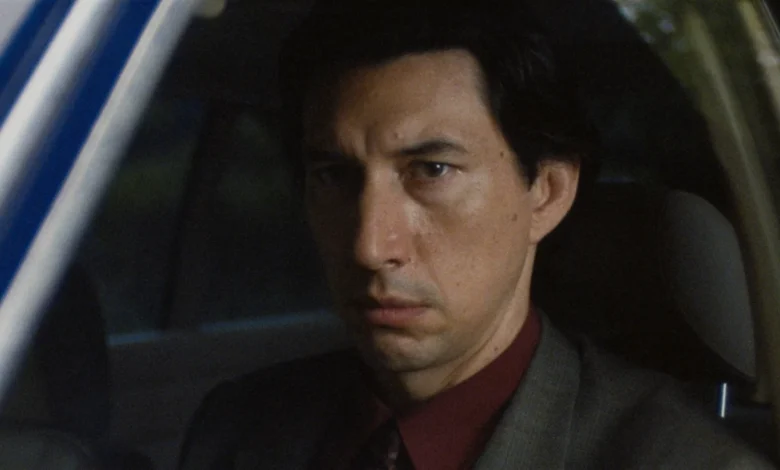
At the core of Paper Tiger’s emotional resonance are standout performances from its principal cast. Adam Driver delivers one of the most compelling turns of his career as Gary Pearl. Eschewing pure villainy, Driver portrays Gary as a complex figure driven by a desperate need to establish his self-made status. His outer-borough bravado, flashy demeanor, and insistent reassurances mask a profound, underlying isolation.
Miles Teller complements Driver’s intense swagger with a nuanced portrayal of a well-meaning, overwhelmed family man. Continuing a productive career phase that highlights his range across both comedy and drama, Teller captures the perpetual bewilderment of an ordinary individual out of his depth. The dynamic between Driver and Teller establishes a palpable, complex sibling rivalry rooted in mutual affection mixed with simmering jealousy.
Scarlett Johansson completes the central trio as Hester. Initially appearing to occupy a conventional domestic space, Johansson’s character evolves as the narrative progresses. Because Hester remains outside the brothers’ insular professional dealings, she serves as an audience surrogate—a clear-eyed observer watching the corrosive family dynamics unfold. As the plot demands difficult choices, Johansson delivers devastating moments of realization, capturing the exact moment a mother perceives the complete dismantling of her carefully constructed life.
Broader Impact and Industry Implications
Paper Tiger transcends the boundaries of a standard thriller by refusing to offer tidy resolutions. The film’s thematic weight relies on the vulnerability of domestic stability against systemic, predatory forces. None of the central characters attain a comprehensive understanding of the geopolitical or criminal forces dictating their fate, emphasizing the fragility of modern life when unexamined routines collide with ruthless criminality.
Industry analysts note that NEON’s strategic release schedule—beginning with a platform release on November 13 before expanding nationwide on November 20—positions the film advantageously for the upcoming awards season. By combining auteur-driven dramatic depth with high-stakes genre elements, James Gray’s latest project has positioned itself as a significant entry in contemporary American cinema, offering audiences a sobering reflection on safety, family, and the irreparable consequences of naive ambition.
Related posts: