The Looting Of The Comic Shops Of France: When Pop Culture Retailers Found Themselves on the Front Lines of Civil Unrest

Civil unrest and nationwide protests swept across several major French cities, resulting in widespread property damage, thousands of arrests, and financial losses climbing into the hundreds of millions of euros. While demonstrations initially erupted over escalating living costs, educational sector grievances, and broader economic pressures, the fallout quickly descended into opportunistic looting and vandalism. Amidst the chaos that targeted high-end boutiques, electronics vendors, and grocery outlets, a distinct and unexpected retail sector found itself heavily impacted: comic book, manga, and pop-culture specialty stores.

While iconic imagery from globally celebrated manga series—such as the Straw Hat Jolly Roger from One Piece—was visibly embraced by various factions within the crowds, the physical retailers trading in these very items experienced unprecedented devastation. In a cruel twist of irony, storefronts dedicated to geek culture, comic books, and Japanese animation became prime targets for criminal elements, leaving store owners facing catastrophic inventory loss and, in some cases, the complete dissolution of decades of entrepreneurial heritage.
A Wave of Destruction Across French Metropolitan Centers
The destructive episodes unfolded across multiple urban centers, leaving localized communities and dedicated fanbases in shock. In Paris, the devastation was particularly acute along the Boulevard Voltaire in the 11th district. Manga Story, a cornerstone of the capital’s pop-culture retail landscape, was completely hollowed out by masked individuals who forced entry and systematically stripped the premises of its entire inventory. Volumes of manga, collectible figures, Pokémon trading cards, board games, and exclusive merchandise were hauled away in bulk.

Neighboring establishments sharing the commercial ecosystem, including Hobby One and Sat.Elite, suffered identical fates. The financial toll on Manga Story alone was quantified by staff in the hundreds of thousands of euros. Furthermore, stock carefully accumulated for an upcoming expansion, the MVP Store, was entirely stolen. For veteran workers, the loss transcended mere commerce. Laurent, an employee who had dedicated thirty years of his life to the storefront, captured the profound despair felt across the industry in a statement to regional press, noting that the enterprise he joined as a teenager had abruptly reached its terminal conclusion. Commercial director David Birbes subsequently detailed the staggering scale of the losses, highlighting the immense logistical barriers to restocking and the palpable anxiety gripping merchants as further demonstrations loomed on the horizon.
A similar narrative of destruction played out hundreds of kilometers away in Grenoble. Momie Mangas, situated on Grande Rue, was subjected to a systematic ransacking that lasted approximately half an hour. Patrick Corbet, the owner and founder who has spent over forty years navigating the comic and manga trade, described the interior as entirely obliterated. Perpetrators not only looted high-value items such as comics, graphic novels, and figurines, but they also maliciously smashed uncarried inventory into the floor and shattered store furniture. Corbet emphasized a critical distinction between politically motivated protesters and the criminal opportunists who hijacked the demonstrations for vandalism.

The timing of the Grenoble incident proved especially cruel. The retail sector typically generates roughly 40 percent of its annual turnover between September and December, anchoring businesses against leaner months. Despite the catastrophic setback, a rapid grassroots recovery effort orchestrated by dedicated staff and loyal customers facilitated a remarkable turnaround. Within a single week, Momie Mangas managed to reopen its doors to the public. While temporary wooden panels masked the architectural scars and numerous shelves remained bare, the reopening served as a defiant testament to community resilience, drawing tens of thousands of online views and an outpouring of solidarity.
In Nantes, the specialized comic book retailer À Plein Rêves fell victim to a coordinated raid that stripped the premises of statues, collectible figures, comic inventories, and the physical cash register. Operating since 2006, the shop functioned as a cultural hub and a sanctuary for local enthusiasts. In an emotional appeal to the public and state authorities, management underscored that twenty years of relentless sacrifice, passion, and community-building had been upended in a matter of hours. The owners urged citizens to monitor online second-hand marketplaces closely to intercept fenced merchandise, noting that the bureaucratic nightmare of documenting, valuing, and filing insurance claims for thousands of individual items would be as grueling as the physical cleanup itself.

The Resistance in Nice and Digital Immortalization
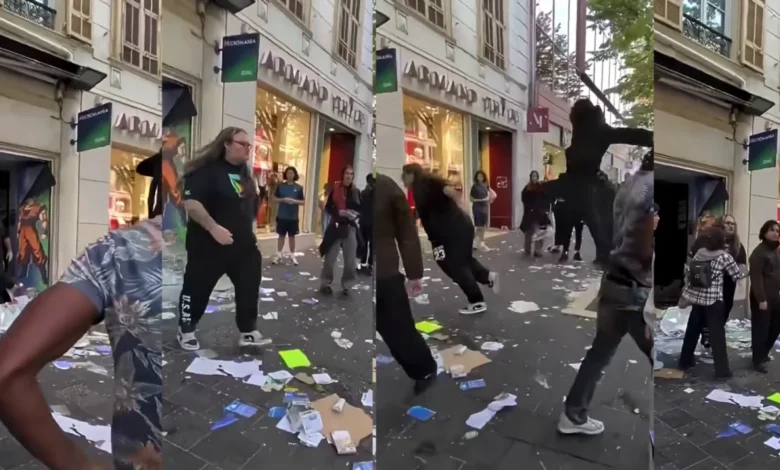
Perhaps the most culturally resonant confrontation occurred in Nice, where a Micromania outlet on Avenue Jean-Médecin was targeted by looters. In an act of instinctive defiance, an employee named Pierre positioned himself at the storefront entrance—flanked by a prominent promotional display of Goku from the legendary franchise Dragon Ball—in a desperate bid to hold back the advancing crowd. Although he was eventually physically assaulted with thrown objects and kicked from behind, and the store was ultimately ransacked, video footage of his solo stand immediately went viral across international digital platforms, earning him the moniker of the "French Goku."
The incident quickly transcended real-world news to enter the realm of digital pop culture. Parisian software developer Gwendall Esnault designed and released a free browser-based arcade game titled Streets of Nice. The video game casts Pierre as the protagonist tasked with defending his retail establishment against waves of identical vandals. In a nod to the social context of the riots, the game maintains a strict mechanical boundary: attacking peaceful pedestrians or genuine demonstrators penalizes the player’s score, ensuring the focus remains squarely on the destructive elements who exploited the civil unrest.

Government Intervention and Economic Aftermath
In response to the widespread commercial devastation affecting small and medium-sized enterprises across the country, the French government announced an emergency support package. The relief measures are designed to mitigate the immediate liquidity crisis and assist businesses struggling to survive the fallout. Key components of the state intervention include:
- Partial wage coverage for employees of businesses with fewer than 250 staff members, easing payroll pressures during forced closures.
- Access to specialized, interest-free loans aimed at accelerating inventory replacement and stabilizing immediate cash flow.
- Comprehensive tax deferrals and accelerated processing for tax refunds to inject rapid liquidity into affected firms.
- Extended deadlines for insurance declarations coupled with a mandate for priority handling and simplified administrative claim procedures.
- The establishment of a targeted solidarity fund dedicated specifically to the hardest-hit independent small businesses.
Despite these governmental safety nets, the psychological and cultural scars left upon France’s independent retail community will take years to heal. As insurance adjusters comb through the wreckage of specialized boutiques from Paris to Nice, industry observers and local merchants are left reflecting on the surreal irony of the modern consumer landscape: amid profound socio-economic protests rooted in local grievances, the primary targets of opportunistic theft overwhelmingly favored imported Japanese manga series like Naruto and One Piece over traditional domestic cornerstones like Asterix.