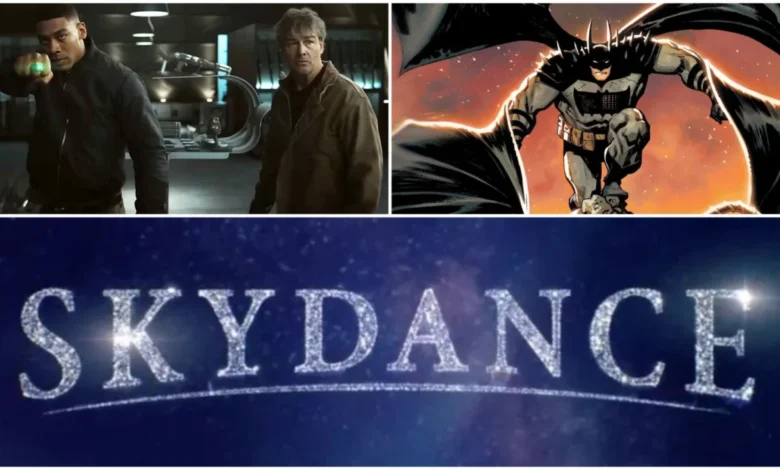
As the landmark entertainment industry merger between Paramount and Warner Bros. Discovery nears its official completion, major structural details are coming to light regarding the future of iconic entertainment assets. With the newly combined corporate entity officially set to operate under the umbrella name Skydance beginning next Tuesday, industry insiders have flooded news outlets with updates concerning the immediate future of DC Studios and its parent publishing house, DC Comics. At the forefront of these transitions is the confirmation that DC Studios co-Chief Executive Officers James Gunn and Peter Safran are expected to retain their leadership roles, signaling a sense of creative continuity amidst monumental corporate upheaval.
The path toward this massive consolidation has been marked by months of strategic planning, negotiations, and high-level evaluations. The impending merger is scheduled to officially close, uniting two historic Hollywood powerhouses under David Ellison’s newly minted corporate vision. Ahead of this milestone, Ellison announced that the overarching enterprise will be named Skydance, while preserving both Paramount and Warner Bros. as prominent sub-brands. This deliberate branding strategy is designed to honor more than a century of cinematic history without letting a new corporate moniker overshadow the legendary studios.
Leadership Continuity and the Future of DC Studios
According to multiple sources close to the negotiations, James Gunn and Peter Safran met in person with David Ellison to discuss the strategic roadmap for DC Studios moving forward. Reportedly described as a highly positive encounter, Ellison encouraged the co-CEOs to maintain their current trajectory, echoing sentiments from earlier in the year when Ellison visited the duo on the production set of the upcoming DC Studios feature Man of Tomorrow.
This vote of confidence is expected to be formalized when Ellison unveils his comprehensive leadership team. Observers note that this stability is crucial for DC Studios, which has been undergoing a systematic creative and narrative reinvention under Gunn and Safran’s guidance. The collaborative environment aims to insulate the superhero-centric division from the disruptive nature of corporate buyouts, allowing the creative team to focus on executing their multi-year interconnected storytelling blueprint across film, television, and animation.
Corporate Hierarchy and Post-Merger Oversight

While Gunn and Safran are anticipated to maintain direct operational control over DC’s cinematic output, the broader corporate structure will inevitably experience shifts. Rumors within the industry suggest that Paramount Pictures co-chairs Dana Goldberg and Greenstein will assume oversight responsibilities for all major film units following the merger’s completion.
Industry analysts are closely monitoring how this reporting structure will function, specifically examining whether Gunn and Safran will maintain a direct line of communication to David Ellison or if intermediate studio executives will manage day-to-day administrative touchpoints. The final organizational chart, expected to be revealed in the coming days, will provide definitive clarity on administrative accountability and resource allocation within the newly structured mega-studio.
DC Comics as a Vital Intellectual Property Engine
Beyond the silver screen, the status of the publishing division has also been a subject of significant industry interest. Reports indicate that DC Comics will remain entirely intact and central to the corporate strategy, viewed by executives as an irreplaceable intellectual property generator.
This valuation is reinforced by the comic book line’s recent commercial and critical resurgence, heavily catalyzed by initiatives such as the successful "Absolute Universe" publishing line. Industry insiders emphasize that the continuous pipeline of fresh narratives, character iterations, and world-building concepts makes DC Comics a foundational asset for cross-media synergy. While corporate restructurings often involve the evaluation of non-core assets, the inherent value of comic book publishing as an incubator for multi-billion-dollar film and television franchises ensures its secure position within the Skydance ecosystem.
David Ellison’s Vision for the Combined Enterprise
Unveiling the corporate identity on Friday, David Ellison emphasized a philosophy of honoring legacy while aggressively pursuing modern storytelling mediums. In a public statement detailing the merger, Ellison remarked that the combination of Paramount and Warner Bros. is designed to equip historic studios with a more powerful operational engine rather than rewrite their storied histories.
"We chose this name for a few important reasons," Ellison stated via social media. "First and foremost, as we bring Paramount and Warner Bros. together, we wanted to preserve what has made each of these studios iconic. Both have distinct identities, extraordinary legacies and brands that have resonated with audiences for generations. We never wanted a new corporate identity to diminish, alter or overshadow either one."
Ellison further stressed that the overarching organization intends to embrace calculated risks, supporting creators with the necessary scale and global distribution capabilities to reach broader audiences. By positioning Skydance as a "creative-first home," the leadership aims to foster an environment where established franchises can expand sustainably alongside original intellectual properties.
Implications and Outlook for the Entertainment Landscape
The formalization of the Skydance-Warner Bros. Discovery merger represents one of the most substantial corporate realignments in modern media history. By retaining proven creative leadership at DC Studios and recognizing the foundational utility of DC Comics as an intellectual property generator, the new leadership team is signaling a commitment to stability and strategic growth.
As the operational transition takes effect next Tuesday, attention will shift toward the execution of upcoming slates and the realization of cross-platform synergies. With clear mandates established and leadership teams locking into place, the newly formed Skydance enterprise is poised to navigate a competitive media landscape heavily reliant on robust, globally recognized franchises.