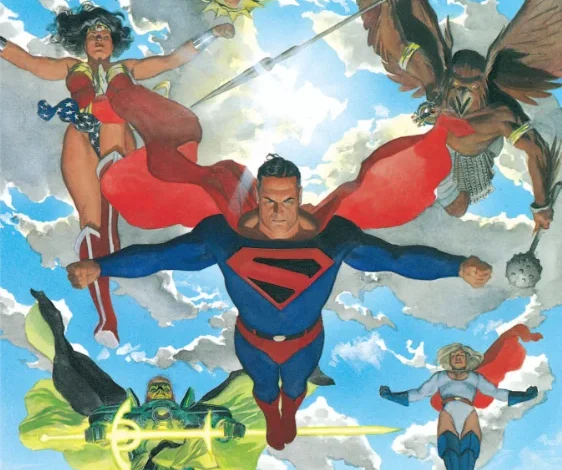
The return of the Justice League to the global stage has fundamentally altered the trajectory of international relations and domestic policy on Earth-96. Following a period of unchecked metahuman escalation and the collapse of traditional state-led law enforcement, the reappearance of Superman and his contemporaries has moved beyond a symbolic restoration of order. Instead, their return has precipitated a complex constitutional crisis regarding the legitimacy of non-state actors operating with near-total impunity. As this essay series examines the socio-political implications of Mark Waid and Alex Ross’s seminal 1996 work, Kingdom Come, through the lens of 2026, the second chapter of the narrative serves as a critical case study in the dangers of unilateral interventionism and the erosion of civilian oversight.
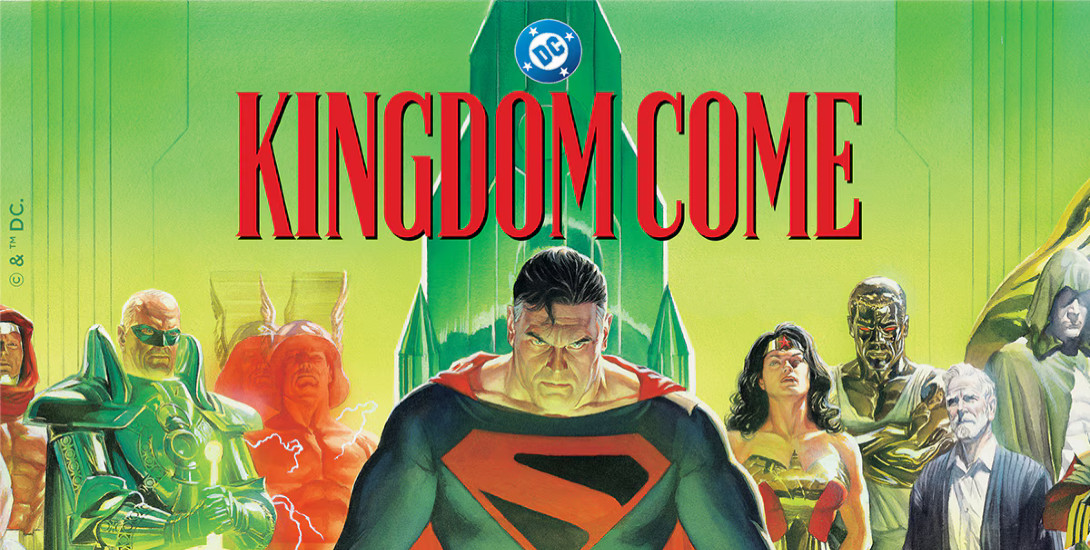
Chronology of Recent Metahuman Escalation
The current geopolitical instability can be traced back to the dissolution of the original Justice League, a decision that created a power vacuum filled by a new, more volatile generation of metahumans. The following timeline outlines the key events leading to the present state of emergency:
- Year 0: The Justice League ceases operations, shifting the burden of global security onto disorganized and largely unaccountable vigilante groups.
- Year 8: The Joker murders the staff of the Daily Planet, including Lois Lane. Following the event, a vigilante known as Magog executes the Joker in public. Magog is subsequently acquitted of all charges, signaling a shift in public support toward lethal, extralegal justice.
- Year 10 (Current): The Kansas disaster occurs, resulting in widespread environmental devastation and the displacement of millions. This catastrophe acts as the catalyst for Superman’s return to the public sphere.
- Year 10 (Post-Kansas): The Justice League formalizes their return, conducting operations from the United Nations to the streets of Gotham, effectively bypassing national sovereignty.
The Problem of Authority vs. Capability
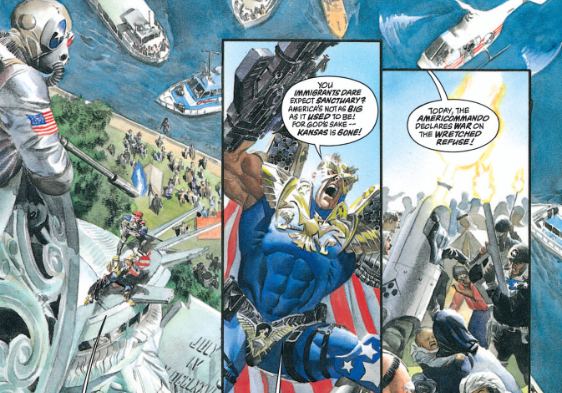
The primary point of contention regarding the League’s return is the distinction between their capability to restore order and the legal authority to do so. While the Justice League possesses the raw power to neutralize threats—such as the incident at the Statue of Liberty involving the extremist group known as the Minutemen—their actions are consistently performed without the mandate of any elected body.
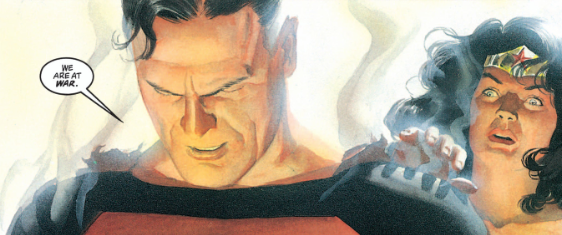
From a sociological perspective, the Justice League operates as an autonomous executive force. During the United Nations press conference, Superman’s pledge to restore "truth and justice," supported by the implicit threat of force, drew immediate skepticism from global leaders. By failing to integrate their operations into the existing judicial framework, the League has inadvertently mirrored the very lack of accountability they claim to oppose. This has led to a climate where metahuman conflict is no longer governed by law, but by the relative strength of the participants.
Surveillance and the Private Security Model
Parallel to the Justice League’s interventionist approach is the emergence of a high-tech surveillance state championed by Bruce Wayne. Operating from the remnants of Wayne Manor, Wayne has implemented a network of robotic agents and intrusive monitoring systems across Gotham and Star City.
This model represents a shift toward privatized policing. Unlike the League’s "punch first" methodology, Wayne’s approach utilizes constant data harvesting and predictive algorithm-based intervention. While this has effectively reduced street-level crime in the short term, it has also created a perpetual state of surveillance. The implication of this model is profound: it suggests that security can only be guaranteed by the total forfeiture of individual privacy. Furthermore, the lack of transparency in how Wayne’s algorithms identify "threats" raises significant concerns regarding due process.
Strategic Alliances and the Luthor Factor
The geopolitical landscape is further complicated by the "Mankind Liberation Front," led by Lex Luthor. Rather than opposing metahumans through conventional means, Luthor has adopted a strategy of infiltration. By co-opting survivors of the Arkham and Belle Reve prison destructions and rebranding them as "heroes," Luthor has successfully injected chaos into the public discourse.
Data analysis indicates that Luthor’s proxies are responsible for approximately 8% of current metahuman vigilante activity. While this percentage may appear marginal, the strategic impact has been the systematic erosion of public trust in the metahuman community. By forcing a scenario where the public must choose between the Justice League’s "god-like" authoritarianism and the Liberation Front’s controlled anarchy, Luthor has successfully paralyzed the political process. The recent, unprecedented alliance between Bruce Wayne and Lex Luthor suggests that the resistance against the Justice League’s new super-prison—a facility designed to hold metahumans without trial—has reached a critical turning point.
The Implications of a Super-Prison
The construction of a containment facility for metahumans is perhaps the most controversial development in the current crisis. Proponents argue that it is a necessary measure to prevent further catastrophes like the one seen in Kansas. Critics, however, point to the facility as the ultimate expression of the Justice League’s overreach.
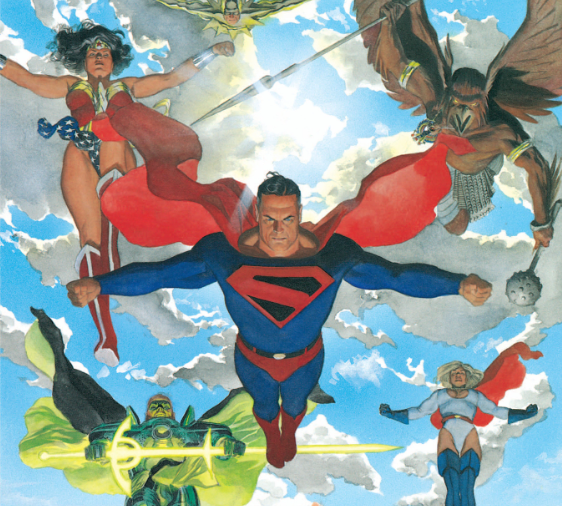
By acting as warden, judge, and jury, the League has effectively removed the possibility of legal appeal. This concentration of power creates a "single point of failure" for global stability. If the prison were to be breached or if the League’s own moral compass were to falter, there would be no secondary institution capable of intervening. The psychological toll on the detainees—and the potential for radicalization within the facility—poses an existential risk to the very peace the League aims to preserve.
Societal and Economic Impact
The economic cost of the metahuman conflict is staggering. Infrastructure damage resulting from vigilante combat has reached unprecedented levels, necessitating a reallocation of global resources toward disaster relief and reconstruction. Moreover, the fear generated by these constant battles has led to a decline in urban economic activity.
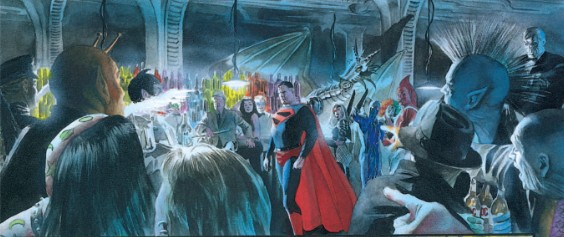
In Gotham, the presence of Wayne’s robotic sentries has created a "chilling effect" on civil discourse. When residents live in a state of constant, monitored surveillance, the capacity for political dissent is effectively nullified. This is not merely a matter of superhero fiction; it is a reflection of real-world concerns regarding the intersection of private technology, artificial intelligence, and governance. As citizens, the reliance on an unaccountable, technologically advanced elite to provide safety often results in the slow, quiet erosion of democratic institutions.
Conclusion: The Fracturing of the Old Guard
The growing friction between Superman and Wonder Woman serves as a bellwether for the future of the Justice League. Their divergent views on the use of lethal force and the necessity of state cooperation suggest that the League is not a monolith, but a coalition of individuals with fundamentally different ideological frameworks.
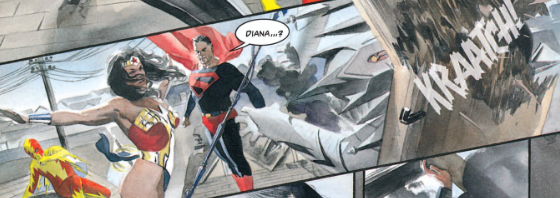
As the world watches, the question remains: Can a society sustain itself when it abdicates its moral and legal responsibility to self-appointed guardians? The history of Earth-96 suggests that the answer is no. Whether through the lens of Superman’s moral idealism or Bruce Wayne’s technological pragmatism, the current trajectory points toward a consolidation of power that leaves little room for the democratic process. As we look back on these events from the vantage point of 2026, the cautionary nature of the conflict is clear: when the rule of law is replaced by the rule of the powerful, the resulting order is as fragile as the glass houses in which these heroes reside.
Related posts: