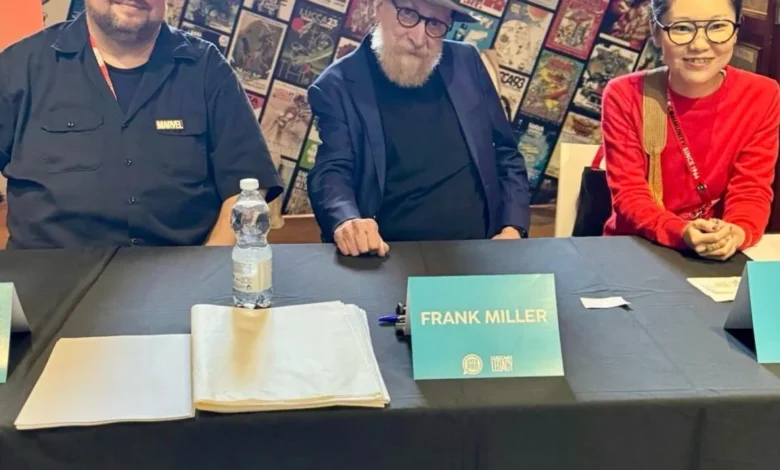
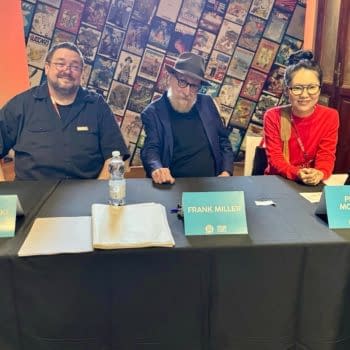
For five up-and-coming Italian comic book creators attending the prestigious Lucca Comics & Games festival, a routine portfolio review session transformed into an unforgettable career milestone. Expecting a standard critique from Marvel Comics executive C.B. Cebulski, the hopeful artists were instead greeted by legendary writer and artist Frank Miller alongside acclaimed modern visionary Peach Momoko. The clandestine gathering, orchestrated to honor the 60th-anniversary milestone of continental Europe’s largest comic convention, underscored an enduring industry tradition: the passing of the torch from established icons to the next generation of visual storytellers.

The surprise encounter, which quickly circulated across professional circles and social media platforms, was conceived by Frank Miller as a direct tribute to the festival’s overarching 2026 theme of "Legacy." Operating on the philosophy that a creative mind must remain a generous one, Miller sought to replicate the pivotal mentorship he received early in his own career from industry titans Will Eisner and Neal Adams. By stepping into the reviewer’s chair alongside Momoko and Cebulski, Miller aimed to provide contemporary aspirants with the same foundational guidance that shaped the golden and modern ages of American comic books.
An Intimate Masterclass in Craft and Tradition
Rather than serving as a brief administrative critique, the multi-hour session evolved into a comprehensive masterclass spanning the breadth of comic book creation. According to accounts shared by Marvel leadership, the discussions delved deeply into artistic influences, narrative pacing, personal perspective, and rigorous work ethics.

A central point of debate and education during the review centered on traditional versus modern mediums. Miller and Momoko shared practical insights regarding the tangible benefits of penciling and inking on physical paper versus utilizing modern digital tablets. While digital tools offer unparalleled speed and editing flexibility, the veterans emphasized the tactile discipline, line weight control, and historical appreciation fostered by traditional ink-on-paper methodologies. For the five young Italian creators—whose portfolios had been carefully vetted by Marvel scouts including Nicola Peruzzi, Giuseppe Camuncoli, Stefano Caselli, Rickey Purdin, and Annalisa—the advice provided an invaluable bridge between classical craftsmanship and contemporary commercial viability.
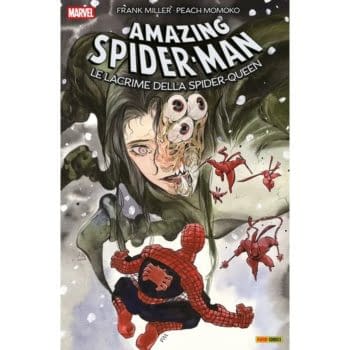
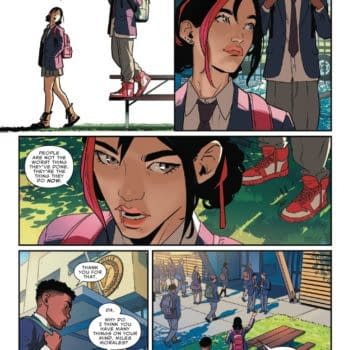
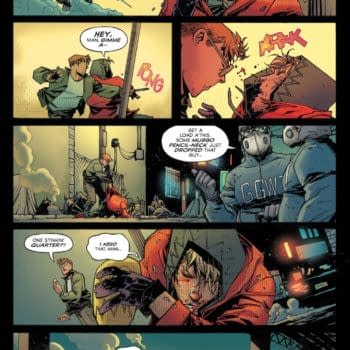
C.B. Cebulski, reflecting on his role as an observer during the interaction, noted the profound impact of having two stylistically distinct powerhouses critique the work. While Frank Miller is universally renowned for his gritty, high-contrast, noir-infused linework that redefined characters like Batman and Daredevil, Peach Momoko represents a modern aesthetic powerhouse, celebrated for her watercolor textures, surrealist framing, and unique approach to Marvel properties like Demon Days. Witnessing how these two disparate artistic sensibilities analyzed contemporary European portfolios offered a masterclass in versatility.
The Historic Legacy of Lucca Comics & Games
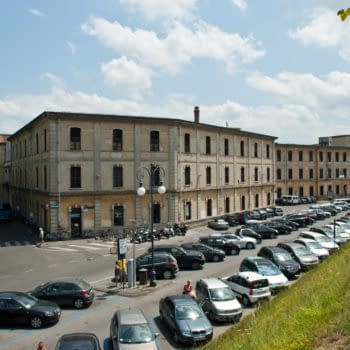
The setting for this surprise mentorship was no coincidence. Lucca Comics & Games stands as the preeminent convention in the Western world, second globally only to Tokyo’s massive Comiket. Situated within the medieval, walled historic center of Tuscany, Italy, the festival has grown exponentially since its modest origins.

The event traces its roots back to 1965 as the Salone Internazionale dei Comics held initially in Bordighera, before permanently relocating to Lucca in 1966. Over the decades, the gathering evolved from a traditional trade exhibition into a massive cultural phenomenon encompassing comics, manga, animation, board games, role-playing games, video games, and expansive costuming subcultures. The 2026 edition marks a monumental diamond jubilee for the organization, celebrating sixty years of sequential art celebration.
Data surrounding the festival highlights its colossal economic and cultural footprint. The annual convention routinely draws upwards of 300,000 ticketed attendees, with hundreds of thousands more flooding the Tuscan municipality to partake in the surrounding atmosphere, exhibits, and public installations. The 2026 anniversary iteration featured over 80 dedicated publishers and hosted more than 400 international guests, including industry luminaries such as Go Nagai, cementing Lucca as the geopolitical epicenter of global pop culture during its multi-day run.
Institutional Growth and Industry Commitment
The timing of this mentorship aligns with broader strategic developments cementing Lucca’s permanent status within the global comic book infrastructure. Concurrently with the convention’s diamond jubilee, the Italian government and local municipal authorities announced formal plans to establish the permanent Lucca Comics Museum (Fumetti) housed within a repurposed historic tobacco factory in the city. This institution aims to preserve the rich heritage of European and international sequential art, providing a year-round academic and cultural repository.
Furthermore, the presence of senior Marvel executives and top-tier creators at the event highlights the publisher’s aggressive international scouting initiatives. By actively integrating European talent pools into mainstream American comic book pipelines, major publishers ensure a diverse infusion of artistic styles. The collaboration between American editorial staff and European talent scouts—such as long-standing contributors in the Italian comic community—demonstrates a systemic institutional effort to discover and nurture overseas artistry.
Broader Implications for Emerging Talent
In an industry where breaking into major publishing houses often relies on digital cold submissions or fleeting convention floor glances, structured mentorship initiatives carry profound economic and professional implications. For the five unknown artists who sat across from Miller and Momoko, the endorsement and tailored feedback serve as a powerful catalyst for their professional trajectories.
Industry analysts note that portfolio reviews of this caliber often act as a direct incubator for future industry stars. By demystifying the expectations of major publishers and instilling the rigorous standards upheld by creators of Miller’s stature, such exercises elevate the overall baseline of emerging sequential art. As the comic book medium continues to navigate the transition between traditional print formats and digital platforms, the transmission of craft, work ethic, and artistic philosophy from master to apprentice remains the most reliable cornerstone of industry longevity.

Ultimately, while the headline-grabbing moments of Lucca 2026 included major book announcements and prestigious awards ceremonies—such as recognition for works like Absolute Martian Manhunter and Feeding Ghosts—the quiet room where five Italian artists received unexpected guidance from Frank Miller may well represent one of the most enduring legacies of the festival’s sixtieth year.