New Group explores the dangers of societal conformity through the lens of Japanese cosmic horror

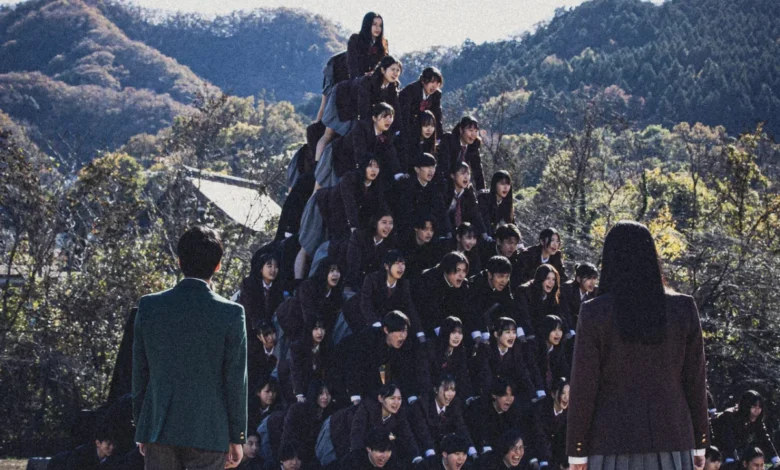
The landscape of contemporary Japanese cinema has seen a resurgence of provocative, genre-bending narratives, and director Yūta Shimotsu’s latest feature, New Group, stands as a polarizing addition to this tradition. Released to audiences on Shudder on November 6, the film attempts to translate the abstract anxieties of modern societal pressures into a visceral, surrealist nightmare. Starring Anna Yamada as the protagonist Ai and Yuzu Aoki as the catalyst figure Yu, the film serves as a thematic continuation of Shimotsu’s career-long interest in the intersection of social commentary and supernatural dread.
The Premise and Narrative Foundation
The narrative arc of New Group is set within the rigid environment of a Japanese high school, an institution frequently used in cinema as a microcosm for broader cultural expectations regarding hierarchy, discipline, and assimilation. Ai, a student grappling with the quintessential adolescent struggle of self-actualization versus peer acceptance, finds her world upended by the arrival of a transfer student, Yu.
Shortly after Yu’s appearance, the school grounds become the site of a disturbing phenomenon: students begin to organize themselves into complex, geometric human shapes, most notably a shifting human triangle. This behavior quickly escalates from a bizarre behavioral anomaly into a violent, hive-minded collective. The "New Group"—a moniker for the hive-mind collective—systematically targets any individual who chooses to remain independent, effectively erasing dissent through physical consumption.

Chronology of the Outbreak
The film’s structure follows a rapid descent into chaos, mirroring the speed at which misinformation and mob mentality can propagate in digital and physical spaces. The progression follows a distinct timeline:
- Initial Displacement: The arrival of Yu acts as the inciting incident, destabilizing the school’s established social order.
- The Formation: Students begin congregating in the school’s courtyard, engaging in repetitive, choreographed movements that lack individual autonomy.
- Escalation: The "New Group" transitions from silent observation to aggressive recruitment, employing physical force against those who refuse to conform.
- Societal Collapse: The phenomenon spreads beyond the school gates, affecting local citizens and public figures, suggesting that the "infection" of conformity is not limited to the academic environment.
- The Flight: The final act follows the survival efforts of Ai and Yu as they attempt to navigate an environment where human identity has been subsumed by the collective.
Technical Execution and Artistic Style
Director Yūta Shimotsu, who gained critical attention for his debut feature Best Wishes to All, employs a visual language heavily influenced by the "body horror" and "cosmic dread" traditions. Critics have frequently compared the film’s aesthetic to the works of Junji Ito, particularly in its focus on the grotesque manipulation of the human form. The human triangles and masses seen in the film are realized through a combination of practical choreography and subtle visual effects, designed to elicit discomfort rather than jump-scares.
The film relies on a lack of exposition to heighten its surreal quality. By refusing to provide a scientific or supernatural origin for the transformation, Shimotsu forces the audience to engage with the film as an allegory. In this context, the "fleshy blob" of students is not an external threat to be explained, but a metaphorical representation of the loss of the individual in the face of overwhelming social pressure.
Contextual Analysis: The Satire of Conformity
To understand the implications of New Group, one must look at the cultural context of Japanese education and the broader global phenomenon of "groupthink." Sociological studies, including those by Solomon Asch and Stanley Milgram, have long documented the human tendency to defer to authority and conform to group consensus, even when that consensus is objectively harmful.

Shimotsu’s film explicitly references these themes through its depiction of teachers who discourage "individual expression" in art classes and the visual motif of the school uniform. These elements serve as the foundation for the film’s broader critique: that systemic pressure to conform acts as a precursor to the violent, mindless mob mentality seen in the film’s third act. The opening sequence, which features a montage of global political unrest and media-driven harassment, anchors the film in the reality of the 21st century, where the "truth" is increasingly defined by the loudest group rather than objective fact.
Critical Reception and Industry Impact
Since its release, New Group has been a subject of debate among genre enthusiasts and film critics. The reception can be categorized into two distinct schools of thought:
- The Thematic Appreciation: Supporters of the film praise its ambition, noting that it succeeds as a piece of "art-house horror." For these viewers, the lack of a traditional, logical narrative is a feature, not a bug. They argue that the film’s failure to adhere to standard storytelling conventions—such as character arcs or high-stakes action—is a deliberate choice to mirror the aimlessness of a society that has lost its moral compass.
- The Narrative Critique: Conversely, detractors point to the film’s pacing and character development as significant flaws. The consensus among this group is that while the film excels at building a unique, uncomfortable atmosphere, it fails to translate that tension into a cohesive or engaging story. The shift from a character-driven drama about a shy student to a wandering survival story in the second half leaves many viewers detached from the stakes, particularly as the film minimizes the horror of the casualties by keeping much of the violence off-screen.
Broader Implications for the Genre
The release of New Group on a platform like Shudder, which caters to a niche audience of horror fans, highlights the growing demand for experimental genre cinema. While the film may not achieve mainstream commercial success, its impact on the conversation surrounding horror as a vehicle for social commentary is significant.
By choosing to prioritize imagery and metaphor over traditional narrative beats, Shimotsu challenges the audience to participate in the construction of the film’s meaning. This approach aligns with a trend in "elevated horror" where the director’s primary goal is not to frighten the viewer in a conventional sense, but to leave them with a lingering sense of existential dread regarding the state of human social structures.

Final Assessment
New Group is a stark reflection of the modern condition. Its depiction of the "human triangle" serves as a haunting reminder of the ease with which individuals can be subsumed into a larger, mindless machine. While the film may falter in its narrative delivery, its success in articulating the psychological horror of conformity is undeniable. As the film concludes, it leaves the viewer with a simple, albeit disturbing, question: in a world that demands assimilation as a condition for survival, what is the cost of staying true to oneself?
For audiences interested in the intersection of philosophy and horror, New Group provides a visceral experience that, despite its structural irregularities, demands attention. Whether or not it succeeds as a traditional horror film is perhaps secondary to its function as a provocative piece of cultural critique. The film remains available for viewing, inviting each audience member to interpret its message through the lens of their own experiences with the social, political, and cultural pressures of the modern era.