The Evolution of the X-Men Cinematic Landscape
The history of the X-Men on screen began in 2000 with Bryan Singer’s X-Men, a film that largely positioned Wolverine as the audience’s entry point into the world of mutants. This creative decision, while commercially successful, fundamentally altered the team dynamic established in the source material. In the comics, Scott Summers and Jean Grey are traditionally depicted as the core, foundational couple of the X-Men, representing the stability and leadership of Charles Xavier’s vision. By centering the films on the outsider status of Logan, the original franchise frequently relegated Cyclops—a character intended to be the field leader—to a secondary role defined primarily by his jealousy and insecurity regarding Jean’s attraction to Wolverine.
This narrative imbalance resulted in a two-decade-long period where the depth of the Summers-Grey relationship was often sacrificed for the sake of the Wolverine-centric plot. With the MCU now in a position to reintroduce the X-Men as a cohesive unit, the opportunity exists to pivot away from this well-worn path. By shifting Wolverine into a role defined by mentorship rather than romantic entanglement, Marvel Studios could offer a more faithful interpretation of the team’s organizational structure, allowing characters like Cyclops and Storm to reclaim their rightful positions as primary leads.
Historical Precedent: The Mentor Archetype
The concept of Wolverine as a mentor is not a radical departure from established lore; rather, it is a return to a specific, highly successful characterization seen in various media. The 2000 animated series X-Men: Evolution provides the most prominent example of this dynamic. In this iteration, Logan was depicted not as a wandering loner, but as a faculty member at the Xavier School for Gifted Youngsters. He served as the primary combat instructor for the younger generation of students, including Scott, Jean, Kitty Pryde, and Rogue.

This version of the character was praised for its ability to maintain the grit and intensity of Wolverine while integrating him into the school’s academic hierarchy. By removing the romantic tension, the show allowed for a more compelling relationship between teacher and student, framing Logan as a battle-hardened veteran passing his survival skills to a new generation of heroes. This model mirrors the trajectory of other legendary mentors in pop culture, such as the relationship between Luke Skywalker and Obi-Wan Kenobi or Daniel LaRusso and Mr. Miyagi.
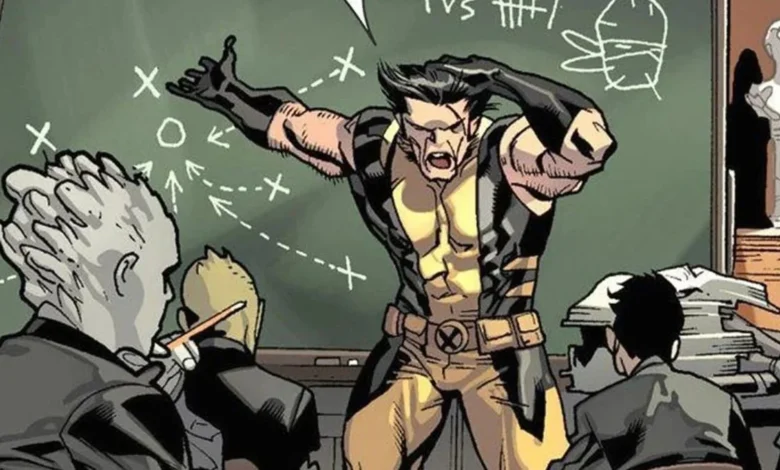
Furthermore, the 2013 comic book series Wolverine and the X-Men, written by Jason Aaron, solidified this transition. Following the events of the "Schism" storyline—where the mutant community split into opposing ideological factions—Logan became the headmaster of the newly founded Jean Grey School for Higher Learning. During this period, he took on the responsibility of mentoring younger students, including the time-displaced original five X-Men. The series demonstrated that Logan is at his most compelling when his savage instincts are tempered by the duty of protecting the next generation.
Casting Speculations and Structural Adjustments
As the MCU moves toward incorporating mutants into the 616 timeline—following the events of upcoming projects like Avengers: Doomsday and Secret Wars—casting rumors have begun to circulate. Reports suggest that Marvel is exploring actors such as Jeremy Allen White to inhabit the role of Logan. Such a choice would mark a distinct shift from the physical portrayal provided by Hugh Jackman, whose 6’2" frame dominated the original films. A more comics-accurate depiction of Wolverine’s height (typically listed as 5’3" in Marvel lore) would emphasize his role as a brawler and a scrappy fighter, fitting for an instructor who relies on technique and endurance rather than traditional heroic stature.
Whether Hugh Jackman continues to portray the character within the multiverse or a new actor is cast for the MCU’s permanent timeline, the core issue remains the necessity of narrative variety. If the studio chooses to maintain the "outsider" status of Logan, it risks repeating the same character arcs that audiences have seen for twenty-five years. Conversely, integrating him into the faculty allows for a dynamic interplay between his cynical, street-smart worldview and the idealistic, academic approach championed by Professor Xavier.

Implications for the MCU’s X-Men Future
The broader implications of this shift extend to the rest of the X-Men roster. For years, the franchise has struggled to find a balance between the "ensemble" nature of the team and the "star power" of its most popular members. By design, the X-Men is an ensemble story. When the narrative is dominated by a love triangle, the internal politics and ideological conflicts of the team—such as the struggle for mutant equality, the morality of Xavier’s school, and the threat posed by anti-mutant sentiment—are frequently sidelined.
Data from past audience surveys and critical reviews of the Fox X-Men films suggest a growing desire for the team’s leadership to be shared. In the original comics, Cyclops’s journey from a young, uncertain recruit to a decisive, sometimes controversial leader of the mutant race is one of the most compelling arcs in comic history. When he is trapped in a domestic rivalry, that character growth is stalled.
Additionally, the introduction of the X-Men into the MCU provides an opportunity to showcase the school’s function as an educational institution. If Logan is the drill sergeant in the Danger Room, it establishes a clear chain of command and a distinct role for each adult member of the faculty. Storm, for instance, can be presented as the primary educator and moral compass, while Logan manages the physical conditioning of the students. This distribution of roles makes for a more efficient narrative machine, allowing the writers to delve into the complexities of a school for super-powered teenagers without needing to fall back on tired romantic tropes.
The Path Forward
Ultimately, the transition of Wolverine from a romantic lead to a mentor figure represents a maturation of the X-Men brand. The audience has evolved, and the standards for serialized storytelling in the MCU have become significantly more complex than they were in the early 2000s. A more nuanced, multi-faceted portrayal of the team will be essential to keeping the franchise relevant for the next decade of Marvel content.

The X-Men are defined by their diversity of power and perspective. By allowing the love triangle to fade into history, Marvel Studios can give Scott Summers and Jean Grey the agency to develop as leaders and partners in their own right, free from the constant intrusion of a third party. This shift does not diminish the importance of Wolverine; rather, it elevates him. It transforms him from a plot device used to generate conflict into a pillar of the Xavier School. For fans who have grown up with these characters, seeing a version of the X-Men where everyone has the space to grow—without the repetitive cycle of romantic drama—would be a welcome and necessary evolution. As the MCU looks toward the future of the X-Men, the most innovative choice may be the simplest one: returning to the source material’s potential as a team-first, character-driven epic, where the best teacher is often the one with the roughest edges.