Behind the Lens of Honda Stage: How Paul Carter Captured Kashus Culpepper’s Rise for ‘Til The Sun Goes Down

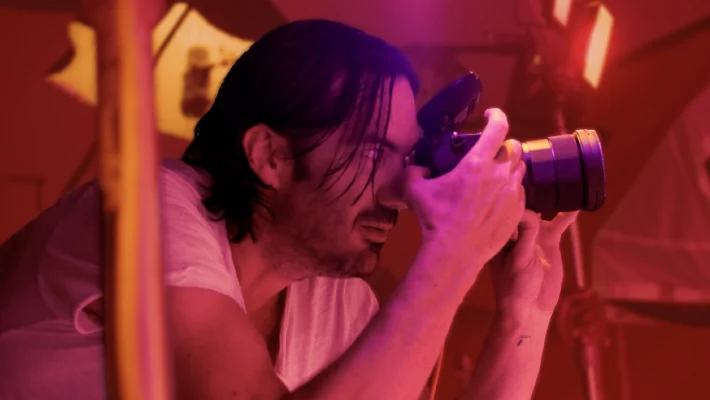
When rising country and roots artist Kashus Culpepper stepped into UPROXX’s FYI Studios to record his poignant track “Til The Sun Goes Down” for the Honda Stage platform, the production required more than just an audio recording; it demanded a visual identity capable of encapsulating the raw, unfiltered energy of his music. Tasked with creating that definitive visual statement was seasoned music photographer Paul Carter. Known for his ability to freeze kinetic, fleeting moments in time, Carter approached the session with a deliberate philosophy: to capture an image powerful enough to make a permanent statement about an artist on the precipice of mainstream breakthrough.
The resulting cover art and the accompanying behind-the-scenes footage offer a window into a modern creative collaboration rooted in shared histories within the live music ecosystem. For Carter, whose career spans decades of documenting some of the world’s most iconic performers across wildly diverse genres, working with an artist like Culpepper represents a return to the foundational roots of music photography.
Shared Roots in the Live Music Ecosystem
To understand the dynamic between Carter and Culpepper, one must examine their respective trajectories through the entertainment industry. Both creators developed their artistic sensibilities not in sterile corporate boardrooms or academic institutions, but in the chaotic, high-stakes crucible of live music venues.
Culpepper’s musical education took place in the gritty, intimate confines of honky-tonks and dive bars. These venues, characterized by sticky floors, dim neon lights, and fiercely loyal audiences, demand a level of authenticity that cannot be faked. An artist performing in these spaces must instantly command the room, connecting with listeners on a visceral, emotional level. This environment shaped Culpepper’s signature sound—a gritty, soulful blend of traditional country storytelling and southern rock instrumentation—and instilled in him a stage presence that feels both weathered and vital.
Parallel to this, Paul Carter was carving out his own space in the visual arts by embedding himself within the pulsing heart of live music culture. Working the festival circuit and shooting high-energy live gigs, Carter honed a documentary-style approach to portraiture. His lens has captured an eclectic roster of legendary and genre-defying acts, ranging from the avant-garde Icelandic icon Björk to Detroit rap royalty Eminem.
“I fell in love with photography going to concerts,” Carter reflects, detailing the grassroots beginnings of his career. Describing the classic hustle of a young concert photographer, he recalls how he “pushed my way to the front and that just got me slowly into shooting portraits of musicians.” That early immersion taught him how to anticipate movement, read the emotional temperature of a room, and find stillness amidst chaos.
When these two backgrounds converged at FYI Studios, the synergy was immediate. Carter’s background in capturing the unpredictable nature of live performances equipped him to handle the dynamic energy of an emerging artist translating his stage presence into a controlled studio environment.
The Art of Photographic Collaboration: Trust and Controlled Chaos
The creation of the “Til The Sun Goes Down” cover art was far from a rigid, paint-by-numbers commercial shoot. According to Carter, the success of the session hinged on mutual trust between the photographer and the subject—a luxury that is not always guaranteed when working with emerging talent navigating high-pressure corporate media environments for the first time.
“It is very joyful when an artist, especially coming up, trusts you,” Carter notes. This trust allows for a collaborative dialogue where both parties can experiment. In commercial photography, meticulous planning is standard operating procedure. Mood boards, lighting diagrams, and strict shot lists are mapped out weeks in advance. However, Carter believes that true artistic magic often occurs precisely when those rigid plans begin to fracture.
“I enjoy the dance of shooting,” Carter explains, utilizing choreographic language to describe the fluid movement between photographer and subject. “We plan as much as you can, but a lot of times it isn’t what you initially thought, and that’s the imagination part. I’m wanting a bit of chaos in it.”
This appetite for controlled chaos is what elevates Carter’s work above standard promotional portraiture. By allowing room for spontaneity, he avoids the polished, overly sterile aesthetic that often plagues modern artist promotion. Instead, the images breathe, retaining an organic roughness that mirrors the stylistic textures of Culpepper’s music. The resulting cover art for the Honda Stage session does not merely present Culpepper as a passive product; it portrays him as an active, formidable force in American roots music.
Expanding the Narrative: The Behind-the-Scenes Window
Beyond the static imagery that serves as the visual anchor for the release, the project includes exclusive behind-the-scenes (BTS) footage captured by Carter. In an era where consumers demand hyper-transparency from their favorite artists, BTS content has transitioned from a promotional afterthought to a critical component of audience engagement.
The footage released alongside the Honda Stage session offers fans an unvarnished look at the creative machinery operating behind the curtain. Viewers see the intense concentration required to deliver a live studio performance, the collaborative adjustments made between takes, and the relaxed camaraderie shared by the crew. By releasing this footage, Honda Stage and UPROXX provide a richer contextual layer to the performance, allowing fans to appreciate not just the polished final product, but the labor, artistry, and human interactions that made it possible.
This visual storytelling complements the audio experience of “Til The Sun Goes Down,” a track that showcases Culpepper’s distinctive vocal range and lyrical depth. Fans seeking the complete immersive experience can view both Carter’s behind-the-scenes documentation and Culpepper’s full live performance on official digital channels, bridging the gap between static photography, moving image, and recorded sound.
The Honda Stage Platform and the Cultivation of Emerging Talent
The collaboration between Culpepper and Carter takes place under the broader umbrella of Honda Stage, the automotive brand’s flagship cultural and musical platform. Established as a multi-tiered initiative to support both established superstars and breakthrough acts, Honda Stage has spent years positioning itself as a vital conduit between artists and their fanbases.
The platform’s strategy relies heavily on the concept of the artist’s journey. Rather than simply sponsoring standard tours or purchasing ad space, Honda Stage builds bespoke content ecosystems—ranging from intimate studio sessions and festival activations to immersive digital experiences—that allow fans to witness an artist’s artistic evolution firsthand.
In the contemporary music industry, where digital saturation makes it increasingly difficult for emerging talent to cut through the noise, platforms like Honda Stage provide crucial institutional backing. By offering high-production-value environments like FYI Studios, Honda affords artists access to top-tier creative talent, including elite photographers like Paul Carter, directors, audio engineers, and state-of-the-art equipment. This level of production elevates the presentation of developing acts, placing them on a visual and sonic par with major-label heavyweights.
Industry analysts note that brand-supported music platforms have become essential pillars of modern artist development. In an era where traditional revenue streams for recorded music have shifted dramatically toward streaming and live performance, visual branding and high-concept content creation are critical for audience acquisition. Artists who can present a cohesive, compelling visual identity alongside their music are significantly more likely to capture the attention of playlist curators, music supervisors, and festival bookers.
Broader Implications for Music Photography and Brand Partnerships
The partnership between Kashus Culpepper, Paul Carter, and Honda Stage highlights a broader evolution in how brands and musicians collaborate in the twenty-first century. No longer satisfied with simple product placement or logo-slapping exercises, today’s consumers expect authentic artistic integrations that respect the integrity of the music and the culture surrounding it.
By enlisting a photographer with deep counter-cultural and live-music roots like Paul Carter, Honda Stage reinforces its credibility within the independent and roots-music communities. Carter’s pedigree—shooting everyone from underground experimental icons to mainstream rap legends—lends an air of authenticity that corporate-sponsored art often struggles to achieve. It signals to discerning music fans that the platform is invested in real artistry rather than manufactured pop constructs.
Furthermore, the project underscores the enduring power of still photography in a digital landscape increasingly dominated by short-form video. While TikTok clips and vertical video dominate daily media consumption, a striking, high-concept cover image remains the definitive visual handshake between an artist and the public. It is the image that stops a user mid-scroll on Spotify, Apple Music, or social media, compelling them to press play.
As Kashus Culpepper continues his ascent through the ranks of American roots and country music, the visual markers established during his Honda Stage session will serve as important historical artifacts of his breakthrough era. Through the sharp, empathetic lens of Paul Carter, and the institutional support of platforms dedicated to emerging talent, moments of raw creative energy are permanently captured, ensuring that the artist’s introduction to a wider audience is as powerful, chaotic, and authentic as the honky-tonks where he first found his voice.