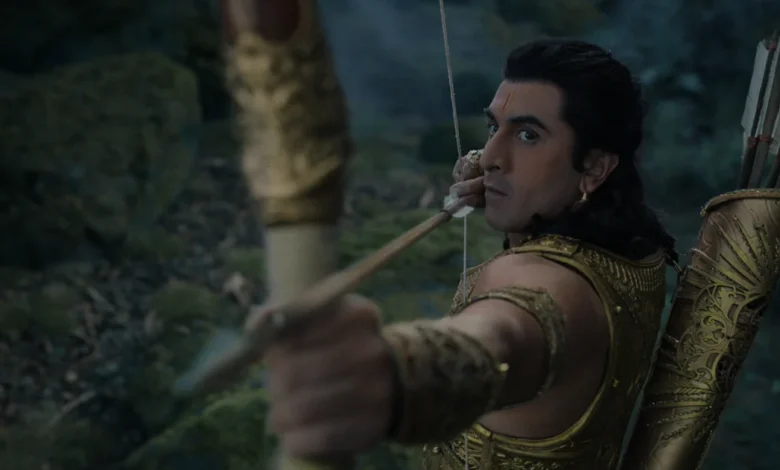
Namit Malhotra’s cinematic adaptation, Ramayana: Rise of a Legend, has officially arrived in theaters, offering audiences a breathtaking visual interpretation of one of the world’s most enduring and revered Hindu epic poems. Distributed during the auspicious festival of Diwali—a holiday intrinsically linked to the narrative triumphs of the original text—the film represents a watershed moment for high-budget mythological storytelling on the global stage. Directed by Nitesh Tiwari and backed by a formidable international production pipeline, the feature film attempts to bridge ancient oral traditions with cutting-edge filmmaking technology, setting a new benchmark for scale, scope, and technical execution in contemporary cinema.
Main Facts and Production Scale
At its core, Ramayana: Rise of a Legend chronicles the foundational cosmological and mortal struggles outlined in the ancient Sanskrit epic. The narrative opens with an exploration of the Hindu Trimurti—Brahma the creator, Shiva the destroyer and renewer, and Vishnu the protector—before diving into the primordial conflict between the forces of good (Devas) and evil (Asuras). Through stunning visual effects and meticulously choreographed battle sequences, the film brings to life legendary figures such as Lord Indra, played by Kunal Kapoor, and the complex antagonist Dashanan, later known as Ravana, portrayed by Yash.
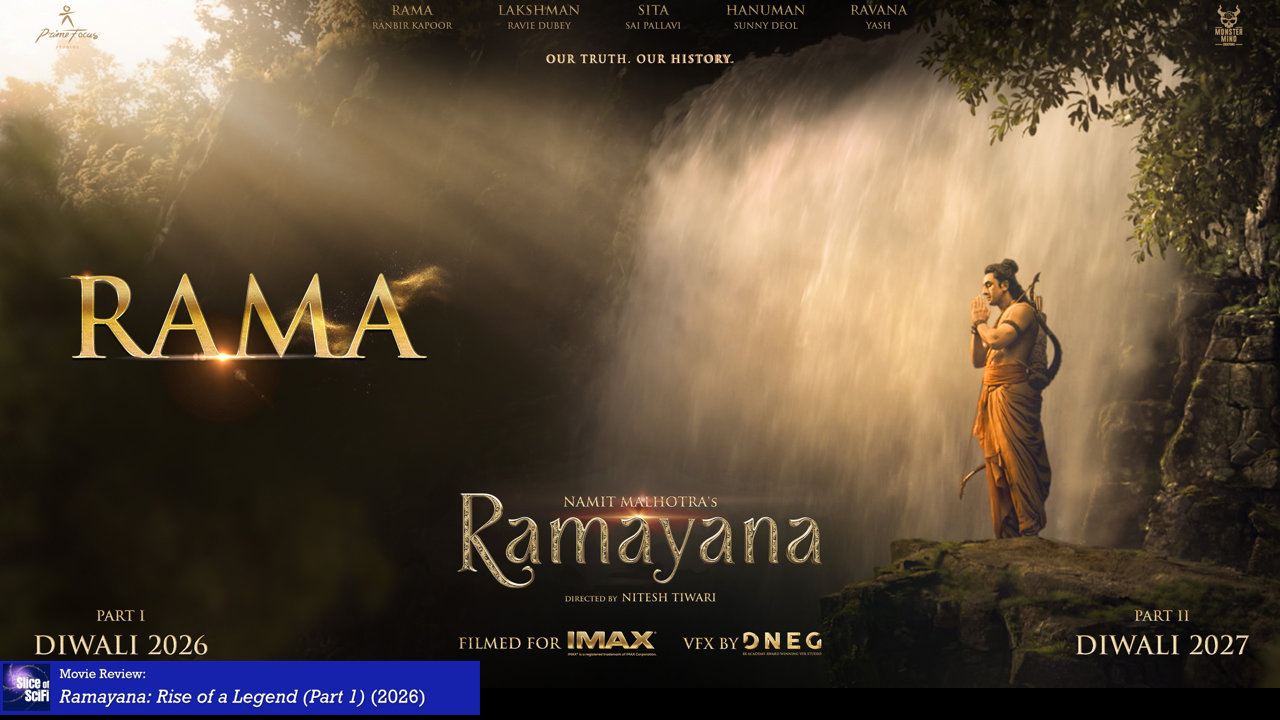
The production boasts an extraordinary roster of acting talent, featuring Ranbir Kapoor as the noble prince Rama, Sai Pallavi as the martial-arts-trained and scripture-versed Sita, Ravi Dubey as Lakshmana, Arun Govil as King Dasharatha, and Adinath Kothare as Bharata. Beyond the primary cast, the film’s technical framework is anchored by a powerhouse creative team. The screenplay is penned by Shridhar Raghavan, while the musical landscape is shaped by the unprecedented collaboration of Academy Award winners Hans Zimmer and A.R. Rahman.
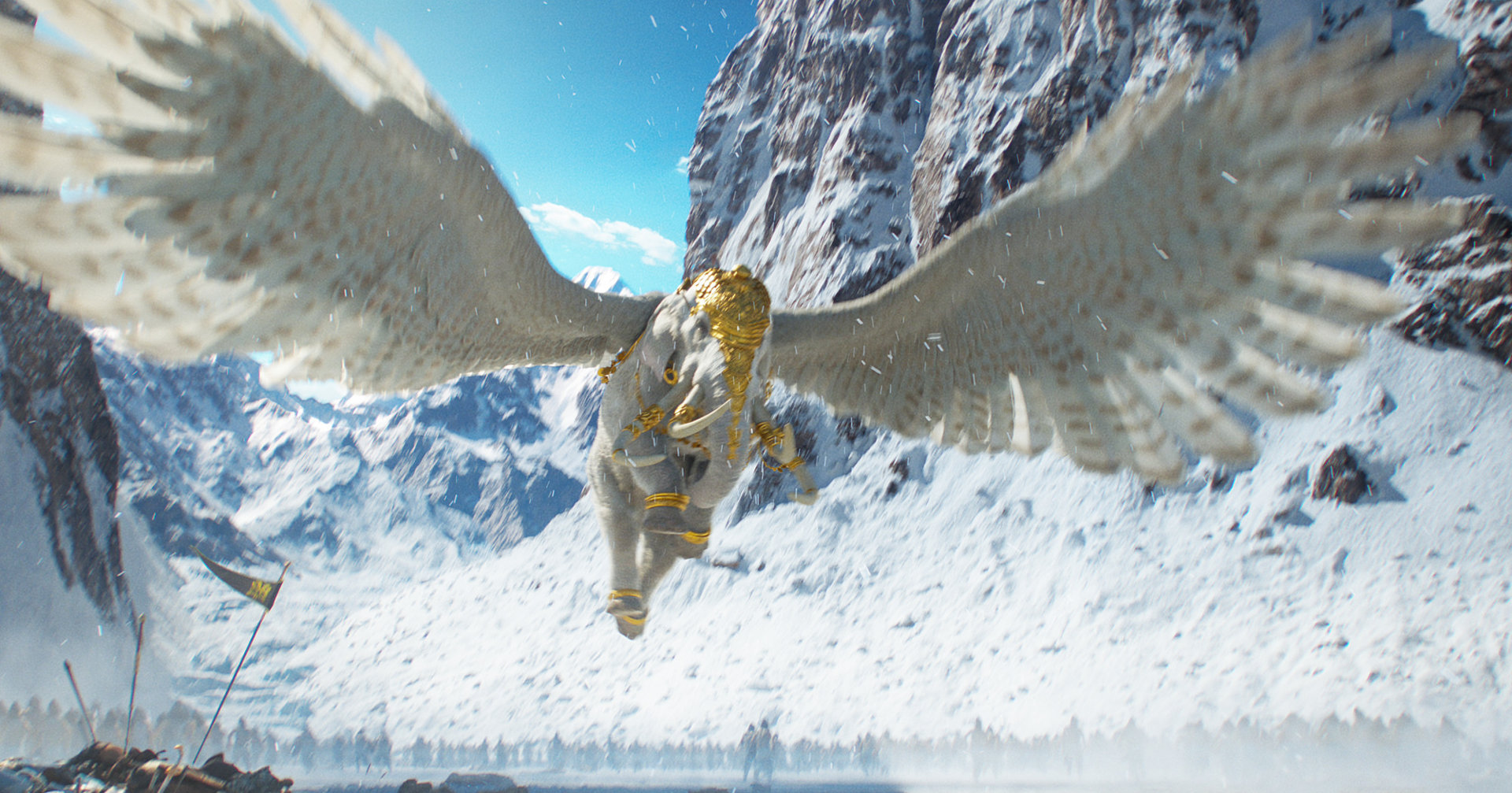
Cinematically, the film leverages advanced 3-D stereoscopic presentation to enhance its immersive world-building. Reviewers and early audiences have noted the exceptional clarity of the cinematography, which transitions seamlessly from sweeping aerial vistas—captured from the perspectives of flying machines and the semi-divine vulture Jataya—to intimate, emotionally charged close-ups. The art direction and production design deliberately blur the line between practical craftsmanship and computer-generated imagery, resulting in opulent royal courts and desolate netherworlds that vividly evoke historical and mythological antiquity.
Chronology of the Narrative Arc
The structural progression of Ramayana: Rise of a Legend follows the early chapters of the epic, charting the rise of its central figures through a series of formative trials and divine appointments.
The narrative chronology unfolds across several key milestones:
- The Primordial Divide: Following a decisive victory aided by Lord Indra and Vishnu, the Devas claim dominion over Lanka, relegating the Asuras to the subhuman conditions of the netherworld.
- The Ascendance of Ravana: Guided by his mother Kaikashi (Shobana), Dashanan undertakes a rigorous ascetic journey to a mountaintop. After attempting to gain immortality, he is granted immunity from death by human hands by Brahma, subsequently seizing control of Lanka and unifying the Asurean forces.
- The Court of Ayodhya: In the prosperous city of Ayodhya, King Dasharatha fathers four sons, with Rama emerging as a paragon of skill, virtue, and martial prowess.
- The Trial of the Pinaka Bow: Summoned to the forest to eradicate demonic threats, Rama and Lakshmana later travel to Mithila. There, Rama successfully strings and shatters the divine bow of Shiva, winning the hand of Princess Sita.
- Encounters and Exile: On their return journey, the newlyweds encounter Parashurama, the sixth avatar of Vishnu, who recognizes Rama’s divine lineage. Shortly thereafter, political maneuvering by Bharata’s mother forces King Dasharatha to honor a past vow, resulting in Bharata’s coronation and Rama’s mandated 14-year exile into the forest alongside Sita and Lakshmana.
Supporting Data and Technical Collaboration
The financial and logistical scope of Ramayana: Rise of a Legend positions it as one of the most ambitious undertakings in modern Indian cinema. With state-of-the-art visual effects supervised by industry veterans, the film seeks to compete directly with Hollywood fantasy blockbusters while retaining cultural authenticity. The integration of Western and Eastern musical sensibilities through Hans Zimmer and A.R. Rahman underscores a strategic effort to appeal to an international demographic without alienating traditionalists.
Costume design plays an equally vital role in establishing the socio-economic and spiritual stratification of the film’s universe. The stark visual contrast between the tattered garments of the marginalized Asuras and the resplendent, color-saturated silks of the Ayodhya and Lanka royal courts provides immediate visual context for the political dynamics at play. Furthermore, the action choreography emphasizes visceral realism, balancing supernatural abilities and divine weaponry to ensure high-stakes tension during confrontation sequences.
Official Responses and Industry Reception
While the film has drawn universal acclaim for its technical achievements, art direction, and world-building, critics and audiences have engaged in nuanced discussions regarding its performances and narrative pacing.
Industry analysts have observed that the film’s release strategy mirrors recent global trends of splitting massive mythological and historical epics into multi-part theatrical events. Ramayana: Rise of a Legend concludes on a dramatic cliffhanger, setting the stage for its anticipated sequel. Originally slated for a Diwali 2027 release, studio schedules have shifted the rollout of the subsequent installment to Diwali 2028, reflecting the meticulous post-production requirements necessary to maintain the high visual fidelity established in the first chapter.
Performances within the film have received mixed yet generally favorable evaluations. Ranbir Kapoor’s portrayal of Rama has been commended for capturing the internal burden of a prince wrestling with destiny and duty. Conversely, Yash’s interpretation of Ravana has been praised for elevating a traditional mythological antagonist into a layered, formidable adversary. However, some dialogue-heavy sequences have faced mild critique for leaning toward theatrical declamation rather than naturalistic conversational delivery, a common stylistic choice in high-fantasy epics that prioritize mythic grandeur over grounded intimacy.
Broader Impact and Industry Implications
The commercial and cultural reception of Ramayana: Rise of a Legend carries significant implications for the global entertainment landscape. By treating sacred texts with Hollywood-tier blockbuster budgets and technical expertise, studios are increasingly validating non-Western mythologies as premier intellectual properties capable of commanding global box office dominance.
The comparison of Malhotra’s adaptation to contemporary Western epics—such as recent cinematic adaptations of classical oral literature—highlights a growing appetite for stories rooted in ancient heroic archetypes. The film demonstrates that cross-cultural audiences respond strongly to universal themes of sacrifice, moral integrity, the eternal struggle between order and chaos, and the weight of prophecy.
As the franchise prepares for its subsequent installments, Ramayana: Rise of a Legend stands as a testament to the evolving capabilities of digital cinema and cross-border creative collaborations. By successfully navigating the delicate balance between reverent source fidelity and modern cinematic spectacle, the production has established a formidable template for how ancient narratives can be preserved, reinterpreted, and celebrated on the global screen for generations to come.