City of Six Moons is an upcoming board game that forces players to decipher an alien language to learn its rules.

The announcement of City of Six Moons by Hollandspiele has sent ripples through the tabletop gaming community, not because of its mechanics or theme, but because of its radical approach to player onboarding. In an industry that has spent decades refining rulebooks to be as accessible and intuitive as possible, designer Amabel Holland has taken the opposite path. By creating a rulebook written entirely in an untranslated, fictional language, the game serves as both a complex simulation and a linguistic puzzle, effectively turning the act of learning the rules into the primary gameplay loop.
A Departure from Modern Game Design
In the current board game market, accessibility is a primary driver of success. Publishers often invest thousands of dollars into graphic design and professional editing to ensure that manuals are clear, concise, and easy to reference during play. Titles like Ticket to Ride or Wingspan are lauded specifically because their rulebooks allow new players to understand the game’s core mechanics in under twenty minutes.
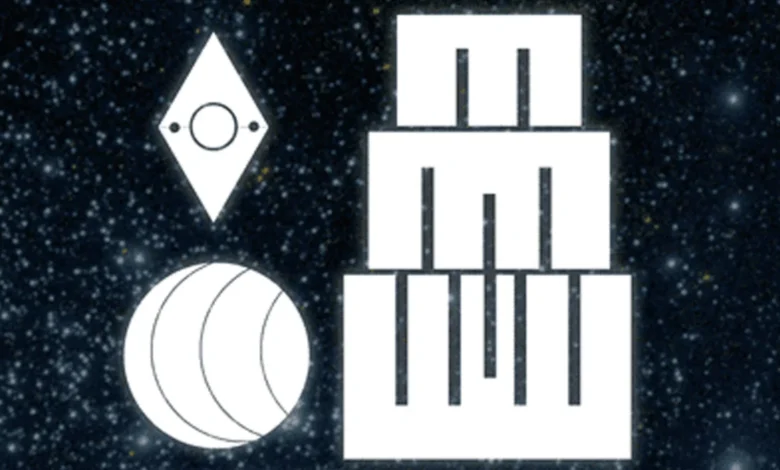
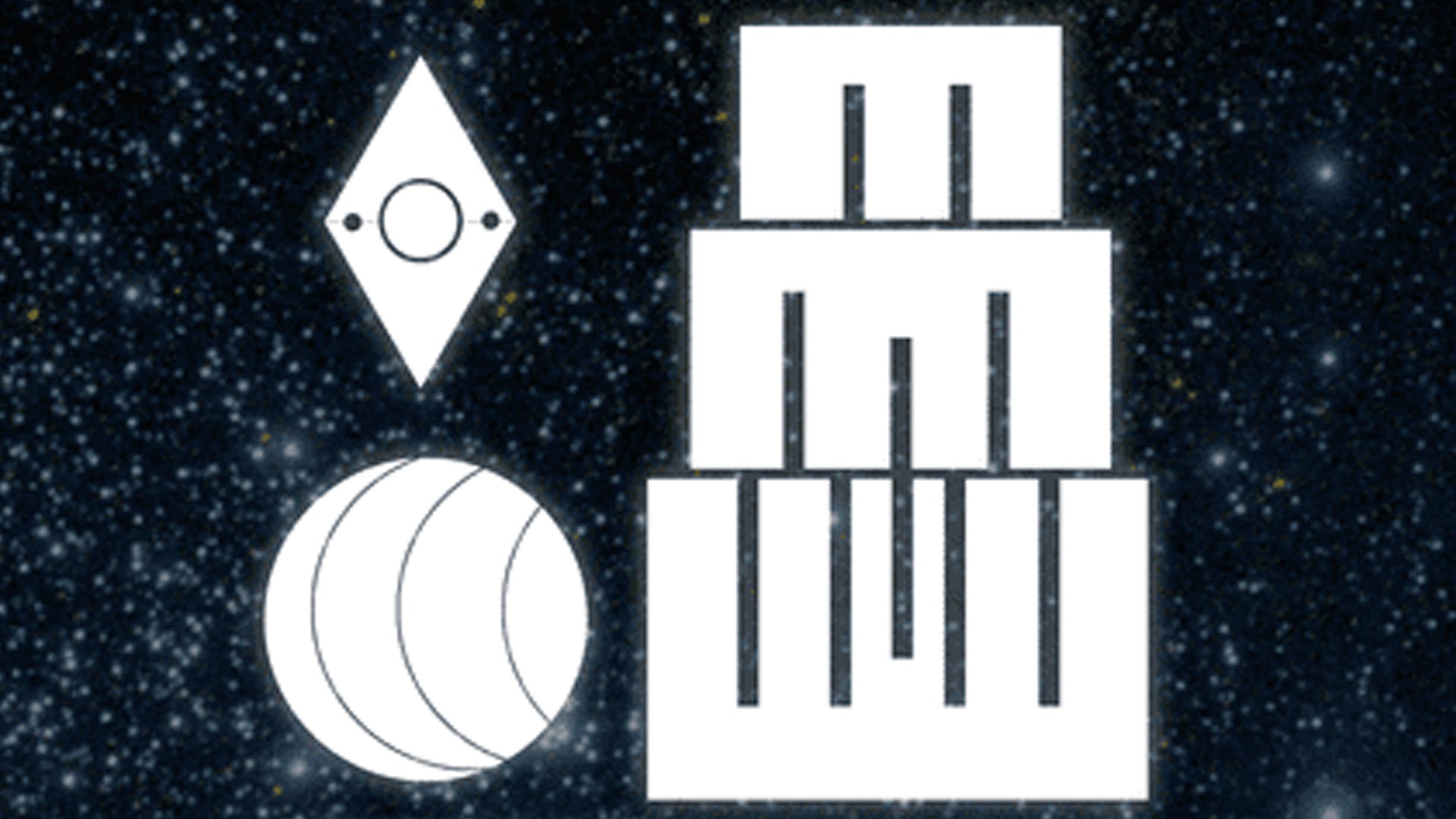
City of Six Moons rejects this trend entirely. By utilizing a system of iconography, glyphs, and non-human symbols, the game demands a high level of intellectual commitment from the player before a single piece is moved. The project is designed to simulate the experience of encountering a truly alien intelligence, forcing the player to abandon their earthly logic and attempt to perceive the world through the lens of a civilization that does not share human linguistic or structural paradigms.
Chronology and Development
The development of City of Six Moons follows a series of unconventional design philosophies championed by Amabel Holland. Known for her work with Hollandspiele—a publishing label she co-owns with Mary Holland—the designer has built a reputation for creating games that prioritize historical accuracy, simulation, and high-level strategy over mass-market appeal.
According to preliminary information released by the publisher, the development timeline for the project has been characterized by iterative testing of the "alien" syntax. The project was conceived as a solitaire experience, a genre that has seen a massive surge in popularity since 2020. Market data from the Board Game Geek (BGG) database indicates that solo-only titles are currently among the fastest-growing categories in the hobbyist sector, with many players seeking solitary, immersive experiences that provide deep tactical challenges without the need for a group.
The game is scheduled for a retail release in the coming month, though the publisher has maintained an air of mystery surrounding the physical components. It is currently known that the box will contain the necessary materials to facilitate the simulation, though it remains unclear whether these components will be marked with the same glyphs as the rulebook or if they will be abstract enough to require the player to deduce their function based on their translation of the rules.
The Philosophy of the Unknowable
A critical aspect of City of Six Moons is the designer’s refusal to provide an "answer key." In standard game design, if a player encounters a confusing rule, they can usually consult the publisher’s FAQ, BGG forums, or direct social media channels for clarification. Holland has explicitly stated that she will not provide such assistance.
This decision creates a unique "epistemic barrier." The player is left in a state of permanent uncertainty, never knowing for certain if they have correctly interpreted the alien syntax. This design choice forces the player to take ownership of their own experience. By removing the safety net of objective clarity, the game transforms the player into an archeologist or a cryptographer.
"That loss is a thing I want you to feel; I want it to linger," Holland noted in a recent discussion regarding the title. This sentiment suggests that the game is not merely a product to be consumed, but an experience to be endured. Once the code is cracked, the "magic" of the mystery evaporates, and the game transitions into a more standard, albeit complex, strategic experience. This shift represents a deliberate design arc: the transition from learner to master, accompanied by the melancholy of losing the wonder of the unknown.
Broader Implications for the Tabletop Industry
The release of City of Six Moons challenges the prevailing wisdom regarding "User Experience" (UX) in board games. For years, the industry has pushed toward "asymmetric information" or "hidden movement" mechanics, but rarely has the actual medium of instruction been weaponized as a gameplay mechanic.
If City of Six Moons proves successful, it could signal a shift toward "hyper-niche" design. While it is unlikely to displace mainstream titles, the game provides a roadmap for how developers can utilize language and semiotics to create deeper immersion. For the average consumer, this level of effort may be daunting, but for the enthusiast market, it offers a level of engagement that standard rulebooks cannot match.
Furthermore, the project highlights the role of the publisher as a curator of experiences rather than just a manufacturer of goods. Hollandspiele’s willingness to back such a daring project speaks to the growing maturity of the board game medium. It is an acknowledgment that players are ready to be treated as partners in the design process, capable of navigating difficult, opaque, and intentionally challenging systems.
Analysis of the "Alien" Approach
From an analytical perspective, the game functions as an experiment in cognitive linguistics. By forcing players to rely on "cultural assumptions" while simultaneously being told those assumptions are likely wrong, the game creates a state of cognitive dissonance. The player is required to look at an icon—perhaps a sun, a star, or a geometric shape—and assign it a value based on the context of the surrounding symbols.
This is fundamentally different from a game that uses icons for simple actions like "draw card" or "gain gold." In City of Six Moons, the icons represent the values, laws, and history of an entire civilization. If the player assumes that a circular icon means "peace," they might find themselves trapped in a scenario where the alien logic dictates that the icon actually signifies "stagnation" or "cycle." This potential for misinterpretation is not a bug; it is the core feature.
Conclusion and Future Outlook
As the release date approaches, the board gaming community remains in a state of anticipation. Will the game be playable in a traditional sense, or will it be a "simulation of failure," where the struggle to understand is the only reward?
The success of City of Six Moons will ultimately be measured not by its sales figures, but by the discourse it generates. If players can successfully document their translation processes and share their experiences, the game may become a landmark title in the study of ludic design.
For now, prospective players are advised that the journey begins the moment they open the box. There will be no shortcuts, no helpful forums, and no designer to guide them through the darkness. The city of six moons awaits, and it speaks in a tongue that has never been heard before. Whether that language is a gateway to a brilliant new world or a labyrinth designed to frustrate remains to be seen, but one thing is certain: it will be a singular experience in an increasingly crowded market.