The Tragedy of the SS Normandie and Batman Parallels Headline MLJ’s Hangman Comics #2 at Upcoming Heritage Auction

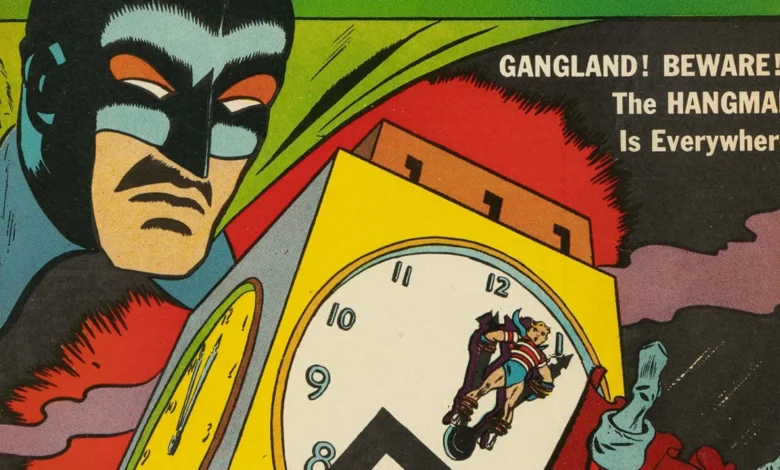
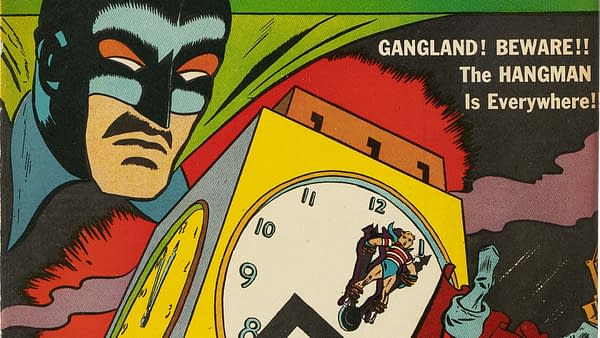
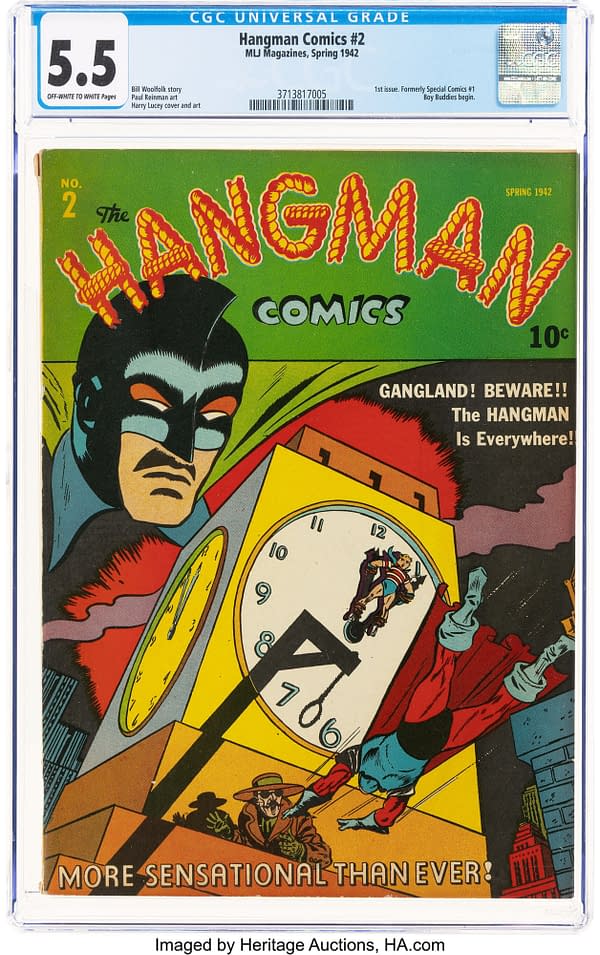
The intersection of wartime reality and Golden Age comic book fiction is on full display in an upcoming auction featuring a rare piece of early 1940s pop culture history. Heritage Auctions has listed a CGC FN- 5.5 graded copy of Hangman Comics #2, cover-dated Spring 1942 and published by MLJ Magazines (the precursor to Archie Comics). This historic issue, featuring a striking cover attributed to artist Harry Lucey, captures a fascinating moment when comic book publishers rapidly pivoted to address the looming shadow of World War II, weaponizing real-world tragedies for patriotic narrative purposes.
Chief among the historical touchstones in this issue is the infamous February 1942 disaster of the luxury ocean liner SS Normandie. In the pages of Hangman Comics #2, the narrative weaponizes this exact national trauma, attributing the catastrophic loss of the vessel to Axis sabotage masterminded by the fictional Nazi villain Captain Swastika. As collectors and historians look toward the upcoming Golden Age Century Comics Showcase Auction VI on November 5, 2026, this particular publication offers a compelling lens through which to examine wartime propaganda, artistic borrowing, and the evolving ecosystem of the American comic book industry during the dawn of the Golden Age.

Wartime Propaganda and the SS Normandie Disaster
The Spring 1942 release of Hangman Comics #2—which notably served as the official title debut for the series, continuing the numerical sequence from the single-issue tryout Special Comics #1—thrust readers directly into the geopolitical anxieties of the Second World War. The issue’s primary narrative centers around a character named Elsa Danning, an American-born woman whose father, a German official, was dispatched to a concentration camp. Fleeing to New York with critical intelligence regarding an active Nazi conspiracy, Danning quickly becomes the target of Captain Swastika, a recurring nemesis of the heroic Hangman.
Within the story, Captain Swastika brazenly takes credit for orchestrating a devastating fire aboard a massive ocean liner docked in New York harbor. The visual depiction in the comic is unmistakable: a heavily listing, burning ocean liner at a pier, an unmistakable artistic nod to the fiery demise of the SS Normandie.
In real life, the luxury liner—subsequently renamed the USS Lafayette (AP-53) after being requisitioned by the United States Navy for conversion into a troop transport—caught fire at New York City’s Pier 88 on February 9, 1942. The blaze raged uncontrollably, causing the massive vessel to capsize the following day, resulting in one fatality and injuring hundreds of personnel. The incident sent shockwaves through a nation already jittery following the attack on Pearl Harbor just two months prior, immediately sparking widespread fears of Axis espionage and domestic sabotage.
However, subsequent official investigations revealed a starkly different reality from the dramatic fiction penned by MLJ’s writers. A rigorous inquiry conducted by the U.S. Navy and local fire officials concluded that the disaster was entirely accidental. The fire was sparked by stray welding torches igniting a pile of kapok-filled life jackets during rushed conversion efforts. Furthermore, the disaster was severely exacerbated by systemic failures: the ship’s internal fire suppression system had been disabled during the conversion process, and the local fire department’s hoses were fundamentally incompatible with the vessel’s marine intake valves.
Despite official findings ruling out enemy action, comic book publishers during the Golden Age recognized the immense emotional resonance of the tragedy. By reframing the accidental inferno as the handiwork of Nazi agents like Captain Swastika, creators channeled public grief and anxiety into high-stakes, patriotic entertainment, reinforcing the narrative that the American homeland was an active theater of war.
Creative Parallels: The Clockmaker of Death and Batman #6
Beyond its engagement with contemporary wartime headlines, Hangman Comics #2 showcases creative tropes that highlight the tightly knit, highly competitive nature of the early comic book industry. The issue features a standalone Hangman story titled "The Clockmaker of Death," a tale that bears striking thematic and structural similarities to an earlier story published by rival publisher DC Comics.
In "The Clockmaker of Death," the antagonist is John Simms, a man who endured twenty years of unjust imprisonment after being framed for selling stolen jewels. The psychological toll of his incarceration drives him insane, while concurrently teaching him the meticulous craft of horology. Upon his release, Simms sets out to exact lethal vengeance against those responsible for his downfall by engineering ingenious, time-triggered murder devices.
Comic historians and vintage paper collectors have long noted the profound parallels between Simms’ narrative arc and "The Clock Maker" saga published approximately seven months earlier in Batman #6. Both stories share remarkably similar structural beats:
- Victims who share direct business or personal connections to the aggrieved clockmaker.
- The utilization of unconventional, clock-themed murder apparatuses, including toxic gas and poisoned-dart mechanisms embedded within timepieces.
- A climactic, fatal final confrontation between the hero and the villain set atop a giant, oversized clock face.
While outright plagiarism was not uncommon in the fast-paced, "sweatshop" era of early comic book production—where tight deadlines and low page rates forced writers and artists to recycle popular tropes—the striking alignment between the MLJ story and DC’s Batman narrative highlights the cross-pollination of ideas defining the Golden Age. Artists like Harry Lucey, whose dynamic linework defined the visual tone of the Hangman features, elevated these derivative scripts through atmospheric layouts and striking compositional framing, ensuring the stories left a lasting impression on readers.
Rarity, Collecting Value, and Auction Market Outlook
As vintage comic book collecting continues to mature into a sophisticated, data-driven hobby, early MLJ superhero material from the World War II era has increasingly drawn the attention of serious historians and investors. Titles featuring patriotic heroes and Axis villains occupy a unique niche in comic book history, serving as physical artifacts of home-front morale building.
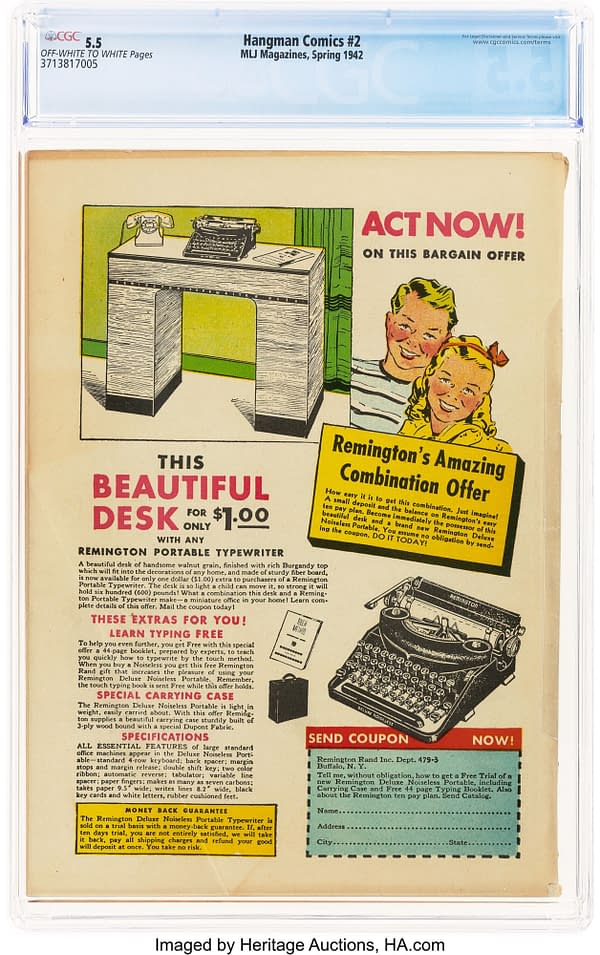
According to Certified Guaranty Company (CGC) census data, Hangman Comics #2 is an exceptionally scarce commodity in the collector market. The registry lists a mere 25 Universal (blue label) copies in existence across all grades. Of those surviving issues, scarcity intensifies significantly at higher quality tiers: only two copies are recorded at a CGC grade of 5.5, with just four known examples sitting at higher grades. This limited survival rate is a direct consequence of the era’s paper drives, wartime recycling efforts, and the ephemeral nature of comic books, which were typically read, discarded, or destroyed by wartime youth.
The upcoming offering at Heritage Auctions—featuring a CGC FN- 5.5 copy complete with off-white to white pages—presents collectors with a rare acquisition opportunity. Because high-grade Golden Age books featuring direct historical references to events like the SS Normandie disaster rarely surface in public sales, pre-auction estimates suggest competitive bidding among specialists focusing on World War II-era propaganda and early MLJ key issues.

Broader Implications and Historical Significance
The preservation and analysis of books like Hangman Comics #2 offer modern audiences a profound window into the psychological landscape of the American home front during 1942. At a moment of profound national peril, the comic book medium functioned simultaneously as escapist entertainment, moral instruction, and psychological processing.
By translating real-world tragedies—such as the capsizing of the Normandie—into the unambiguous struggle between American champions and cartoonish Axis villains, publishers like MLJ helped galvanize public support for the war effort. Concurrently, the stylistic and narrative borrowing between competing publishers like MLJ and DC demonstrates how rapidly creative innovations propagated through the burgeoning industry.
As this scarce issue heads to the auction block in November 2026, it serves as a testament to the enduring historical value of Golden Age comic books. Far from being mere children’s entertainment of a bygone era, these vintage paper artifacts capture the fears, anxieties, and unyielding resilience of a nation fighting a global war—both on the actual battlefields of Europe and the Pacific, and within the colorful, high-stakes panels of newsstand comic books.