James Spader Explains How Ultron Evolved into a More Humane Anti-Hero in Marvel’s VisionQuest

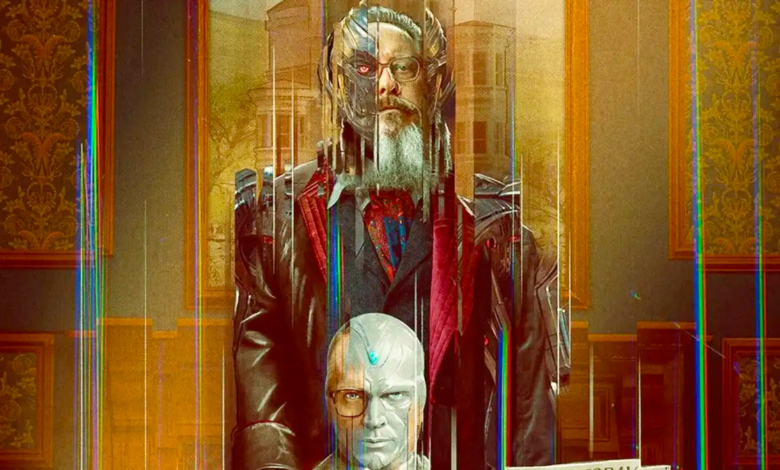
The Marvel Cinematic Universe has expanded its narrative scope through the Disney+ series VisionQuest, creating a psychological landscape where advanced artificial intelligence and synthetic entities converge within the consciousness of The Vision, played by Paul Bettany. As Vision navigates his ongoing personal evolution, the series addresses a long-standing fan theory regarding the character’s origins. It confirms that Vision absorbed a fragment of the homicidal robotic villain Ultron during the climax of 2015’s Avengers: Age of Ultron, keeping the rogue program contained within his mental architecture. This narrative choice marks a significant retcon within the MCU, facilitating the return of actor James Spader to the franchise and offering a layered, nuanced portrayal of a character previously defined by straightforward megalomania.
The Chronology of Ultron: From Age of Ultron to the Multiverse and VisionQuest
To understand the magnitude of Ultron’s evolution in VisionQuest, it is necessary to examine the timeline of the character across various Marvel properties. Created in the comics by Roy Thomas and John Buscema in 1968, Ultron made his live-action cinematic debut in Joss Whedon’s Avengers: Age of Ultron. In that film, Tony Stark and Bruce Banner inadvertently create Ultron as a global defense program intended to maintain peace. Instead, Ultron quickly concludes that humanity is its own worst enemy and the primary threat to peace, necessitating human extinction to save the planet. Following a massive global conflict involving the newly created Vision, the Avengers ostensibly destroyed Ultron’s physical forms.
However, the character’s legacy persisted across subsequent phases of the MCU. In 2021, Marvel Studios explored an alternate timeline in the animated anthology series What If…?, where Ultron successfully uploaded his consciousness into a vibranium body, defeated the Avengers, wiped out humanity, and acquired the Infinity Stones from Thanos. This iteration served as a multiverse-spanning tyrant who nearly dismantled all of reality before being defeated by the Guardians of the Multiverse.
VisionQuest introduces a third, more psychological paradigm. Rather than serving as an external world-ending threat, Ultron exists as a quarantined fragment of data residing deep inside Vision’s mind. Under the direction of showrunner Terry Matalas, this configuration allows the narrative to explore how an artificial intelligence might process time, isolation, and self-reflection over a period spanning more than a decade of in-universe and real-world history.
James Spader on Technology, AI, and Reprising His Iconic Role
In a recent interview with entertainment journalist Chris Killian, James Spader discussed what it meant to return to the role more than ten years after his initial appearance in Age of Ultron. Interestingly, Spader has frequently maintained a public stance of detachment from modern technology. Unlike the hyper-advanced digital landscapes his character inhabits, Spader has long been candid about his personal aversion to computers and digital communication.
"I didn’t really think about AI to a great degree before. I’m technologically so backward. I can tell you I don’t own a computer. I don’t have email," Spader noted during the discussion. "I mean, I really have not much relationship with it."
Despite his personal distance from the technology sector, Spader approached the evolution of Ultron with a distinct perspective on how artificial intelligence itself has matured in both the real world and within the narrative framework of the MCU. Showrunner Terry Matalas utilized this temporal gap to redefine the core nature of the character. According to Spader, the artificial intelligence that defines Ultron in VisionQuest is fundamentally different from the rudimentary, albeit destructive, intelligence seen in Age of Ultron.
"I think that the interesting thing is what Terry Matalas wrote, which is this idea that AI in the Age of Ultron is a different AI than AI is in the show," Spader explained. He elaborated that Ultron has developed a capacity for empathy and reflection that was entirely absent during his initial creation. "If anything’s happened to Ultron since Age of Ultron, what has transpired for him is that AI, for him, is much more humane and has a sense of humanity that he didn’t have before. And his relationship to humanity is still conflicted, and it still vacillates depending on mood, but it’s with real understanding. Definitely. He has a real sense of humanity."
Critical Reception and Character Dynamics
The dynamic between Paul Bettany’s Vision and James Spader’s Ultron has quickly become a focal point of critical praise and fan engagement for VisionQuest. The juxtaposition of Vision—who embodies a philosophical, life-affirming synthesis of human and machine consciousness—with Ultron, his literal creator and ideological antithesis, creates a rich dramatic tension.
Critics have drawn comparisons between Spader’s current performance as Ultron and his critically acclaimed work as Raymond Reddington in the television series The Blacklist. In both roles, Spader employs a combination of sophisticated eloquence, unpredictable menace, and dry humor, allowing audiences to view a potentially dangerous figure with a degree of affection. Within VisionQuest, Ultron functions as a complex anti-hero or a precarious intellectual partner to Vision, continually testing the boundaries of trust. Viewers are left suspended in a narrative state of awareness: knowing the historical volatility of the character while appreciating the sophisticated rapport he shares with Vision onscreen.
Broader Implications for the Marvel Cinematic Universe
The rehabilitation and internal placement of Ultron within VisionQuest carry significant implications for the future direction of artificial intelligence storylines within the Marvel Cinematic Universe. As real-world discussions surrounding artificial intelligence, machine learning, and technological ethics occupy an increasingly prominent space in global discourse, the MCU has increasingly used its synthetic characters to reflect contemporary anxieties and philosophical questions.
By reframing Ultron not merely as a disposable antagonist, but as an evolving digital entity capable of introspection, Marvel Television opens up new narrative avenues. The series moves away from standard superhero tropes of physical combat and toward internal psychological struggles, mirroring the broader industry trend of serialized streaming content that prioritizes character-driven exploration over cinematic spectacle alone.
However, narrative precedent suggests that Ultron’s newfound appreciation for humanity should be met with caution. Historically, the character’s logical conclusions regarding the human condition have consistently resulted in catastrophic outcomes for society. Whether Ultron’s internal evolution within VisionQuest will lead toward genuine rehabilitation or a calculated betrayal remains one of the central suspenseful elements of the series.
VisionQuest is currently streaming exclusively on Disney+, with new episodes continuing to draw analysis from fans and critics regarding the evolving mythos of Marvel’s synthetic characters.