Matt Wagner and Kelley Jones Discuss Their New Graphic Novel Dracula Book IV The Undead Now on Kickstarter

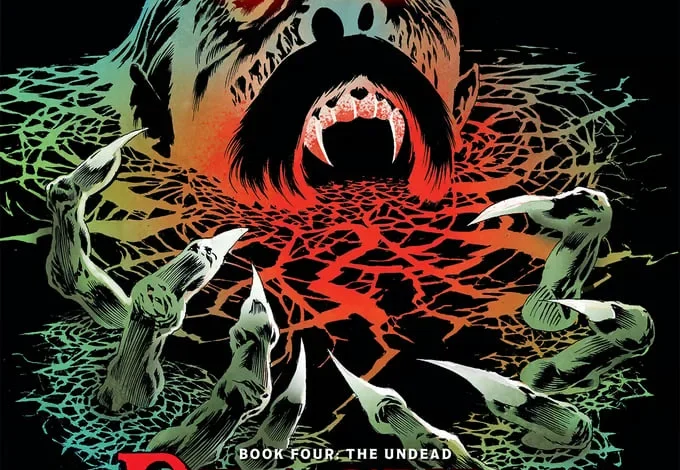
The landscape of gothic horror literature is undergoing a dramatic expansion as veteran comic book creators Matt Wagner and Kelley Jones bring their acclaimed graphic novel series to its terrifying conclusion. Dracula: Book IV—The Undead marks the final chapter of an ambitious four-part reinterpretation of Bram Stoker’s foundational 1897 novel. Following the success of the previous installments—Dracula—Book I: The Impaler, Dracula—Book II: The Brides, and Dracula: Book III—The Count (the latter published by Dark Horse)—the creative team has launched a crowdfunding campaign on Kickstarter for this massive 122-page hardcover finale.
The project reunites the core creative team, including colorist José Villarrubia and letterer Rob Leigh, to deliver what the authors describe as the most dark and uncompromising volume of the entire saga. By charting territory far beyond the final pages of Stoker’s original text, Wagner and Jones have crafted a narrative that challenges conventional assumptions regarding the definitive defeat of literary history’s most iconic vampire lord.
Deconstructing the Masterpiece: Background and Chronology of the Saga
Bram Stoker’s original epistolary novel established the modern template for vampire fiction, tracking a group of British heroes led by Professor Abraham Van Helsing as they hunt the Count across Europe back to his Transylvanian stronghold. However, the novel’s hurried climax has long been a subject of critical analysis and fan debate. Specifically, Van Helsing explicitly details the ritualistic methods required to permanently destroy a vampire—including decapitation and driving a wooden stake through the heart—yet the heroes fail to execute these exact measures during the final confrontation as the sun sets and Dracula’s powers are restored.
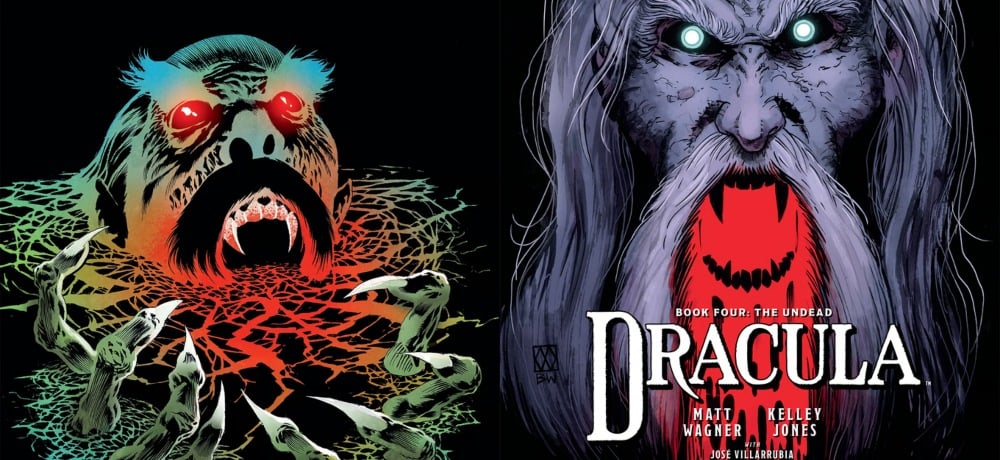
Seizing upon this narrative ambiguity, Wagner and Jones conceptualized a four-part graphic novel epic designed to flesh out the uncharted corners of Stoker’s universe.
- Dracula—Book I: The Impaler: Explored the historical and supernatural origins of Vlad Tepes, establishing the warlord’s transition into the undead curse.
- Dracula—Book II: The Brides: Focused on the harrowing histories and internal dynamics of the vampire lord’s loyal consorts.
- Dracula: Book III—The Count: Examined the insidious infiltration of London and the psychological toll inflicted upon Stoker’s protagonists.
- Dracula: Book IV—The Undead: Ventures beyond the conclusion of the 1897 novel, exploring the apocalyptic morning after the climax and the terrifying awakening of an enraged vampire lord.
This structured progression allowed the creators to maintain rigorous fidelity to Stoker’s established canon while simultaneously constructing a wholly original expansion of the mythos.
Creative Vision and Narrative Implications
The decision to bypass the accepted conclusion of Stoker’s novel provided the creative team with unprecedented narrative freedom. According to writer Matt Wagner, the psychological ramifications of the original story’s events served as a primary thematic anchor for the final volume.
"In the novel, Stoker’s heroes will certainly never forget the events which have transpired, but they basically settle into a happily-ever-after sort of ending," Wagner explained. "To my mind, they must have certainly suffered some far more distinctive form of what we now term PTSD. Exploring how this utter break with their established realities would’ve affected the survivors was a deep well for story in every sense."
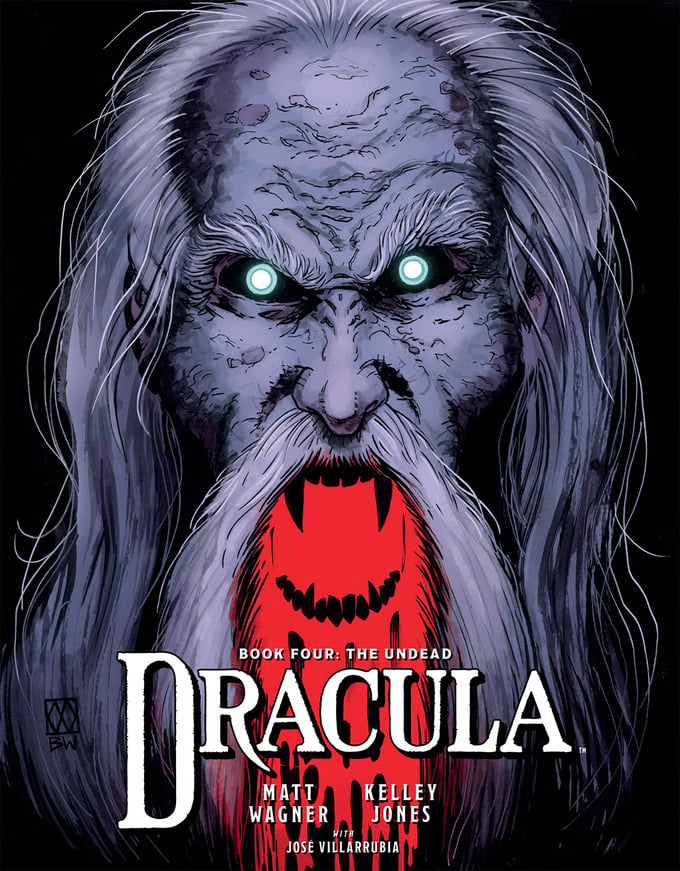
Furthermore, Wagner noted that the humiliation of being defeated by mortal adversaries—whom the ancient vampire views merely as peasants—acts as a catalyst for a resurgence of his historical brutality. Rather than retreating into passivity, an enraged and calculating Dracula brings his centuries-old military cunning to the forefront.
Artist Kelley Jones emphasized that this volume allows the character to shed the standard tropes associated with cinematic vampire adaptations, returning instead to the visceral cruelty of the Wallachian warlord. "The vile things he does have nothing to do with his bloodlust—here is that Wallachian warlord that made his reputation 500 years ago," Jones stated. The artist added that the scale of dread and spectacular violence presented in Book IV required him to elevate his visual compositions beyond anything attempted in the earlier books.
Production Continuity and the Kickstarter Campaign
Maintaining continuity across all four volumes was a priority for the creators. The inclusion of colorist José Villarrubia and letterer Rob Leigh ensured a seamless visual identity from the first page of Book I to the final panel of Book IV. Wagner lauded the team as a "Dream Team," pointing to Villarrubia’s classical approach to palette and lighting and Leigh’s precise typographical placement as foundational to the project’s success.
The crowdfunding initiative for Dracula: Book IV—The Undead follows the precedent set by previous volumes in the series, notably Book I, which secured a position in the Top 20 all-time most successful graphic novel campaigns on Kickstarter. Distributed exclusively through the platform in European-album-sized hardcover editions, the campaign offers backers multiple variants, including covers by Wagner and Jones, as well as a signed and numbered edition strictly limited to 666 copies.
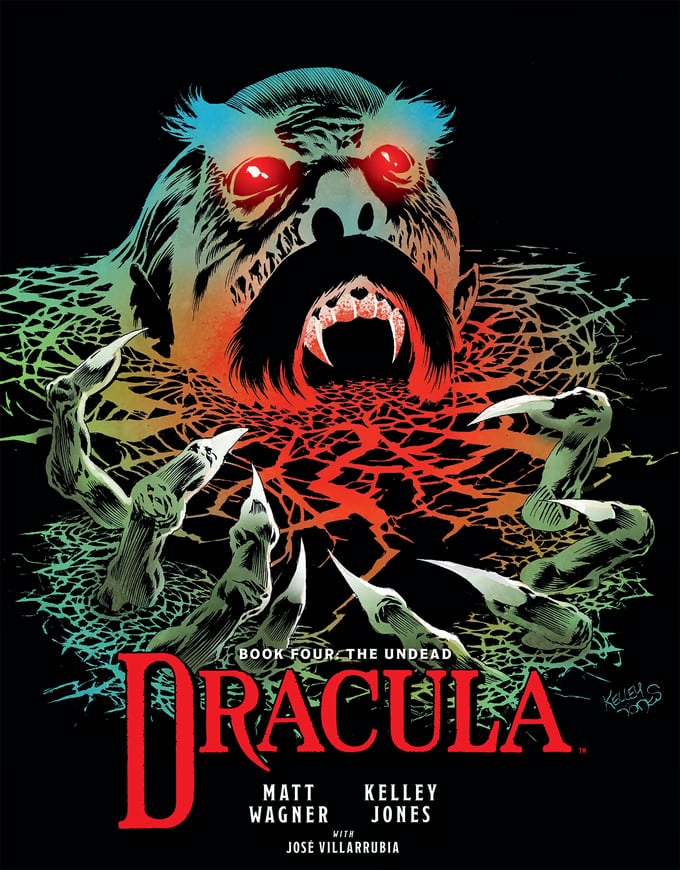
In addition to the core graphic novel, the campaign features curated add-ons designed to evoke the aesthetic of 1970s horror magazines and comic anthologies—a medium that heavily influenced both creators during their formative years. Among these items is a psychedelic black light poster colored by Villarrubia, alongside themed apparel and residual stock from previous campaign tiers.
Broader Impact on the Horror Genre
The conclusion of Wagner and Jones’s Dracula series arrives during a cultural period marked by renewed interest in sophisticated, faithful adaptations of classic gothic literature. By treating Stoker’s text not as a rigid boundary but as a living historical document, the creators have established a benchmark for independent comic publishing adaptations.
The project has garnered praise from literary scholars and diehard horror enthusiasts alike for its ability to honor the Victorian prose style while introducing modern narrative tension and visceral artistry. As the campaign progresses, the industry implications point toward a viable economic model for creator-owned, premium-format hardcover graphic novels funded directly by readership communities.
For the creators, the completion of the saga represents a career milestone. While Wagner continues his long-running work on the Dark Horse Comics epic Grendel: Devil’s Crucible and lays the groundwork for future gothic collaborations with Jones under the Orlok Press banner, Book IV stands as a definitive exploration of undying malice.
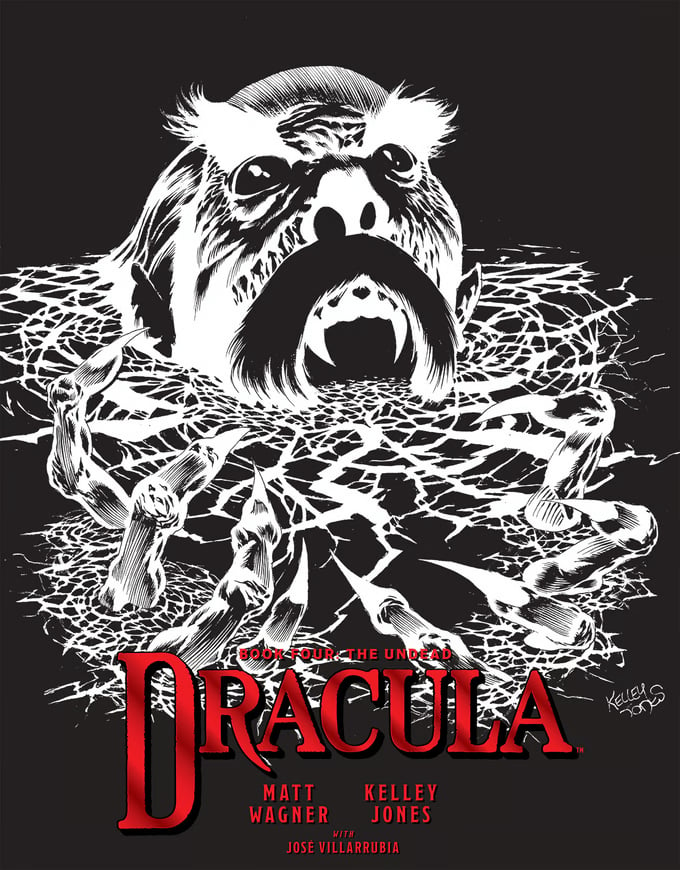
As fans and backers secure their copies of Dracula: Book IV—The Undead, the ultimate implication of Wagner and Jones’s work remains clear: if the heroes of 1897 truly failed to pierce the heart of the beast, then the night belongs entirely to the vampire lord, and his vengeance has only just begun.
Related posts: