Clive Barker Returns to Horror Roots With Library of the Dead After Crushing Kickstarter Goals


More than forty years after redefining the boundaries of macabre literature with the publication of the seminal Books of Blood, legendary horror author and filmmaker Clive Barker has announced his return to the short story format with a massive new publishing initiative titled Library of the Dead. Launched via the crowdfunding platform Kickstarter to bypass the constraints and censorship risks of modern commercial publishing, the campaign shattered its initial financial goals within hours of going live. As of this writing, the project has comfortably surpassed the one million dollar mark, signaling an enduring and voracious appetite among fans for Barker’s unique brand of visceral, transgressive horror.
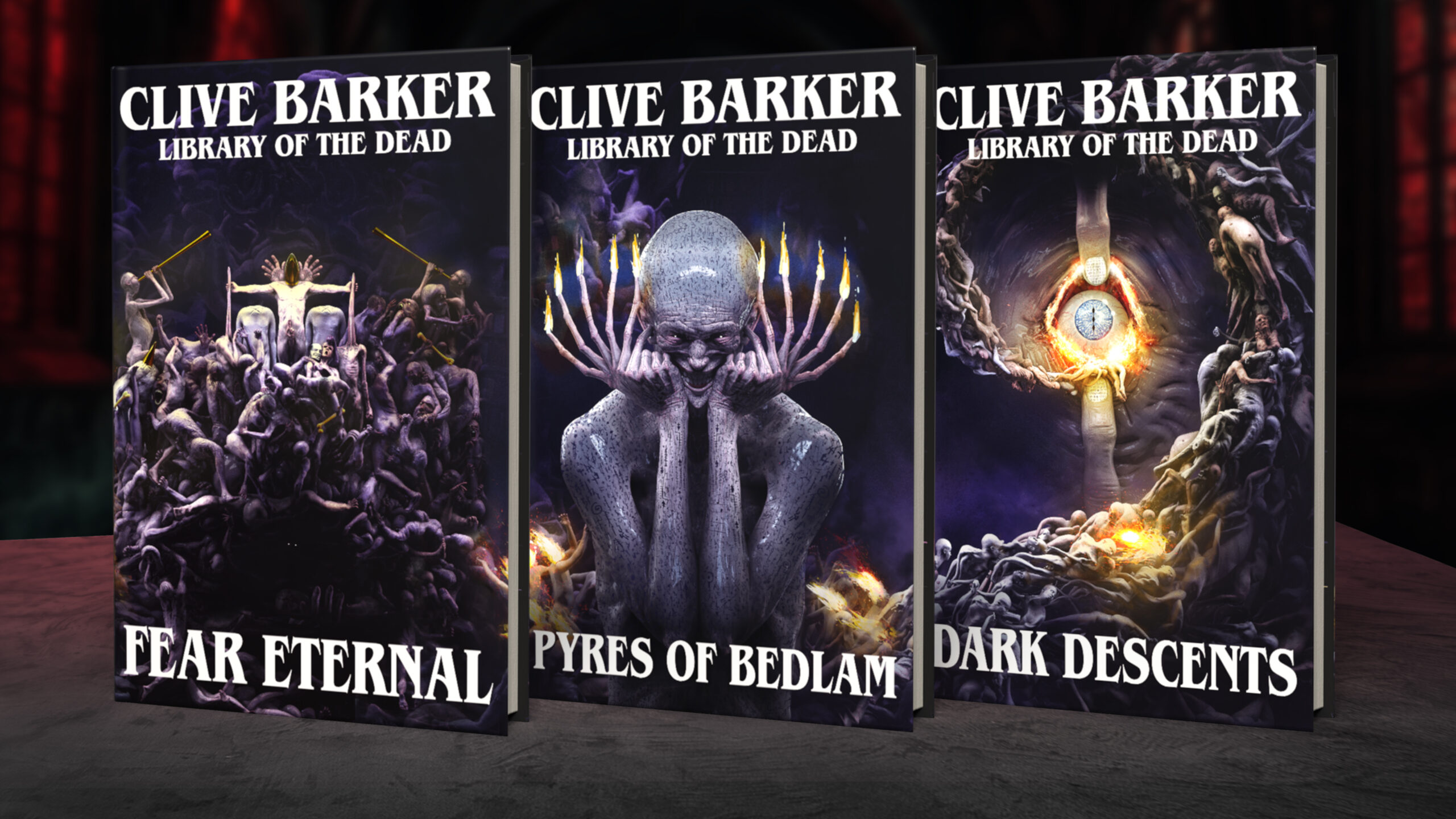
The Library of the Dead initiative is not merely a singular anthology, but rather an expansive multimedia event set to unfold over the coming year. It encompasses three distinct volumes—Fear Eternal, Pyres of Bedlam, and Dark Descents—each blending brand-new short fiction with rare, out-of-print material and poetry. This literary resurrection serves as a spiritual successor to the Books of Blood series, which first introduced readers to iconic figures such as Mahogany from "The Midnight Meat Train," Harry D’Amour from "The Last Illusion," and the Candyman from "The Forbidden." Alongside the new books, the year-long celebration includes a fully remastered edition of the original Books of Blood, newly commissioned fine art prints, and potential immersive audio adaptations.
A Historic Return to Short-Form Horror
Reflecting on his career and the evolution of the genre, Barker recently discussed the stark decline of short story collections in mainstream publishing houses. In an extensive interview with Rue Morgue, the author recalled his early struggles when pitching the original Books of Blood four decades ago. At the time, major publishers routinely dismissed short fiction, arguing that it lacked commercial viability and proved difficult to adapt into lucrative feature films or television series. Despite these industry biases, Barker’s multi-volume collection became a foundational pillar of modern horror, proving that concise narratives could deliver a profound psychological and visceral impact that sprawling novels sometimes struggle to achieve.
Barker noted that while masters of the craft like Stephen King have continued to champion the format, a distinct shortage of short-form horror writing exists among contemporary authors. This trend, he suggests, is largely driven by industry expectations favoring long-form intellectual properties. However, Barker maintains that the short story remains the most effective vehicle for shocking and provoking readers. The new material slated for Library of the Dead features uncompromising, brutal narratives that derive their power precisely from their brevity, refusing to dilute their impact through unnecessary exposition.

Curating the Macabre: Old Rarities and New Masterpieces
The structural composition of Library of the Dead bridges Barker’s storied past with his ongoing creative evolution. Each of the three forthcoming volumes has been meticulously curated to unearth limited-exposure works alongside definitive modern pieces. Among the highlights is "Chiliad," a substantially longer narrative that Barker regards as perhaps the finest short story of his career. By bringing these disparate pieces together under a unified banner, the project offers both longtime collectors and a new generation of readers an opportunity to experience Barker’s literary range.
The commercial success of the Kickstarter campaign has also allowed for an expansion of the physical artifacts accompanying the books. Originally promised at nine new fine art prints for select backer tiers, the soaring financial support has expanded the collection to a dozen unique pieces. These artworks delve into the darkest themes of the new stories, establishing a cohesive visual mythology centered around a new central figure: "The Librarian." Much like Pinhead served as the iconic anchor for The Hellbound Heart, the Librarian functions as a thematic core for Library of the Dead, allowing Barker to explore the character’s profound and unsettling depths across multiple artistic mediums.
Multimedia Aspirations and Immersive Audio Productions
Beyond the printed page, the Library of the Dead initiative opens avenues for transmedia storytelling. Audiobooks have evolved significantly in recent years, transforming from simple voice-read companions into full-scale sonic productions featuring ensemble casts, original musical scores, and cinematic sound design. Barker expressed enthusiastic support for adapting his new collections into immersive auditory experiences, hinting that fans of his earlier works will be particularly surprised by the talent slated to participate in the audio productions.
Furthermore, the mainstream visibility generated by the Kickstarter campaign has already drawn attention from Hollywood film producers. Barker pointed to "World Without Witnesses," a deeply personal, autobiographical story set on the island of Guernsey involving a young man encountering ghosts in his godparents’ estate, as a prime candidate for a feature film adaptation. As inquiries from the film industry increase, the multimedia footprint of Library of the Dead threatens to extend far beyond the literary world.
Defending Artistic Integrity Against Industry Censorship
Barker’s return to self-publishing via Kickstarter also highlights his historical resistance to editorial censorship—a battle he famously fought during the initial publication of Books of Blood. Reflecting on his early interactions with conservative publishing houses, Barker recalled refusing demands to alter passages from stories such as "In the Hills, the Cities," choosing instead to threaten walking away from his debut book deal entirely rather than compromise his artistic vision.
Operating outside the traditional publishing apparatus for Library of the Dead has granted Barker absolute creative freedom, particularly regarding themes of sexuality and the transgressive human condition. In an era where marginalized communities face renewed political scrutiny and censorship, Barker’s work remains unapologetically reflective of his life experiences and worldview. Rather than crafting overt political tracts, he continues to prioritize visceral emotional truth and psychological depth, ensuring that the new stories push boundaries without relying on exploitation or superficial shock value.
Project Timeline and Availability
The crowdfunding campaign for Clive Barker’s Library of the Dead represents a significant shift in how legendary creators can leverage direct-to-consumer platforms to bypass corporate gatekeepers. By maintaining total ownership over the curation, physical manufacturing, and artistic direction of the project, Barker and his team have established a masterclass in independent publishing for legacy authors.
The exclusive Kickstarter campaign for Library of the Dead remains open to backers through Monday, September 7, before closing its doors to finalize production runs for the books, remastered sets, and expanded art prints. As the publishing industry watches closely, the unprecedented financial backing of Barker’s latest venture reaffirms that the master of modern horror retains an fiercely loyal audience eager to follow him back into the shadows.
Related posts: