Night After Night Review: Josh Lobo Delivers a Masterclass in Cinematic Ambiguity at Tubi FrightFest

The psychological thriller and horror landscape has long wrestled with the mechanics of ambiguity. When executed poorly, narrative vagueness can alienate audiences, signaling a fundamental confusion on the part of the filmmakers. When overexplained, it strips the viewing experience of its inherent mystery. However, a select group of cinematic creators manage to expertly pull the strings, forcing viewers to anchor themselves entirely to the unknowing characters on screen in an effort to decipher an unfolding enigma. Director and co-writer Josh Lobo firmly establishes himself within this elite category with his sophomore feature film, Night After Night, which recently celebrated its screening at the United Kingdom’s Tubi FrightFest.
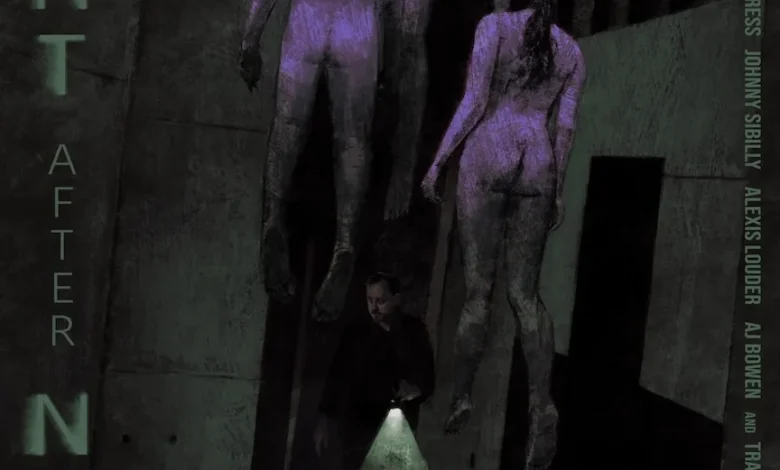
Starring Scott Poythress, Johnny Sibilly, and Alexis Louder, and distributed under Restricted Pictures, Night After Night follows Lobo’s 2019 feature debut, I Trapped the Devil. Across both projects, Lobo has demonstrated a distinct affinity for testing the boundaries between objective truth and subjective fiction. Co-written by Lobo and Rowan Russell, Night After Night eschews conventional linear storytelling in favor of a character-driven structural framework that prioritizes psychological exploration over predictable plot beats.
Narrative Architecture and Character Dynamics
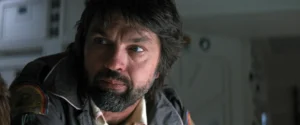
The narrative centers primarily on Andy, played by Scott Poythress—recognized for his work in The Signal, alongside co-star AJ Bowen, who also makes an appearance in this film. Andy serves as the emotional and structural anchor of the movie. Operating as a nocturnal watchman at a private academic institution, Andy leads a routine existence characterized by monotony and isolation. Residing temporarily in a motel, it becomes readily apparent to the viewer that he is a man running away from his past rather than intentionally building toward a future.
Andy’s daily existence follows a rigid, repetitive cycle. His sole social interaction occurs during a brief cigarette break in the institutional atrium with fellow security guard Willis, portrayed by Johnny Sibilly, before they exchange shift duties. Clock in, clock out, and repeat.

The physical setting of the film functions as a deliberate architectural metaphor for the institution it houses. The building appears deceptively open, featuring transparent glass panels designed to project an aura of clarity and visibility. Yet, this structural transparency is revealed to be an illusion. The interior is predominantly dark, fortified, and labyrinthine, obscuring what lies just around each corner. The facility projects an exterior of absolute honesty while actively concealing its true nature.
Adding to the unease, the building’s top floor is undergoing extensive architectural construction. Whenever a security guard ascends to inspect the upper level during their rounds, the aesthetic shifts noticeably into a stark black-and-white visual palette. Before long, strange and unexplained noises emanating from a room at the far end of the upper hallway capture the attention of both Andy and Willis. What begins as an isolated auditory anomaly soon escalates into a nightly occurrence, drawing the guards deeper into an escalating spiral of investigation and psychological distress.
Thematic Exploration and Genre Subversion
While elements of the narrative align with the traditions of body horror, Night After Night transcends simple genre classification by focusing heavily on the characters’ subjective interpretations of these bizarre encounters. The phenomenon that Willis and Andy ultimately uncover is fundamentally natural—indeed, among the most primal occurrences imaginable. However, the men’s respective reactions to these discoveries throw their contrasting life experiences, psychological vulnerabilities, and immediate needs into sharp relief.
Faced with the unknown, both characters resort to primal instincts: trust, lust, violence, and fear manifest instantaneously without deliberation or strategic thought. Through this dynamic, Lobo constructs a dark mirror reflecting human nature, challenging audiences to confront behaviors that may prove uncomfortable to witness.
Crucially, Night After Night refuses to market itself as a high-octane thriller saturated with gratuitous violence and explicit encounters at every turn. Director of photography and production design choices align to ensure the film drips questions at a steady pace rather than supplying neat, easily digestible answers. The narrative prioritizes the atmospheric processing of events over a tidy resolution, ensuring a resonant and contemplative viewing journey.

Performances and Technical Execution
At the center of the film’s success is Scott Poythress’s subdued yet compelling performance. Portraying a man deeply fractured by his history without sliding into caricature, Poythress endows Andy with a nuanced sense of quiet desperation and resilience. He does not play Andy as a beacon of hope, but rather as an authentic individual navigating complex emotional terrain.
Complementing the on-screen tension is the musical score composed by Simon Waskow, whose previous work includes acclaimed contributions to Luz and Cuckoo. Waskow’s atmospheric compositions propel the narrative forward, establishing an underlying rhythm that amplifies the psychological weight of the characters’ isolation.
Festival Reception and Broader Implications
As independent horror continues to explore psychological intimacy over traditional jump-scare mechanics, films like Night After Night highlight a growing appetite for ambiguity-driven storytelling. Screened at Tubi FrightFest—one of the United Kingdom’s premier genre film festivals—the picture has drawn attention from critics and genre aficionados alike for its refusal to pander to commercial expectations of resolution.
By prioritizing atmosphere, character-driven tension, and thematic resonance, Josh Lobo’s second feature cements his status as a distinctive voice in contemporary genre cinema. Night After Night stands as an uncompromising exploration of human nature, challenging audiences to examine how past trauma and primal instinct shape our response to the unexplained.