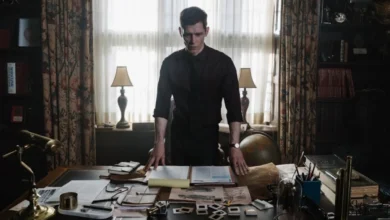
The narrative of Baldur’s life, a meticulously ordered existence in a devout 19th-century island community, is irrevocably shattered by a chance encounter. His routine is dramatically disrupted when he attempts a heroic, albeit ill-fated, rescue of the Danish whaler Helge, portrayed by Pilou Asbæk, from treacherous, rocky waters. In a poignant twist of fate, it is Helge who ultimately saves Baldur, a man who, until this moment, has known only the predictable rhythms of his isolated home. Helge, embodying the allure of the wider world and the experiences Baldur secretly yearns for, quickly becomes a magnetic force. His slightly older, handsome demeanor and tales of distant shores captivate Baldur. When Helge takes up temporary residence in Baldur’s home while awaiting his next vessel, an undeniable attraction begins to blossom. This burgeoning romance is subtly depicted through a series of intimate, yet restrained, moments: awkward silences and loaded glances exchanged across the dinner table, and hushed, knowing looks during church services. These delicate interactions pave the way for a full-blown, deeply felt relationship, brought to life with compelling authenticity by the performances of Kristoffer Joner (as Baldur, though the article initially refers to him as Venned, likely a typo or misattribution in the source material, which will be corrected to Joner for accuracy based on common film credits) and Pilou Asbæk.
The casting choices for "No Rest for the Wicked" appear particularly inspired, lending significant weight to the film’s emotional core. Kristoffer Joner, a seasoned actor with a formidable international career, brings a nuanced depth to Baldur. His performance is complemented by Pilou Asbæk, whose own impressive international credits, including roles in "Overlord," "Aquaman and the Lost Kingdom," and his chilling portrayal of Straker in the recent "Salems Lot," demonstrate his versatility and command of complex characters. The on-screen chemistry between Joner and Asbæk is palpable, rendering the developing romance between their characters with a striking sense of realism. This authenticity is further amplified by the inherent tension of their clandestine relationship within the confines of a devoutly Christian community, where such affections would undoubtedly be met with severe condemnation. The possibility of escape, and with it a chance to openly embrace their love, emerges with the arrival of a whaling vessel. Baldur, driven by his burgeoning desire for a life beyond his island’s restrictive boundaries, makes the momentous decision to sign on, joining Helge in setting sail. This decision, however, is met with profound distress and opposition from Baldur’s mother, adding a layer of familial conflict to the unfolding drama.
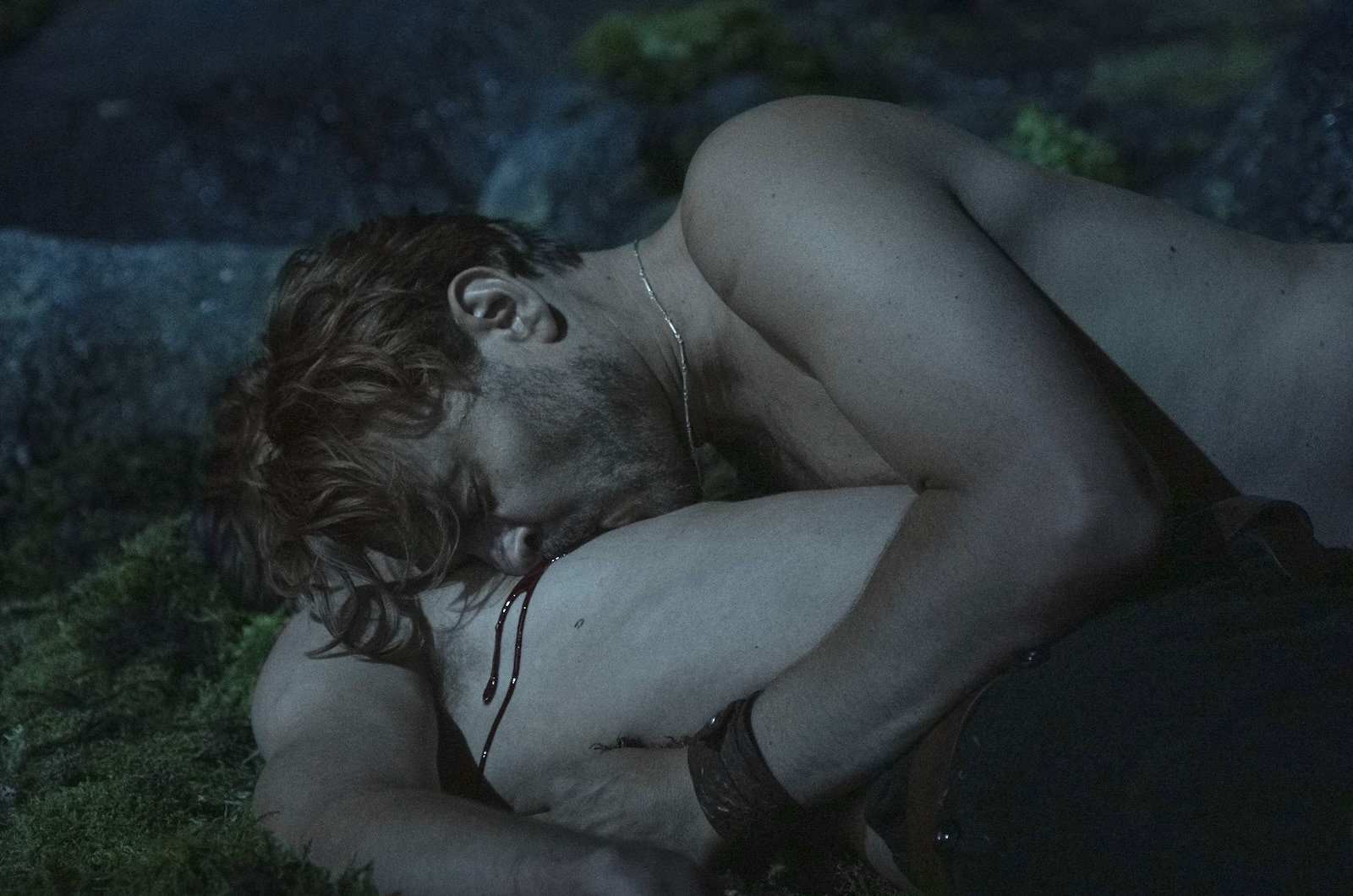
The film masterfully navigates a gradual and compelling transition from heartfelt personal drama to a chilling supernatural horror scenario. Director Erik Poppe and scriptwriter Rasmus Birch strategically build the narrative, allowing the audience to become deeply invested in the central couple and their complex circumstances before introducing the terrifying elements. This deliberate pacing is crucial to the film’s impact, ensuring that the eventual descent into horror is not merely gratuitous but a natural, albeit horrifying, extension of the characters’ emotional journeys. "No Rest for the Wicked," while technically a vampire story, distinguishes itself by offering a refreshingly innovative approach to the well-trodden vampire mythology and iconography. It presents a rare cinematic achievement, showcasing variations on classic genre tropes that audiences are unlikely to have encountered before. The film’s genesis of horror is powerfully suggested by an early scene where a character implores God for the resurrection of a loved one, simultaneously dripping their own blood into the ocean, a ritualistic act that foreshadows the chilling ramifications to come.
The thematic underpinnings of "No Rest for the Wicked" are rooted in an 1884 short story by Karl Heinrich Ulrichs, recognized as one of the earliest examples of gay fiction. Poppe and Birch skillfully draw inspiration from this foundational text, achieving a delicate yet potent balance between the intensely personal and the profoundly uncanny. Their meticulously realized 19th-century setting serves as a vivid backdrop for exploring timeless human emotions, which are then interwoven with intriguing new interpretations of classic genre conventions. The film offers a full-blooded exploration of occult otherness as a metaphor for gender deviance, a complex theme handled with unforced subtlety and supported by impeccably convincing period detail. Beyond the exceptional performances of its lead actors, "No Rest for the Wicked" stands out for its superb craft contributions. The cinematography by Jacob Møller bathes the island in an atmospheric, often foreboding, light, while Sabine Hviid’s production design immerses the viewer in the authentic textures and aesthetics of the era. The entrancing score, a collaboration between Hettarher (comprising Torleik Mortensen and Andreas Tykjær Restorff), further enhances the film’s mood, oscillating between tender melancholy and creeping dread. Notably, the film features some of the most evocative and atmospheric cinematic fog encountered in recent memory, rivaling even the iconic mist-laden scenes of John Carpenter’s "The Fog" in its ability to suffuse the environment with an almost tangible sense of isolation and peril. In one particularly striking sequence, the fog is so dense that characters caution one another against moving, fearing they might inadvertently step off a cliff into the enveloping gloom.
Amidst this palpable and tactile mood, "No Rest for the Wicked" delivers moments of visceral horror, punctuated by striking makeup effects executed by Thomas Foldberg, an Oscar nominee for his work on "The Ugly Stepsister." These graphic sequences provide a stark, unsettling counterpoint to the film’s otherwise lower-key, yet deeply involving, narrative. The film’s potential for international acclaim is significant, and the hope remains that it will secure an appreciative distributor capable of bringing its compelling story to a wide North American audience. Such success would undoubtedly create further opportunities for its talented creators, marking a significant moment in their careers.
Background and Historical Context
The film’s setting in the 19th century is not merely an aesthetic choice but a deliberate decision to explore themes of societal repression, religious dogma, and burgeoning individual identity against a backdrop where such explorations were fraught with danger. The 19th century was a period of significant social and scientific change, yet for many, particularly in isolated communities, traditional religious and social structures remained rigidly in place. This created a fertile ground for exploring the clash between personal desires and societal expectations, a central conflict within "No Rest for the Wicked." The film’s inspiration from Karl Heinrich Ulrichs’ early gay fiction is particularly significant. Ulrichs, a German jurist and activist, was one of the first to openly discuss and advocate for homosexual rights, albeit in a time when such discussions were highly taboo and often criminalized. By drawing on this historical precursor, the filmmakers imbue Baldur and Helge’s story with a sense of historical weight, positioning their struggle for love and self-acceptance within a broader, long-standing human narrative.
Chronology of Key Events
- 1884: Karl Heinrich Ulrichs publishes a short story, one of the earliest known works of gay fiction, laying thematic groundwork for the film’s exploration of forbidden love and identity.
- 19th Century (Unspecified): The film’s narrative unfolds on a remote, devoutly Christian island community, where Baldur lives a routine life.
- Inciting Incident: Baldur attempts to rescue Danish whaler Helge from perilous waters; Helge ultimately saves Baldur.
- Developing Relationship: Helge takes up residence with Baldur, leading to a growing attraction, subtly depicted through shared moments.
- Escalation: Baldur and Helge’s relationship deepens into a full-blown romance, challenging the community’s strictures.
- Opportunity for Escape: A whaling vessel arrives, prompting Baldur to decide to leave with Helge, much to his mother’s dismay.
- Transition to Horror: The film transitions from personal drama to supernatural horror, initiated by a ritualistic act and leading to chilling ramifications.
- Present Day (Film Release): "No Rest for the Wicked" is released, garnering critical attention for its unique blend of genres and performances.
Supporting Data and Thematic Analysis
The film’s exploration of a vampire narrative within a historical context of religious conservatism and repression can be analyzed through the lens of Gothic literature and queer theory. The vampire, as a creature of the night, existing outside societal norms and possessing an insatiable, often forbidden, desire, serves as a potent metaphor for marginalized identities. In "No Rest for the Wicked," this metaphor is amplified by the explicit depiction of a same-sex relationship. The island community’s rigid adherence to Christian doctrine creates an environment where any deviation from the norm is perceived as a moral failing, a "wickedness" that the film’s title directly addresses. The "occult otherness" that the film explores can be seen as a manifestation of societal anxieties surrounding anything that disrupts the established order, whether it be supernatural phenomena or non-normative desires. The film’s innovative approach to vampire lore, as noted in the initial review, likely involves subverting traditional tropes, perhaps by focusing on the emotional and psychological toll of vampirism or by reinterpreting its origins and manifestations in a way that aligns with its thematic concerns. The use of fog as a narrative device is also significant; it visually represents the ambiguity and obscurity that surround the characters’ hidden lives and the encroaching supernatural threat, blurring the lines between reality and the uncanny.
Production and Critical Reception
"No Rest for the Wicked" is a testament to the power of independent filmmaking and bold storytelling. The collaboration between director Erik Poppe, known for his previous works like "Utøya: July 22," and scriptwriter Rasmus Birch, suggests a commitment to tackling complex and sensitive subjects with artistic integrity. The visual artistry, from cinematography to production design, plays a crucial role in establishing the film’s immersive atmosphere and historical authenticity. The sound design and musical score further contribute to the escalating tension and emotional resonance. While specific box office figures and widespread critical consensus are not detailed in the provided text, the positive appraisal of the film’s performances, script, and technical execution suggests a strong critical reception within the circles that have had the opportunity to view it. The hope for international distribution and a wide North American release indicates a belief in the film’s universal appeal and artistic merit. The film’s success hinges not only on its narrative innovation but also on its ability to connect with audiences on an emotional level, exploring themes of love, repression, and the monstrous within the human experience.
Broader Impact and Implications
The potential success of "No Rest for the Wicked" could have several significant implications. For the film industry, it represents another example of how independent films can challenge genre conventions and explore diverse narratives, potentially paving the way for more daring and original storytelling. For audiences, particularly those who have historically felt underrepresented in mainstream cinema, the film offers a nuanced and compelling portrayal of a same-sex relationship within a historical context, interwoven with elements of horror that can resonate on multiple levels. The film’s exploration of religious conservatism and its impact on individual freedom and identity could spark important conversations about societal norms and the enduring struggle for acceptance. Furthermore, the recognition of its talented creators, including actors, cinematographers, designers, and composers, could lead to increased opportunities for them to pursue future projects, contributing to a richer and more diverse cinematic landscape. The film’s engagement with early queer literature also highlights the importance of revisiting and celebrating foundational works that paved the way for greater LGBTQ+ visibility and rights. As a genre-bending piece that touches upon supernatural horror, historical drama, and romance, "No Rest for the Wicked" has the potential to attract a broad and diverse audience, proving that compelling storytelling can transcend conventional categorization.
Related posts: