Epic Games Embraces Generative AI Across Fortnite, UEFN, and Unreal Engine 6 Development Despite Industry Backlash

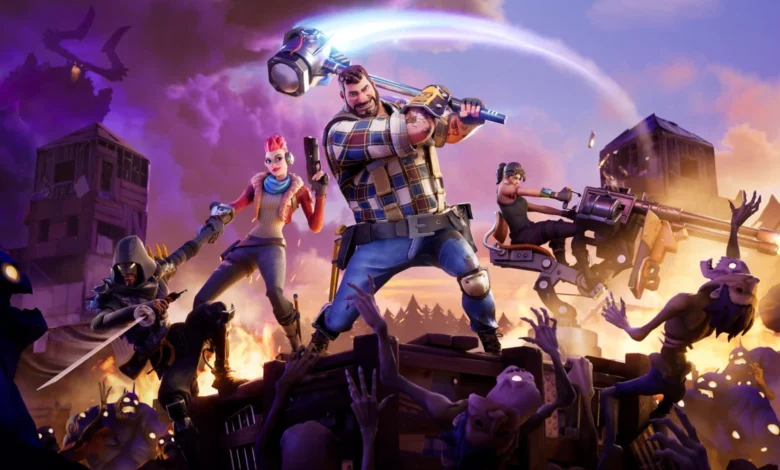
The video game industry stands at a profound technological crossroads as Epic Games officially confirms its aggressive transition toward generative artificial intelligence. In a recent disclosure, executive leadership at Epic Games outlined a comprehensive strategy to integrate AI tools deeply into the production pipelines of its most prominent properties, including Fortnite, the Unreal Editor for Fortnite (UEFN), and the highly anticipated next-generation game development suite, Unreal Engine 6. This bold move signals a decisive shift in how multi-billion-dollar game studios conceptualize software engineering, code generation, and content creation, bypassing traditional development methods in favor of automated assistance and iterative machine-learning processes.
The announcement, detailed by Marcus Wassmer, Epic Games’ Executive Vice President of Development, sheds light on an internal operational philosophy that prioritizes velocity and competitive edge over cautious industry norms. According to Wassmer, the core engineering teams at Epic are no longer authoring the majority of foundational code by hand. Instead, developers are utilizing advanced AI models to generate code bases and architectural features, a practice colloquially and professionally referred to as "vibe-coding." Rather than attempting to generate an entire game engine in a single, unguided automated prompt—a method colloquially known as "one-shotting"—Epic’s engineers act as directors, guiding generative models through continuous iteration to ensure that output meets stringent performance, memory allocation, and scalability thresholds.
The Evolution of Epic’s AI Integration Timeline
The escalation of generative AI integration at Epic Games has accelerated significantly over recent years, transforming from experimental trials into core operational infrastructure.
In the early stages of generative AI adoption within the gaming sector, most major publishers approached the technology with extreme hesitation. Concerns surrounding intellectual property infringement, copyright infringement, and unpredictable code outputs relegated AI to supplementary roles, such as placeholder asset creation or rudimentary text generation. However, Epic Games began accelerating its internal deployment of generative models as tools matured from simple text-to-image systems into sophisticated code-completion and logic-generation frameworks.
By mid-decade, the company’s internal pipelines began shifting rapidly. Developers working on high-profile corporate projects—including an unreleased, troubled Disney and Marvel collaborative shooter—were reportedly directed to leverage generative AI models to shoulder heavier workloads in both code architecture and asset production. This strategy was further highlighted when Epic openly admitted to utilizing generative AI to build and optimize the latest iteration of the Epic Games Launcher. Company representatives defended the unorthodox move by bluntly stating that traditional programming remains notoriously difficult and labor-intensive, positioning AI assistance as a necessary evolution to maintain a competitive advantage against rival digital distribution platforms like Valve’s Steam.
The culmination of this timeline arrives with the current development cycle for Unreal Engine 6. Wassmer confirmed that nearly all active development streams tied to Fortnite, UEFN, and the upcoming UE6 framework are heavily reliant on AI-assisted tools designed to compress development cycles, reduce human error, and deploy software patches at an unprecedented scale.
Executive Rationale and the "Move Fast" Philosophy
Navigating the turbulent waters of public perception, Epic Games leadership has made it clear that institutional anxiety surrounding artificial intelligence will not slow down their operational roadmaps. Addressing the broader ethical, economic, and environmental concerns that plague the generative AI sector, Wassmer adopted a pragmatic and unapologetic stance.
"We are more concerned about the risks of moving too slowly than we are about AI skepticism," Wassmer stated during recent interviews. He emphasized that the company views a halfway or hesitant approach to artificial intelligence as fundamentally unviable in today’s hyper-competitive software landscape. By being transparent about its internal workflows, Epic hopes to establish standardized best practices for other studios navigating the same technological transition.

This aggressive posture has inevitably triggered friction with industry peers. A notable ideological clash recently occurred between Epic CEO Tim Sweeney and Valve Corporation regarding regulatory transparency policies on digital storefronts. Valve instituted a policy requiring developers distributing titles on Steam to explicitly disclose their use of generative artificial intelligence assets and code. Sweeney openly criticized this mandate on social media, arguing that forcing developers to issue public disclosures effectively invites targeted harassment from organized ideological factions within gaming communities. Sweeney’s defense of unburdened AI implementation underscores Epic’s corporate alignment with rapid, unobstructed technological integration.
Industry-Wide Implications and Stakeholder Concerns
While Epic Games champions its AI-first methodology as a triumph of efficiency, the broader gaming ecosystem continues to grapple with the complex repercussions of widespread generative AI adoption. The industry-wide debate encompasses several critical dimensions, ranging from workforce stability to environmental sustainability.
Workforce Dynamics and Job Security
One of the most immediate concerns raised by labor unions, industry guilds, and independent developers is the impact of generative AI on human employment. As studios like Epic embrace AI to handle heavy lifting in code generation and asset pipelines, fears persist regarding structural downsizing. Programmers, technical artists, and quality assurance personnel worry that automation will diminish the value of specialized human labor, leading to fewer entry-level positions and increased precarity for mid-career professionals.
Intellectual Property and Plagiarism Risks
The legal and ethical landscape surrounding machine learning models remains fraught with uncertainty. Independent creators and major publishers alike have voiced acute anxieties regarding data scraping, copyright infringement, and the potential for AI models to inadvertently replicate proprietary code or artistic styles without authorization or compensation. While major corporations possess the legal resources to navigate these murky waters, smaller independent studios often find themselves vulnerable to copycat products generated rapidly via automated pipelines.
Environmental Footprint
Beyond the socio-economic impacts on human labor, the infrastructural demands of running large-scale generative AI models present significant environmental challenges. Training and operating sophisticated machine-learning models require immense computational power, resulting in high electricity consumption and elevated carbon emissions. International regulatory bodies and environmental organizations have repeatedly flagged the tech industry’s surging power usage, raising questions about the long-term sustainability of scaling AI across every tier of software development.
Fact-Based Analysis: Efficiency Versus Quality
From a technical perspective, Epic Games’ strategy represents a calculated gamble on the future of software engineering. By utilizing AI to automate repetitive coding tasks and streamline the foundational layers of Unreal Engine 6, Epic aims to lower the barrier to entry for game creators while drastically reducing production budgets and timelines. Modern video games have ballooned in budget and development duration, frequently requiring five to eight years and hundreds of millions of dollars to complete. If generative tools can successfully mitigate development bottlenecks, the economic model of AAA game development could undergo a permanent structural shift.
However, technical analysts caution that over-reliance on AI-generated code introduces unique vulnerabilities. Automated code generation can occasionally produce subtle logic errors, security vulnerabilities, or architectural bloat that requires intensive human auditing to resolve. Furthermore, maintaining strict memory, performance, and scalability envelopes—crucial metrics for an industry-standard engine like Unreal—demands rigorous oversight that automated systems cannot always guarantee autonomously.
Conclusion
As Epic Games presses forward with its comprehensive AI integration strategy, the company remains firmly planted at the vanguard of the video game industry’s technological evolution. By embedding generative tools into Fortnite, UEFN, and the foundational architecture of Unreal Engine 6, Epic is actively redefining the boundaries of software development. Whether this high-speed, AI-driven approach will be universally adopted across the broader gaming landscape or face severe structural pushback remains one of the defining questions of the modern digital era. For now, Epic Games has signaled that hesitation is the ultimate risk, choosing to accelerate into an automated future regardless of the controversy left in its wake.
Related posts: