Star Trek Strange New Worlds Season 4 Finale Review: A Temporal Masterpiece of Character and Cosmic Scale

The fourth season of Star Trek: Strange New Worlds concluded on Thursday, September 24, 2026, with a high-stakes, time-bending episode that serves as both a culmination of the season’s character arcs and a sophisticated homage to the franchise’s storied history. Written by executive producers Henry Alonso Myers and Robbie Thompson and directed by Chris Fisher, the finale—titled by the production team as a thematic nod to TNG’s “All Good Things”—delivers a narrative that balances complex science-fiction concepts with the intimate, emotional stakes that have come to define the series.

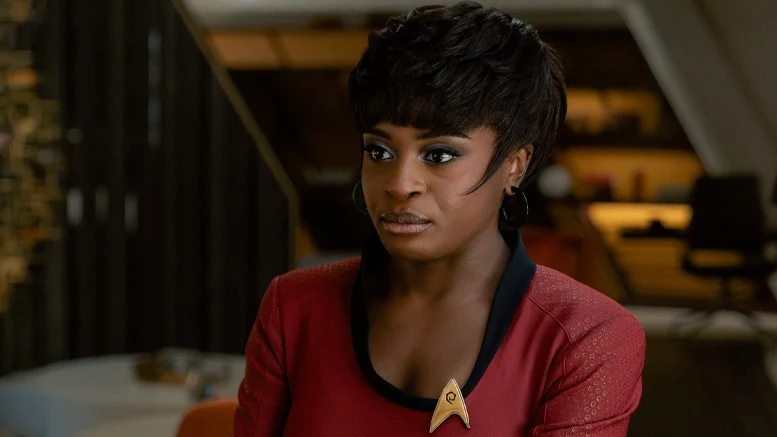
The episode centers on a scientific investigation into a white hole, a theoretical cosmic phenomenon representing the temporal inverse of a black hole. When the USS Enterprise, under the command of Captain Christopher Pike, approaches the anomaly, the crew encounters unexpected gravitational distortions. During this mission, Lieutenant Nyota Uhura experiences a harrowing temporal displacement, hearing communications from the future and phasing through reality. Her subsequent efforts to reconcile these fragmented timelines form the backbone of the episode, eventually leading to a collaborative effort between her present-day self and a future version of herself—a version of Uhura who serves under Captain James T. Kirk and shares a romantic history with Chief Engineer Montgomery “Scotty” Scott.
A Chronology of Temporal Disruption
The narrative structure of the finale relies on a bifurcated timeline, requiring the audience to track two distinct versions of the Enterprise crew. The primary conflict arises when an attempt to study a black hole in the future results in a catastrophic mission failure, leading to the death of Scotty and the reassignment of Lieutenant Erica Ortegas. Present-day Uhura, after receiving cryptic, music-based signals from her future counterpart, realizes that the white hole and the black hole are linked by a singular, anomalous event: the birth of a cosmic entity, referred to by the crew as a “space baby.”

The chronology of the episode is marked by the following key developments:
- Initial Contact: The USS Enterprise investigates a white hole. Uhura experiences sensory input from a future timeline, triggering a shift in her temporal perception.
- The Divergent Timeline: A parallel investigation into a black hole results in a shuttle explosion, claiming the life of Scotty and creating a reality where the Enterprise crew is fundamentally altered.
- The Temporal Bridge: Through the coordination of both Uhuras, the two crews utilize a dilithium-based quantum device to synchronize the two anomalies.
- The Midwife Protocol: The crew deciphers the broadcasted musical signals as a warning from non-linear entities—the “midwives”—who are facilitating the birth of a space-borne lifeform.
- Restoration: Both versions of the crew successfully deploy drones to assist in the birth, effectively stabilizing the space-time continuum and restoring the timeline to its original state.
Scientific and Narrative Context
The episode draws upon established Star Trek lore while introducing new concepts. The utilization of a “white hole” is a rare occurrence in the franchise, though it has been previously explored in non-canon literature and theoretical physics discussions within the show’s writers’ room. The inclusion of the "midwife" entities mirrors the recurring trope of highly advanced, non-corporeal, or extra-dimensional beings—reminiscent of the Bajoran Prophets or the Q Continuum—who operate outside the traditional constraints of linear time.

The production design team subtly distinguished the two iterations of the Enterprise through lighting and set decoration, signaling the shift between the Pike-led mission and the Kirk-led future. This visual storytelling allowed the cast, specifically Celia Rose Gooding, to demonstrate range. Gooding’s performance, portraying two versions of Uhura with varying levels of experience and emotional baggage, has been highlighted by critics as a career-defining turn. The use of poker as a recurring motif helped delineate the cultural differences between the command styles of Pike and Kirk, grounding the high-concept sci-fi in recognizable social rituals.
Analysis of Character Arcs and Franchise Legacy
The finale serves as a bridge between the era of Strange New Worlds and the eventual timeline of The Original Series (TOS). The decision to place Uhura at the center of the finale, rather than Captain Pike, marks a significant departure from previous season structures. By allowing Uhura to lead the investigation and negotiate with the cosmic entities, the show validates her character’s growth from a cadet to a seasoned communications officer.

The romantic subplot between Uhura and Scotty, while brief, provides the necessary emotional catalyst for the episode’s climax. By framing the survival of the timeline as a mission to save a loved one, the script elevates the stakes beyond mere scientific curiosity. Furthermore, the episode maintains continuity by respecting established character trajectories. For example, Christine Chapel’s arc is carefully positioned toward her future relationship with Dr. Roger Korby, while M’Benga’s activities align with his future service on Vulcan.
The inclusion of James T. Kirk, portrayed by Paul Wesley, is handled with restraint. By having both captains—Pike and Kirk—independently deduce the temporal interference, the show reinforces the competence of both leaders. The scene in which Captain Pike confides in future Uhura acts as a poignant reminder of his own foreknowledge regarding his tragic fate, adding a layer of melancholy to his optimistic leadership.

Broader Implications for the Star Trek Universe
The success of this finale lies in its ability to conclude the season without the need for a traditional cliffhanger. Given that the show has been renewed for a final six-episode run, the narrative autonomy displayed in this episode provides a blueprint for the series’ conclusion. It demonstrates that the writers are capable of wrapping up complex story threads while maintaining the sense of wonder that defines the franchise.
From a production standpoint, the episode stands out for its high-fidelity visual effects and the score by Nami Melumad. Melumad’s composition, which weaves together themes from TOS and the Kelvin-timeline films, provides a cohesive musical identity that bridges the gap between disparate eras of Star Trek. The episode also serves as a masterclass in “fan service” that avoids the trap of excessive nostalgia, opting instead to incorporate deep-cut references—such as the appearance of a Skorr, a species originating from The Animated Series—in a way that feels organic to the story.

Official Stance and Future Outlook
While Paramount has not released a formal statement detailing the specific internal metrics of the season finale, the creative team has indicated that the “Time Travel” arc was designed to test the limits of the ship’s crew. Producers have hinted that the forthcoming final season will focus on the maturation of these characters as they prepare for the roles they are destined to fill in the mid-23rd century.
The episode confirms that while the timeline can be altered, the core essence of the Starfleet family remains a constant. The closing monologue, emphasizing that the value of one’s life is defined by the people they choose to surround themselves with, serves as a thematic bookend to the series’ explorations of duty and identity. As the production moves into its final phase, the events of the season four finale solidify the show’s reputation as a balanced, high-concept, and emotionally resonant entry in the Star Trek canon.

In summary, the Strange New Worlds season four finale successfully synthesizes the high-stakes action of modern television with the character-driven philosophy of classic science fiction. By grounding its grand, temporal ambitions in the personal evolution of its lead, the episode secures its place as one of the most successful narratives in the series’ history, setting a high bar for the final chapter to come.