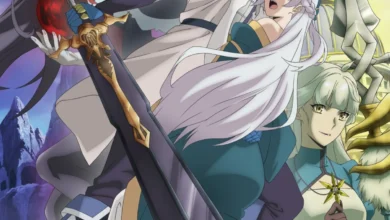
The landscape of Japanese web-novel adaptations continues to expand as manga artist Higure Sakino officially prepares for the wide release of their latest project. On September 28, the manga adaptation of Akane Yuzuki’s light novel series, Elina Sky wa Machigaenai ~Saikyo Majo no Yarinaoshi Kofuku-tan~ (Elina Sky Will Not Make Mistakes Anymore ~The Strongest Witch’s Story of Starting Over and Finding Happiness~), will officially debut on Takeshobo’s digital platform, Take Comic. This release marks a significant milestone for the series, which has steadily gained traction within the competitive Shōsetsuka ni Narō ecosystem since its inception.
Origin and Narrative Foundation
The original source material, penned by Akane Yuzuki, first appeared on the Shōsetsuka ni Narō website—a renowned hub for amateur and professional web novel serialization—in February 2025. The narrative follows Elendira Knightley, a powerful and feared witch characterized by her history of extreme malevolence. Despite her dark reputation, a singular act of mercy—saving a child from the brink of death—catches the attention of a divine entity. Recognizing a latent spark of goodness, the goddess grants Elendira a second chance.
Following a century of cycles in the afterlife, the protagonist is reincarnated as Elina Sky, the daughter of a Count. Eschewing her former life of destruction, Elina commits to a path of altruism. To facilitate this transformation, she establishes a jack-of-all-trades business, utilizing her immense magical prowess and past experiences to solve the problems of those around her. The thematic core of the story focuses on redemption, the burden of past sins, and the transformative power of a second chance, tropes that have seen significant popularity in the "villainess" and "reincarnation" subgenres of contemporary Japanese light novels.
Chronology of Development
The transition from web novel to serialized manga has been a carefully paced process. The project was officially announced by Higure Sakino via their X (formerly Twitter) account on September 21, 2026. However, the editorial team behind the adaptation opted for a staggered rollout strategy to gauge audience interest and build momentum.
- February 2025: Akane Yuzuki launches the original web novel on Shōsetsuka ni Narō.
- August 5, 2026: The first chapter of the manga adaptation receives an early digital release.
- September 5, 2026: The second chapter is released digitally as part of the promotional lead-up.
- September 16, 2026: Yuzuki updates the web novel with the latest installment, maintaining synergy between the source and the adaptation.
- September 28, 2026: The full serialization on Takeshobo’s Take Comic website commences.
This "early access" model, often employed by digital manga platforms in Japan, serves to cultivate a dedicated reader base before the official, broad-scale launch. By providing two chapters prior to the platform debut, Sakino and the editorial staff at Takeshobo have effectively lowered the barrier to entry for new readers.
The Creative Force: Higure Sakino
The adaptation is helmed by Higure Sakino, a creator whose profile has been on a steady ascent within the manga industry. Prior to the Elina Sky project, Sakino made waves with the creation of Emma and the Eyes that Bid Farewell (Ishikuzu no Emma to Sayonara no Hitomi). That series, which launched on the popular platform GANMA! in December 2025, received critical attention for its atmospheric storytelling and character design.
The success of Emma and the Eyes that Bid Farewell has reached international markets, signaling Sakino’s growing influence. In August 2026, it was announced that the California-based publisher Crossed Hearts, which recently launched its specialized "Studio Hearts" imprint, acquired the license for the series. The first volume is slated for a North American release in February 2027. This international expansion underscores the growing trend of Japanese digital manga being rapidly translated and localized for Western audiences, bridging the gap between niche web-based publications and global distribution.
Industry Context and Market Implications
The serialization of Elina Sky highlights a broader trend within the Japanese publishing industry: the symbiotic relationship between web novels and manga adaptations. Platforms like Shōsetsuka ni Narō act as a "proof-of-concept" laboratory for new intellectual properties. When a story demonstrates consistent reader engagement—measured by page views, bookmark counts, and reader feedback—it becomes a prime candidate for professional publishing houses like Takeshobo to adapt into manga or light novel print formats.

Data from the Japanese publishing sector suggests that "isekai" (reincarnation/otherworld) and redemption-themed stories continue to dominate the digital manga charts. By casting the protagonist as a former villain seeking redemption, the Elina Sky series taps into a highly successful archetype. This narrative structure allows for a dual perspective: the audience gets the thrill of high-stakes magical combat associated with the protagonist’s past, contrasted against the heartwarming, slice-of-life elements of her new career as a problem solver.
Analysis of the "Reincarnation" Subgenre
The decision to adapt this specific novel reflects the current market demand for character-driven redemption arcs. Unlike earlier iterations of the isekai genre, which often focused on power fantasies and rapid escalation, contemporary stories like Elina Sky lean heavily into the emotional reconciliation of the protagonist.
Industry analysts observe that this shift in focus toward "rehabilitation" and community-building narratives allows for longer-term serialization potential. By establishing a business that interacts with various members of society, the creator provides a natural framework for episodic storytelling, which is ideal for the monthly or bi-weekly chapter format of digital manga platforms.
Official Response and Expectations
While no formal statements from the editorial staff at Takeshobo have been released, the marketing strategy surrounding the launch indicates high expectations. By leveraging the existing fan base of Yuzuki’s web novel and utilizing Sakino’s established reputation from the GANMA! series, the publisher is positioning Elina Sky as a flagship title for their digital growth strategy.
The digital release of the first two chapters has already generated positive discourse on social media platforms, with fans praising the character design of the reincarnated Elina. The integration of high-fantasy elements with the structured, task-oriented nature of the protagonist’s business has been identified by early readers as a key hook.
Looking Ahead
As of September 22, 2026, the anticipation for the September 28 launch remains high. For readers, the primary interest lies in how closely Sakino will adhere to the web novel’s plot versus how much creative liberty will be taken in the manga’s pacing.
Furthermore, the involvement of international publishers like Crossed Hearts in the broader manga ecosystem suggests that if Elina Sky performs well domestically in Japan, it is a strong candidate for future licensing in English-speaking markets. The manga industry’s current trajectory suggests that digital-first adaptations are no longer secondary, but are rather the primary engines for discovering the next major hit. With Higure Sakino’s established visual style and Akane Yuzuki’s proven narrative foundation, the adaptation is poised to make a significant impact on both the Take Comic platform and the wider digital manga landscape in the coming months.
As the project moves into its full serialization phase, the focus will shift toward the long-term viability of the adaptation and whether it can maintain the narrative quality established in the initial web novel chapters. Given the current velocity of the industry, Elina Sky represents a quintessential example of how modern Japanese manga is produced, distributed, and eventually globalized in the digital age.