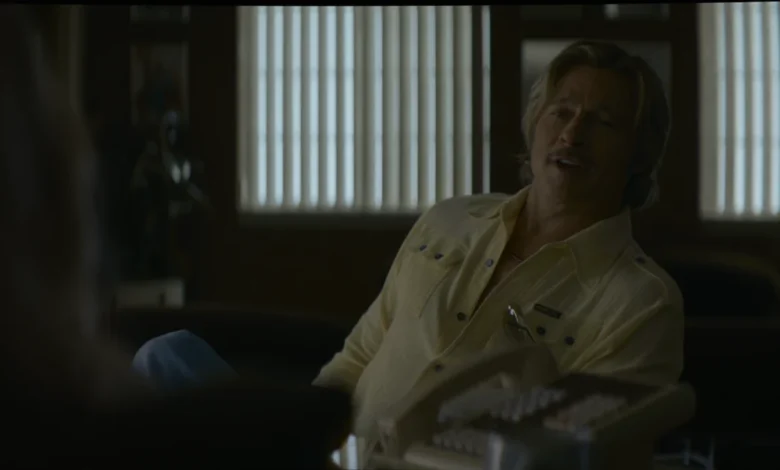
Netflix’s upcoming feature The Further Mis-Adventures of Cliff Booth has drawn significant industry attention following the release of its official trailer, with critics and film historians immediately drawing thematic and structural comparisons to the historical evolution of the Alien franchise. Directed by David Fincher and written by Quentin Tarantino, the upcoming Netflix release features Brad Pitt reprising his Academy Award-winning role as the charismatic, unflappable Hollywood stuntman and war veteran Cliff Booth. Set against the backdrop of 1970s Los Angeles, the project marks a unique Hollywood collaboration: an original narrative conceptualized by Tarantino, yet executed through the distinct, precision-driven lens of a completely different filmmaker.
While the source material stems from 2019’s critically acclaimed Once Upon a Time in Hollywood, the cinematic lineage invoked by this directorial handoff mirrors the trajectory of Twentieth Century Fox’s iconic sci-fi property. Much like the Alien franchise—which famously enlisted Ridley Scott, James Cameron, David Fincher, and Jean-Pierre Jeunet to helm successive entries with vastly different stylistic signatures—The Further Mis-Adventures of Cliff Booth establishes a cinematic precedent where distinct auteurs inherit established characters and reshape them to fit their individual visual and thematic vocabularies.
The Genesis of a Cinematic Universe and the Tarantino-Fincher Dynamic
To understand the weight of this creative pairing, one must examine the origins of Quentin Tarantino’s ninth feature film, Once Upon a Time in Hollywood. Released by Sony Pictures in July 2019, the feature-length love letter to the motion picture industry grossed over $377 million worldwide and earned ten Academy Award nominations, securing a Best Supporting Actor win for Brad Pitt. The narrative tracked the parallel lives of fading television Western star Rick Dalton (Leonardo DiCaprio) and his loyal, stoic stunt double and confidant Cliff Booth (Brad Pitt) throughout the tumultuous year of 1969. The film culminated in a revisionist historical climax where Booth and Dalton thwart members of the Manson Family, thereby sparing the life of actress Sharon Tate (Margot Robbie).
Despite the film’s massive commercial success and cultural footprint, a direct sequel was rarely considered an immediate priority by Tarantino, who has long maintained a self-imposed retirement limit of ten feature films. Rather than stepping behind the camera to direct a follow-up himself, Tarantino opted to pen the screenplay and hand the directorial reins to David Fincher. This choice introduces a fascinating stylistic friction. Tarantino’s filmmaking is historically characterized by maximalism, extensive pop-culture pastiche, non-linear storytelling, and sprawling, stylized dialogue. Fincher, conversely, is celebrated for his clinical precision, muted color palettes, meticulous framing, and psychological gravity—a stark aesthetic divergence that promises to redefine the boundaries of the character study.
Auteur Succession: The Alien Franchise Blueprint
The decision to entrust an established character to a radically different director directly mirrors the historical evolution of the Alien franchise, a cinematic blueprint for auteur-driven sequels. Ridley Scott’s original 1979 masterpiece established the property as a claustrophobic, atmospheric "haunted house in space," anchored by a single, terrifying Xenomorph and the relentless survival instincts of Ellen Ripley (Sigourney Weaver).
When James Cameron assumed control for the 1986 sequel, Aliens, he discarded the gothic horror template in favor of high-octane military science fiction, pitting a platoon of Colonial Marines against a swarm of alien creatures. The franchise subsequently endured a notoriously turbulent production history under David Fincher, whose 1992 directorial debut, Alien 3, was plagued by studio interference, script rewrites, and budgetary constraints. Despite Fincher’s well-documented public disownment of the final theatrical cut due to studio-mandated changes, the resulting film remains a bleak, punishing, and visually striking meditation on mortality and institutional corruption. Later entries continued this tradition of stylistic reinvention, moving from Jean-Pierre Jeunet’s darkly comedic and manic Alien: Resurrection in 1997 to Ridley Scott’s philosophical prequels Prometheus (2012) and Alien: Covenant (2017).
By applying this anthology-style succession model to a grounded, period-piece drama, The Further Mis-Adventures of Cliff Booth tests whether a non-sci-fi cinematic universe can sustain itself through the rotation of distinct directorial visions. Industry analysts note that if the film succeeds critically and commercially, it could establish a new framework for prestige franchise expansion, wherein character continuity is maintained through the script while thematic evolution is driven entirely by successive directors.
Chronology and Setting: 1977 Hollywood on the Brink of Change
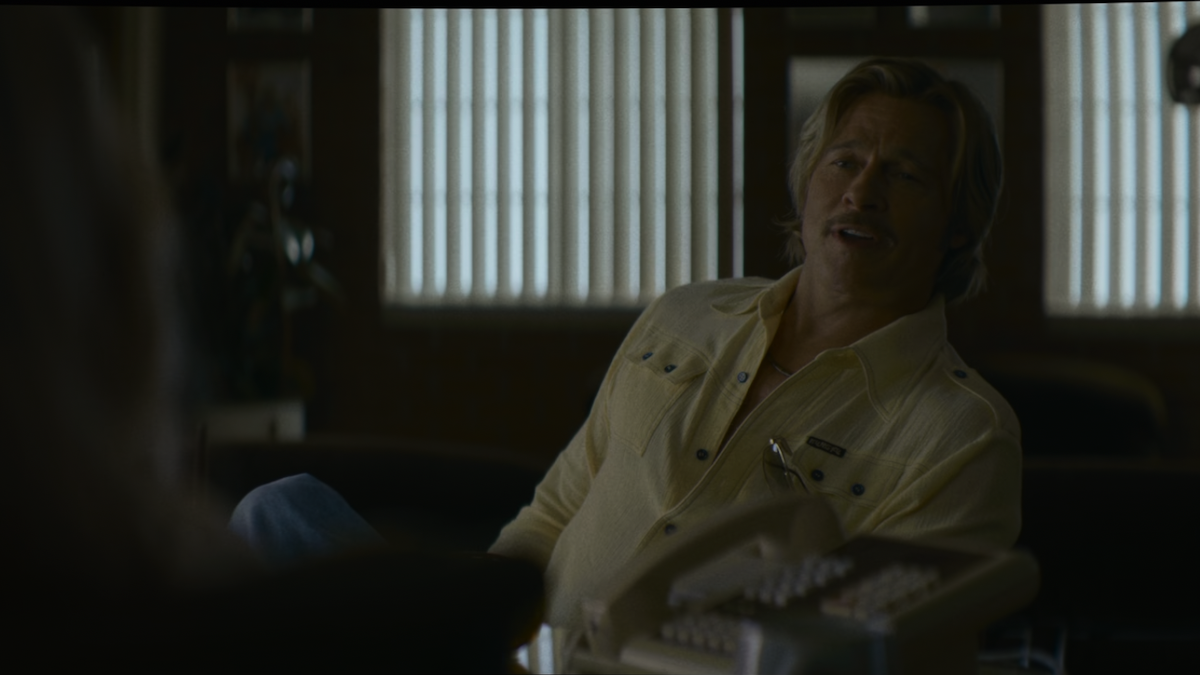
Narratively, The Further Mis-Adventures of Cliff Booth advances the timeline of its protagonist into the late 1970s, specifically centering the plot in the year 1977. Film historians and pop-culture analysts point out the profound historical significance of this specific temporal setting. By 1977, the New Hollywood movement—characterized by auteur-driven, gritty dramas championed by directors like Martin Scorsese, Francis Ford Coppola, and Robert Altman—was facing an abrupt paradigm shift. The release of George Lucas’s Star Wars in May 1977 permanently transformed the economic and industrial landscape of the American film industry, ushering in the era of the high-concept blockbuster, merchandising dominance, and multiplex culture.
Within this shifting industrial landscape, a character like Cliff Booth—an aging, analog stuntman rooted in the practical, blue-collar traditions of classic Hollywood action—faces an uncertain professional reality. While the promotional trailer refrains from introducing explicit science-fiction elements, preferring instead to highlight Booth swaggering through the sun-drenched, asphalt-and-neon topography of 1970s Los Angeles, the subtext of institutional obsolescence is unmistakable. Booth must navigate an industry rapidly pivoting away from the smoky studio backlots and stunt-coordination yards of his youth toward futuristic soundstages and special effects houses.
Production, Distribution, and Industrial Implications
The distribution model for The Further Mis-Adventures of Cliff Booth represents another significant milestone in modern Hollywood economics. Financed and distributed globally by Netflix, the film nevertheless secured a prominent theatrical release strategy, including a designated IMAX run slated to begin on November 25, 2026. This hybrid rollout reflects the streaming giant’s ongoing efforts to capture both the prestige awards season demographic and the lucrative premium large-format theatrical market, a strategy previously utilized for high-profile auteur projects such as Fincher’s Mank and The Killer.
Behind the camera, Fincher has reunited with several key collaborators from his previous cinematic endeavors, ensuring the visual consistency that defines his filmography. Cinematographer Erik Messerschmidt, who won an Academy Award for his work on Fincher’s Mank, utilizes digital capture techniques designed to emulate the tactile grain and desaturated warmth of late-1970s cinematic stocks. Meanwhile, the production design team has reconstructed historical Los Angeles landmarks of the era, meticulously recreating the Sunset Strip, classic Hollywood watering holes, and the subterranean world of studio soundstages.
Critical Reception and Audience Expectations
Early reactions to the promotional campaign have generated substantial debate among film critics regarding the viability of expanding Tarantino’s cinematic universes without the filmmaker at the helm. While purists initially questioned whether a Cliff Booth story could function without Tarantino’s idiosyncratic narrative pacing and dialogue rhythms, the involvement of Fincher has largely assuaged those concerns, elevating the project from a routine IP extension to an anticipated collision of two major cinematic voices.
Box office analysts project strong interest driven by the enduring global appeal of Brad Pitt and the established brand equity of Once Upon a Time in Hollywood, though the film’s ultimate cultural impact will likely hinge on its ability to transcend nostalgic fan service. By treating 1970s Hollywood with the same meticulous, analytical detachment that Fincher previously applied to historical investigations in Zodiac and Mindhunter, The Further Mis-Adventures of Cliff Booth promises to offer a darker, more psychologically grounded perspective on a character previously defined by effortless cinematic cool.
As the industry prepares for the film’s upcoming IMAX debut on November 25, 2026, attention remains focused on whether this experiment in auteur handoff can successfully redefine how contemporary Hollywood manages its intellectual property. If the creative gamble pays off, the further adventures of Cliff Booth may well establish a sustainable blueprint for cinematic storytelling—proving that iconic characters can endure across decades, provided they are willing to step into unfamiliar and challenging creative terrain.