The discourse surrounding the cinematic landscape often reflects anxieties regarding shifting cultural tastes, censorship, and commercial viability. Recently, filmmaker Zack Snyder ignited a fresh debate in the entertainment industry by suggesting that modern cinema suffers from a distinct lack of physical intimacy. In an interview with Variety, Snyder argued that the absence of sex in contemporary films represents a fundamental disconnect between studios and audiences. He proposed an ambitious, albeit idiosyncratic, remedy: an NC-17 erotic thriller released in IMAX to destigmatize explicit content and revive the genre.
While Snyder’s diagnosis touches on a widely observed phenomenon—the sanitization of mainstream blockbusters—his prescription overlooks both historical precedent and contemporary box office realities. An examination of film history, current audience metrics, and the evolution of cinematic censorship reveals that modern moviegoers are not inherently averse to sexuality on screen. Instead, the historical ebb and flow of erotic content demonstrates that audiences respond primarily to narrative execution rather than formats or ratings alone.
The Historical Evolution of Cinema and Sexuality
To understand the modern debate, one must examine how sexuality has interacted with commercial filmmaking since its inception. Contrary to the perception of early cinema as a pristine medium, motion pictures have engaged with themes of nudity and physical desire for well over a century. Early cinematic novelties, such as Georges Méliès’s 1897 short After the Ball and Eugène Pirou and Albert Kirchner’s 1899 film Le Coucher de la Mariée, incorporated bathing and intimate elements. As the medium developed into a structured studio system, prominent silent-era stars like Theda Bara cultivated personas explicitly built on sultry appeal, while Cecil B. DeMille’s 1932 biblical epic The Sign of the Cross featured elaborate sequences resembling Roman orgies, sparking controversy while drawing massive box office returns.
The commercial success of provocative films in the early 1930s alarmed studio executives, who feared mounting pressure from external municipal censors and federal legislators. To preempt government intervention, the major studios established the Motion Picture Production Code, commonly known as the Hays Code, in 1930, with strict enforcement beginning in 1934. The Code explicitly banned "any licentious or suggestive nudity—in fact or in silhouette," alongside profanity and graphic violence, for all films distributed nationwide.
Despite these stringent limitations, filmmakers operating under the Hays Code mastered the art of subtext. Movies produced between 1934 and 1954 frequently achieved high levels of sexual tension through clever dialogue, expressive cinematography, and nuanced performances. A prime example is Howard Hawks’s 1944 film To Have and Have Not, in which Lauren Bacall instructs Humphrey Bogart on how to whistle: "You just put your lips together and blow." This single exchange generated palpable erotic energy without violating any regulatory codes, proving that suggestion often resonates more powerfully with audiences than explicit depiction.
The Post-Code Renaissance and the Blockbuster Era
The dismantling of the Hays Code in the late 1950s—accelerated by the rise of the MPAA rating system in 1968—ushered in an era of unprecedented on-screen frankness. Art-house imports, international cinema, and the American New Hollywood movement embraced explicit content. Notable milestones included the X-rated drama Midnight Cowboy (1969), which achieved mainstream critical acclaim and won the Academy Award for Best Picture, and the cultural phenomenon surrounding the 1972 adult feature Deep Throat.
This trajectory culminated in the late 1980s and early 1990s, a period widely recognized as a commercial renaissance for the erotic thriller. Films such as Fatal Attraction (1987), Basic Instinct (1992), and Indecent Proposal (1993) dominated box office charts and drove cultural discourse. During this era, sexuality permeated multiple genres; mainstream action stars and romantic leads regularly appeared in intimate scenes.
However, historical context indicates that these erotic thrillers existed within a diverse cinematic ecosystem. Even at the height of the genre’s popularity, audiences simultaneously supported family-oriented animation like Disney’s The Little Mermaid (1989) and The Lion King (1994), mainstream comedies like Home Alone (1990), and historical dramas like Apollo 13 (1995). Erotic thrillers were never the sole pillar of the industry; rather, they represented one profitable niche among many.
Correlation, Causation, and the Superhero Era
Snyder’s assertion that modern cinema has inexplicably abandoned sex contains a kernel of truth regarding the 2000s and 2010s, a period characterized by a notable decline in explicit intimacy within mainstream releases. However, attributing this decline entirely to a shift in public appetite confuses correlation with causation.
During the mid-2000s and throughout the 2010s, major studio slates became heavily consolidated around intellectual properties, most notably the cinematic universes anchored by superhero franchises. Because these properties were designed to capture the widest possible demographic—spanning international markets with varying censorship standards and domestic family audiences—studios systematically minimized sexual content. The disappearance of sex from mainstream cinema was primarily a byproduct of the monocultural dominance of the four-quadrant superhero blockbuster, rather than a grassroots consumer rejection of adult themes.
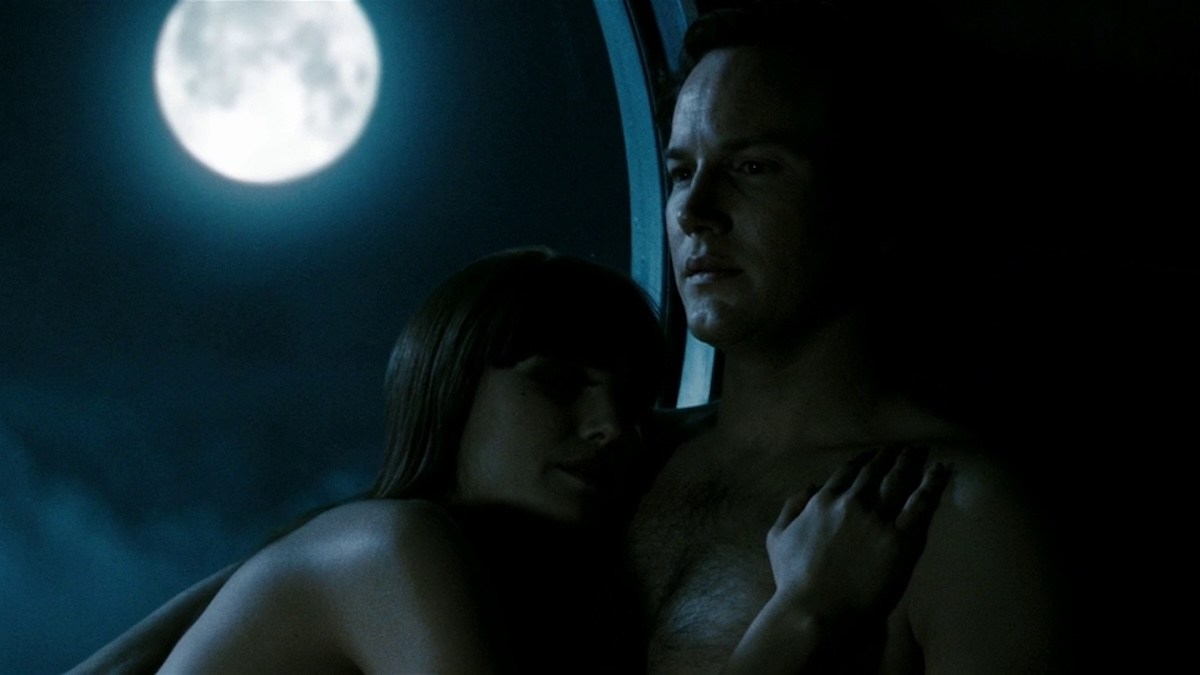
Snyder himself contributed significantly to this era through his work on comic book adaptations. Notably, his films incorporated intimate sequences—such as the musical montage in Watchmen or the bathtub sequence in Batman v. Superman: Dawn of Justice—that received mixed critical responses. Rather than sparking a broader appreciation for eroticism, these sequences highlighted the challenges of integrating mature physical intimacy into superhero narratives without alienating the core demographic.
Contemporary Evidence and Audience Reception
Recent box office and critical trends challenge the premise that modern audiences reject sexuality in film. Over the past several years, critically acclaimed and commercially successful releases have routinely integrated explicit themes and nudity without suffering at the box office.
For instance, A24’s Anora, a feature focusing on the life of a sex worker, achieved widespread critical acclaim and major awards recognition. Similarly, Christopher Nolan’s Oppenheimer featured prominent nude scenes involving Cillian Murphy and Florence Pugh, contributing to a global box office gross exceeding $950 million. Furthermore, contemporary releases spanning various genres continue to explore human sexuality, demonstrating that audiences remain receptive to mature content when it serves a cohesive narrative purpose.
This data suggests that moviegoers do not necessarily demand a standalone "erotic thriller" genre revival in specialized formats like IMAX. Instead, modern audiences evaluate films based on overall quality, narrative coherence, and artistic integrity. When sexuality is utilized as an authentic component of character development rather than a gimmick, viewers respond favorably.
Industry Implications and Technical Realities
Snyder’s proposal for an IMAX-released, NC-17 erotic thriller also underestimates the logistical and technical realities of contemporary film distribution. The IMAX format requires specialized capture methods and substantial capital investment. To date, very few feature films have been shot entirely using IMAX cameras, a feat achieved primarily through the collaboration of master auteurs like Christopher Nolan on epics requiring vast visual scales.
The economic model of IMAX screens prioritizes high-earning, visual-effects-heavy blockbusters that can command premium ticket prices across global markets. An NC-17 rating inherently restricts a film’s theatrical footprint by barring underage audiences and limiting advertising avenues, making it financially unviable for large-scale premium formats. Studio executives balancing rising production budgets and post-pandemic box office volatility are unlikely to greenlight high-budget adult thrillers for premium exhibition spaces, regardless of theoretical consumer demand.
Ultimately, while the desire for diverse genres and mature storytelling remains valid among film enthusiasts, the return of sensuality to the cinema does not require artificial industry interventions or high-concept formatting experiments. As history demonstrates, sex and romance have always naturally woven themselves into the cinematic tapestry whenever filmmakers produce compelling, well-crafted stories. Audiences will continue to embrace passion on screen, provided it is delivered through quality filmmaking rather than calculated shock value.