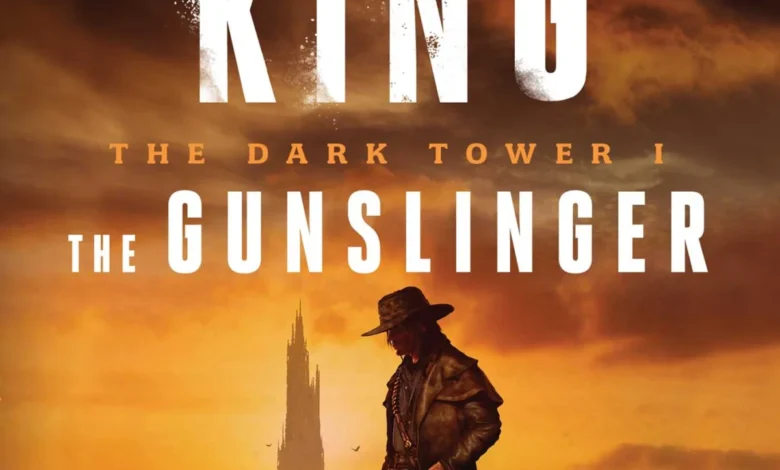
The quest to bring Stephen King’s magnum opus, The Dark Tower, to the screen remains a primary objective for filmmaker Mike Flanagan. Four years after the initial announcement that the visionary behind The Haunting of Hill House and Doctor Sleep had secured the rights to the expansive literary series, concerns regarding the project’s status have persisted due to the industry’s notoriously volatile development cycles. In a recent interview with Entertainment Weekly, Flanagan provided a definitive update, confirming that the adaptation is "very much on the table" and remains a cornerstone of his current creative slate.
This confirmation arrives as fans of the Gunslinger saga have grown increasingly anxious, particularly following a series of high-profile streaming cancellations and shifts in studio priorities across the entertainment landscape. For followers of King’s bibliography, the partnership between Flanagan and the material is viewed as the most promising attempt to date, given Flanagan’s established track record of translating King’s complex, character-driven prose into nuanced visual narratives.
A History of Development Challenges
The path to adapting The Dark Tower has been fraught with structural obstacles for over two decades. The series, which spans eight core novels and a collection of short stories, is notoriously difficult to translate due to its genre-bending nature. It blends elements of high fantasy, western, science fiction, and horror, requiring a level of world-building that is both expensive and narratively demanding.
The most notable attempt to bring the series to the screen occurred in 2017 with a feature film directed by Nikolaj Arcel and starring Idris Elba as Roland Deschain and Matthew McConaughey as the Man in Black. Despite the star power, the production suffered from a truncated runtime and a narrative structure that failed to capture the intricate mythology of the books, resulting in poor critical reception and a disappointing box office performance. Before the 2017 effort, high-profile filmmakers including J.J. Abrams and Ron Howard had both attempted to mount versions of the story, with Howard’s ambitious plan to create a multi-platform experience involving both films and television series ultimately collapsing under budgetary and logistical weight.
Flanagan’s Strategic Vision
Mike Flanagan’s approach differs significantly from previous iterations. Rather than attempting to compress the expansive mythology into a two-hour film, Flanagan has publicly discussed a multi-season television model. This structure is widely considered the only viable path to capturing the scope of Mid-World and the psychological evolution of Roland Deschain.
During his recent discussion with Entertainment Weekly, Flanagan addressed the potential for cross-pollination between his various King-related projects. Specifically, when asked whether his upcoming television adaptation of Carrie might serve as a narrative entry point or "backdoor pilot" for The Dark Tower, Flanagan did not rule out the possibility.
"I may have asked this very question several times along the way," Flanagan noted. "It’s certainly not impossible. There are characters in the Tower canon who would serve a very specific purpose in that story, who audiences wouldn’t necessarily recognize because they only exist in certain books." This statement suggests that Flanagan is viewing his broader portfolio of King adaptations through a cohesive lens, potentially building a shared universe that mirrors the interconnected nature of King’s literary multiverse.
The Significance of the Tower in King’s Canon
The Dark Tower is widely regarded as the "keystone" of the Stephen King universe. It acts as the nexus point where characters and events from his other works, such as The Stand, Salem’s Lot, and Hearts in Atlantis, intersect. For decades, King enthusiasts have mapped these connections, noting how the villainous Randall Flagg—known by many names throughout the author’s bibliography—serves as the primary antagonist across multiple timelines.
By maintaining control over the rights, Flanagan is positioned to treat the material with the reverence it demands. His previous work on Doctor Sleep, which successfully reconciled the narrative differences between King’s original novel and Stanley Kubrick’s 1980 film adaptation of The Shining, serves as evidence of his ability to navigate the complex expectations of the King fandom.

Industry Implications and Production Timelines
The confirmation that the project is still in development suggests that despite the lack of recent casting news or production start dates, the intellectual property remains a high-value asset for the production entity involved. In the current economic climate of streaming services, where content is frequently pruned for tax incentives, the continued existence of a project in active development is a significant indicator of its perceived viability.
Historically, major epic fantasy adaptations have required lengthy pre-production phases to ensure visual fidelity to the source material. For The Dark Tower, the challenge lies in the physical production of the "Mid-World" setting, which requires a distinct aesthetic that separates it from standard genre fare. Flanagan’s preference for practical effects and deep character study suggests that the production will likely avoid the CGI-heavy pitfalls that hindered the 2017 film.
Future Outlook
As of the latest reports, while no official casting announcements or release windows have been finalized, the public reassurance from the creative lead provides the necessary clarity for the project’s stakeholders. The convergence of Flanagan’s burgeoning reputation as a "King whisperer" and the vast, untapped potential of The Dark Tower suggests that the series remains in a state of deliberate, careful incubation.
For the audience, the wait continues, but the confirmation serves as a vital signal that the project has not been relegated to development hell. As Flanagan balances his current slate of projects, including the aforementioned Carrie series and other prospective works, the focus on the Tower remains a priority. In the lexicon of the series itself, the "ka"—or destiny—of the project seems to be moving forward, albeit at a pace that respects the immense scale of the source material.
The industry will continue to monitor updates regarding production timelines, as the successful execution of this series would represent a landmark achievement in modern television fantasy. For now, the knowledge that the project is "on the table" is sufficient to maintain the momentum required for one of the most anticipated adaptations in recent literary history.