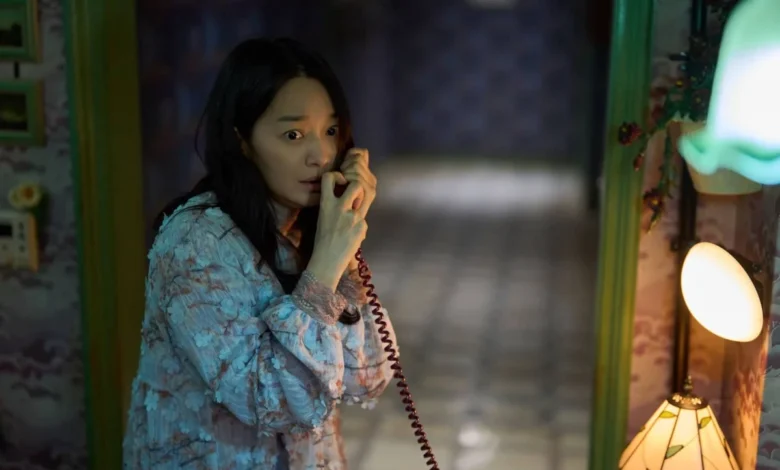
The cinematic landscape is often a canvas for exploring the darkest corners of human experience, and the recently released thriller, The Eyes, attempts to navigate the labyrinthine complexities of grief, deception, and the desperate pursuit of truth. The film centers on Seo-jin, a woman thrust into a relentless investigation after the inexplicable death of her sister, Seo-in. While authorities swiftly categorize the incident as a suicide, Seo-jin harbors a gnawing certainty that a far more sinister narrative lies beneath the surface, a conviction bolstered by fragmented, haunting glimpses into her sister’s final moments. This unsettling premise sets the stage for a narrative that, while aspiring to gripping suspense, ultimately falters under the weight of its own narrative choices.
Unraveling a Sister’s Demise: The Initial Investigation
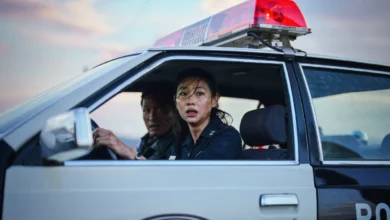
From the outset, The Eyes establishes a palpable tension between the official pronouncements of suicide and Seo-jin’s unwavering belief in foul play. The film introduces Mi-gyung (Kim Young-ah), a sympathetic detective whose professional judgment is challenged by Seo-jin’s persistent conviction. This dynamic creates an immediate point of intrigue, as the audience is implicitly aligned with Seo-jin’s perspective, privy to the fleeting visions that contradict the official narrative. The film’s director, Yeom, crafts a commendable initial phase of the investigation, imbuing it with a sense of palpable suspense as Seo-jin embarks on a solitary quest for answers.
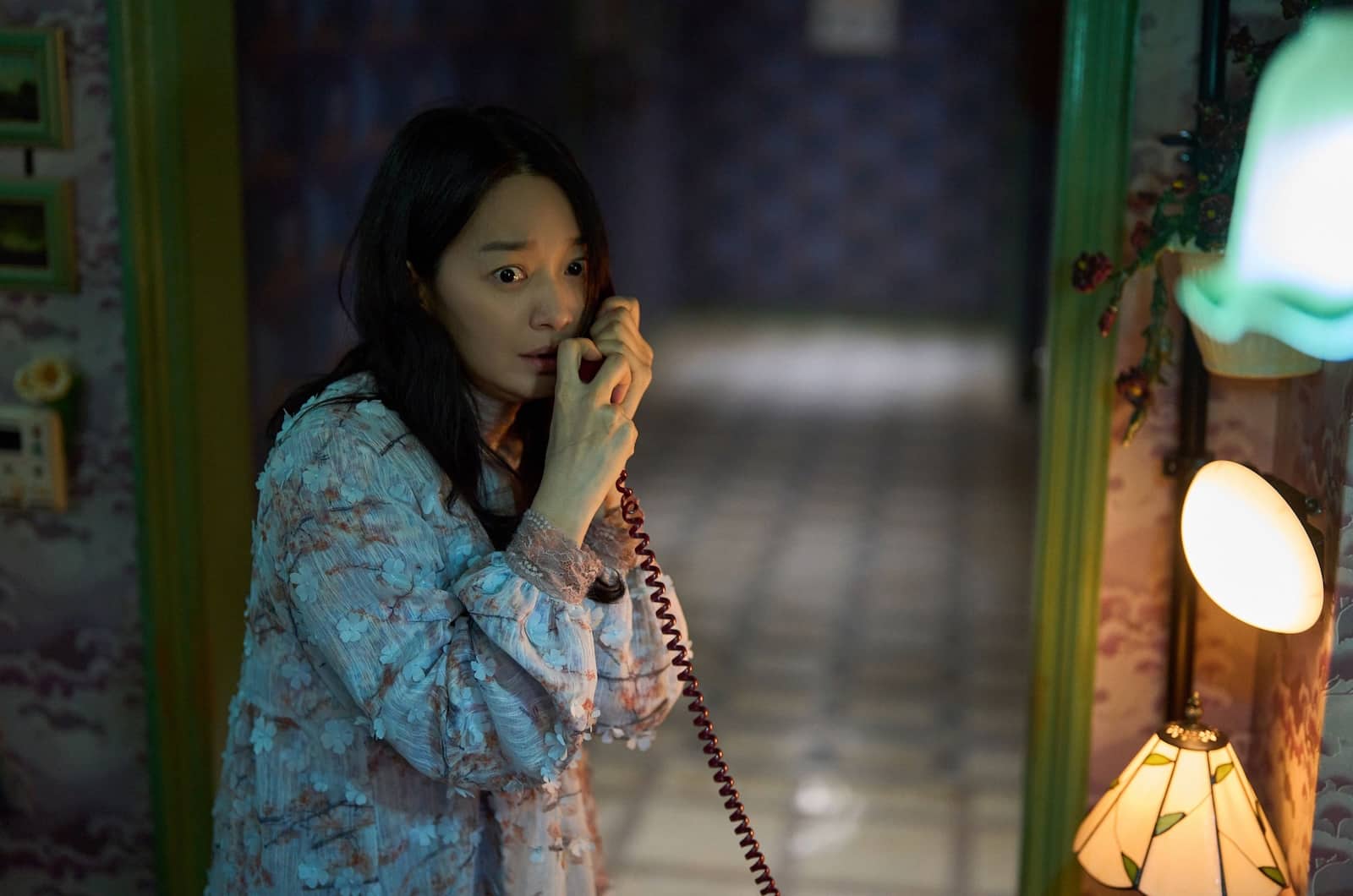
Her investigation is significantly aided by the presence of detective Lee Do-hyuk (Kim Nam-hee), a character who becomes an integral, albeit sometimes questionable, ally. Together, they begin to peel back the layers of Seo-in’s life, unearthing secrets that Seo-jin herself was unaware of. A pivotal discovery suggests that Seo-in may have been involved with a man unknown to her sister, a revelation that propels Seo-jin deeper into a shadowy world. The film features a particularly well-executed and extended sequence set in a hotel, where Seo-jin’s pursuit of clues about this clandestine relationship showcases both her determination and the film’s stylistic potential. These scenes, interspersed with poignant flashbacks depicting the estrangement that grew between the sisters, underscore the emotional stakes of Seo-jin’s journey. Actress Shin, in her dual portrayal, delivers an empathetic performance, effectively conveying the fractured bond between the siblings and the profound grief that fuels Seo-jin’s actions.
Navigating Narrative Pitfalls: Red Herrings and Predictable Twists
However, the narrative’s momentum is not consistently maintained. Director Yeom’s attempts to inject suspense through misdirection, particularly with the character of Dae-ho (Son Bo-seung), Seo-in’s physically imposing yet mentally challenged neighbor and handyman, feel somewhat heavy-handed. While intended as a potential red herring, Dae-ho’s portrayal borders on caricature, offering little genuine ambiguity and serving more as a distraction than a compelling suspect. Furthermore, a scene where detective Lee leaves Seo-jin vulnerable and alone in a car within a dimly lit parking garage, while aiming for a moment of heightened peril, feels like a contrived plot device to isolate the protagonist and amplify her perceived danger.
The most significant critique leveled against The Eyes by early reviewers and audience members alike is the glaring predictability of the antagonist’s identity. The film, according to these observations, telegraphs the villain’s role with such overtness that their eventual reveal feels less like a shocking climax and more like an inevitable conclusion. This lack of surprise significantly undermines the intended dramatic impact. A scene where characters visit a location that seems tangential to the main plot, yet carries an ominous undertone, further exacerbates this issue. The implication is clear, and the ensuing events confirm the audience’s premonition, leading to a sense of foreboding that unfortunately translates into a predictable trajectory.
The Downward Spiral of the Climax: Predictability and Plagiarism Allegations
The final act of The Eyes is where the film, by many accounts, deviates sharply from its initial promise, venturing into territory described as "wildly off the rails." The "Big Reveal," which should have been the culmination of the film’s suspense, is reportedly not only thoroughly predictable but also fundamentally implausible. The film attempts to immerse the audience in Seo-jin’s perspective through a scene designed to obscure information about a character she is interacting with. However, the execution is so transparent that viewers are left in a state of passive anticipation, waiting for the predictable outcome.
Upon the reveal, Seo-jin is plunged into what is described as a protracted and preposterous finale. More damningly, this concluding sequence is alleged to borrow heavily, not in a subtle homage but in a more overt manner, from two classic films by a renowned master of the genre. This perceived lack of originality, coupled with the narrative’s outlandishness, transforms the intended dramatic tension into a source of frustration for the audience.
Unanswered Questions and Missed Opportunities
The film’s narrative shortcomings extend to its inability to coherently address the questions it meticulously builds throughout its runtime. The explanations offered for the unfolding events are frequently described as lacking logical coherence, further diminishing the impact of the climax. One might argue that director Yeom could have leaned more into the inherent camp potential of the story’s more absurd elements, embracing a more heightened, stylized approach. However, the film’s decision to play these moments "disappointingly straight" leaves the audience questioning the director’s intentions and the overall tonal balance.
Despite these significant narrative flaws, the film is not entirely devoid of merit. The cinematography by Lee Tae-yun, known for his work on The Man from Nowhere, is consistently praised. His atmospheric and stylish visual approach offers moments of genuine aesthetic pleasure, providing a pleasing visual texture that contrasts sharply with the narrative’s descent into absurdity. Nevertheless, The Eyes ultimately proves to be a film that taxes the viewer’s intellect in ways that are counterproductive to its intended purpose, leaving a lingering sense of dissatisfaction.
Background and Context: The Thriller Genre and Audience Expectations
The thriller genre, by its very nature, relies on audience engagement through suspense, misdirection, and ultimately, a satisfying resolution to a complex puzzle. Films within this genre often explore themes of deception, paranoia, and the fragility of perceived reality. Audiences approaching The Eyes would likely anticipate a meticulously crafted narrative that keeps them guessing, rewarding their attention with an intelligent and impactful conclusion. The genre’s conventions demand that the antagonist’s identity and motivations, while concealed, should be discoverable through careful observation and deduction, making the eventual reveal feel earned.
The film’s premise, focusing on a sibling’s quest for justice, taps into universal themes of familial bonds and the lengths one will go to protect or avenge loved ones. This emotional core, when combined with a well-executed mystery, can create a powerful cinematic experience. However, when the mystery falters and the emotional core is undermined by narrative contrivances, the audience’s investment is jeopardized.
Supporting Data: The Rise of Subscription Streaming and Genre Films
In the contemporary film industry, the release of genre films like The Eyes often occurs within the broader context of subscription streaming services and the evolving distribution landscape. While precise box office figures for this specific film were not readily available at the time of this report, the global streaming market has seen exponential growth. Data from Statista indicates that the global revenue for the video streaming market is projected to reach billions of dollars in the coming years, with a significant portion attributed to film and television content.
This trend suggests that films like The Eyes, even if not major theatrical releases, can find substantial audiences through digital platforms. The success of such films often hinges on their ability to generate online buzz and positive word-of-mouth, particularly through social media and critical reviews. The critiques surrounding the predictability and narrative inconsistencies of The Eyes may therefore have a disproportionate impact on its broader reception within this digital ecosystem.
Reactions from Related Parties (Inferred)
While direct statements from the filmmakers or cast regarding the criticisms of The Eyes were not immediately available, industry analysts and film critics have offered their perspectives. The consensus among many points to a perceived disconnect between the film’s ambitious premise and its execution. The director, Yeom, in previous projects, has demonstrated a capacity for nuanced storytelling. The current reception suggests that The Eyes may represent a misstep in his directorial career, or perhaps a deliberate attempt at a different style that did not resonate with the intended audience.
The actors involved, particularly Shin, have received commendations for their emotional depth, suggesting that the performances themselves were not the primary source of the film’s perceived weaknesses. The collaborative nature of filmmaking means that the final product is a collective effort, and the critiques of the screenplay and directorial choices ultimately reflect on the entire production team.
Broader Impact and Implications: The Challenge of Originality in Thrillers
The critical reception of The Eyes underscores a perennial challenge within the thriller genre: the constant demand for originality in a landscape saturated with similar narratives. Filmmakers are tasked with crafting stories that can surprise and engage audiences who have become adept at identifying common tropes and plot devices. When films fail to deliver on this promise, they risk being dismissed as derivative or predictable.
Furthermore, the film’s alleged unoriginality in its climax raises questions about creative integrity and the line between inspiration and imitation. While drawing influence from established works is common, overt borrowing can lead to accusations of plagiarism and damage a filmmaker’s reputation. The long-term implications for director Yeom and the production team could include a more critical eye from audiences and industry professionals on future projects, demanding a higher standard of narrative innovation and ethical sourcing of creative ideas.
Ultimately, The Eyes serves as a case study in the delicate balance required to craft a compelling thriller. While it possesses moments of visual flair and strong performances, its narrative shortcomings, particularly the predictability of its central mystery and the perceived lack of originality in its conclusion, prevent it from achieving its full potential. The film’s journey from an intriguing premise to a disappointing finale highlights the critical importance of a robust and cohesive screenplay in delivering a satisfying cinematic experience within the demanding thriller genre.