Narrative Framework and Plot Development
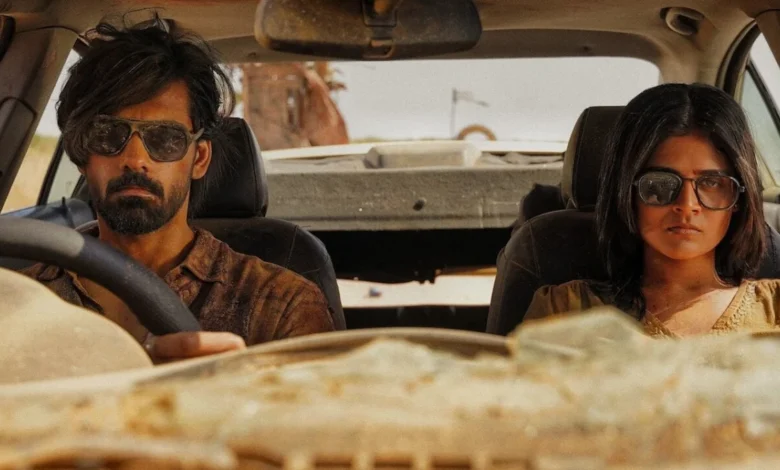
The story centers on Ethan and Ivy, siblings born from an interspecies union, classifying them as half-vampires. The narrative arc is intentionally lean, prioritizing momentum over complex exposition. The inciting incident occurs in the arid, sun-scorched landscapes of the Rajasthan desert. While en route to a new professional opportunity for Ivy, the siblings are intercepted by a ruthless criminal syndicate. This encounter escalates quickly into a lethal confrontation, during which the twins are murdered and abandoned.
The pivotal shift in the narrative occurs at nightfall. Utilizing their inherent, supernatural regenerative abilities, the siblings are resurrected. From this point forward, the film transitions into a methodical, unrelenting revenge procedural. The protagonists engage in a pursuit of their attackers, transforming the desert landscape into a stage for systematic retribution. The script, co-written by Samjad and Praveen Viswanath, eschews traditional character development in favor of a kinetic, "road movie" structure that mirrors the relentless pace of George Miller’s Mad Max: Fury Road.
Technical Mastery and Action Choreography
A defining characteristic of Half is its pedigree in action design. The production secured the services of Very Tri Yulisman, a renowned choreographer whose previous credits include The Raid 2 and The Night Comes for Us. Yulisman’s influence is evident in the film’s tactical, close-quarters combat sequences. The action is marked by a sophisticated integration of environment and weaponry; the protagonists frequently weaponize the landscape and, in a stylistic departure from traditional vampire lore, utilize the anatomical remnants of their adversaries as makeshift implements of war.
The film’s aesthetic identity is further bolstered by the cinematography of Pappinu, whose frenetic, handheld camerawork places the audience directly within the chaos of the brawls. This is punctuated by a score composed by Midhun Mukundan, which draws heavily upon the Ennio Morricone school of composition, utilizing dramatic, atmospheric swells that underscore the "curry western" tone. The interplay between the desert setting and the modern, almost nocturnal aesthetic of the protagonists—characterized by stylized fashion choices like glowing LED headphones and cross-motif apparel—creates a visual dissonance that differentiates Half from standard gothic horror.
Historical Context and Genre Evolution
The release of Half follows a broader trend in international cinema where directors are blending local cultural settings with the "ultra-violent" action aesthetic that gained global prominence in the 2010s. By placing vampires in the Rajasthan desert, Samjad subverts the traditional Victorian or gothic settings typically associated with the genre. This "curry western" approach—a nod to the Indian cinema subgenre of the 1970s and 80s that adapted Leone’s style to the Indian hinterlands—is modernized here with the inclusion of supernatural elements.
The film stands alongside other recent international entries, such as The Furious, which have pushed the boundaries of the action genre through increased practical stunt work and a reduction in CGI reliance. By prioritizing physical performance over digital effects, the filmmakers have cultivated an atmosphere of tactile, grounded danger. The reliance on practical choreography is a direct response to audience fatigue regarding over-produced, digital-heavy action sequences, favoring instead the "body-horror" reality of the stunt performances.
Analysis of Thematic Implications
While Half is primarily a vehicle for spectacle, it explores the concept of karmic justice through the lens of supernatural vengeance. The villains of the piece are intentionally devoid of complex motivations, serving as archetypes of systemic cruelty. By portraying the antagonists as particularly irredeemable—specifically through their willingness to engage in violence against children—the narrative effectively aligns the audience’s moral compass with the twins. The excessive, almost cartoonish gore serves as a cathartic mechanism, intended to maximize the satisfaction derived from the protagonists’ triumph.
![‘Half’ Takes Vampires on a Bloody, Full-Throttle Road Trip of Revenge [TIFF Review]](https://www.dreadcentral.com/wp-content/uploads/2026/08/HALF_Still-1200x675.jpg)
The decision to make one of the lead characters, Ivy, mute, serves a functional narrative purpose beyond mere stylistic choice. It forces the film to rely on visual storytelling and physical acting, ensuring that the tension remains centered on the environment and the action rather than dialogue-heavy exposition. This aligns with the "show, don’t tell" ethos that defines the film’s brisk 90-minute structure.
Production Chronology and Industry Impact
The production of Half was characterized by a high degree of technical preparation, particularly regarding the stunt rehearsals required for Yulisman’s choreography. Filming took place under the challenging conditions of the Rajasthan desert, necessitating a grueling schedule that demanded significant physical stamina from leads Ranjith Sajeev and Aiswarya Raj.
The film’s impact on the Indian market is notable for its refusal to adhere to standard "Masala" film conventions, which typically include musical numbers and lengthy dramatic interludes. By opting for a Western-influenced, minimalist narrative, Samjad has signaled a shift in the aspirations of contemporary Indian filmmakers toward a more globally accessible, high-concept genre style.
Reception and Critical Observations
Industry analysts have noted that Half succeeds because it remains disciplined in its scope. By not attempting to rewrite the vampire mythos or build an overly complex lore, the film avoids the pitfalls of "world-building bloat" that often plague modern supernatural features. The critical consensus suggests that the film serves as a masterclass in economy of storytelling.
The villains are utilized as catalysts for action, and the "road movie" structure provides a natural, logical progression for the story. The lack of "fat on the bone," as noted by early reviewers, is not a narrative weakness but a calculated design choice. The film operates on a "high-gas" philosophy—once the conflict is established, the momentum remains constant until the conclusion.
Future Trajectory
As streaming platforms and global distribution networks continue to flatten the market for international cinema, films like Half demonstrate the viability of niche genre projects that can travel across borders. The success of this film could potentially pave the way for more high-concept, stylized action features emanating from the region, moving away from traditional drama and toward more experimental genre blends.
The film serves as an informative case study for students of modern cinema, demonstrating that effective genre storytelling requires a clear, singular vision. By stripping away extraneous plot points and focusing on the interplay between character, choreography, and environment, Samjad has produced a work that is as visually arresting as it is narratively simple. The legacy of Half will likely be found in its influence on future filmmakers who seek to marry the stylistic rigor of Western action cinema with the deep, visceral traditions of Indian storytelling, proving that the vampire genre remains a fertile ground for reinvention, provided the director has the courage to prioritize style and momentum above all else.