Interview with the Vampire: A Retrospective on the 1994 Gothic Masterpiece and Its Legacy

Thirty years after its theatrical debut, Neil Jordan’s adaptation of Anne Rice’s seminal novel, Interview with the Vampire, remains a cornerstone of gothic horror cinema. With the recent release of a newly restored 4K Ultra HD edition by Warner Bros., the film is undergoing a critical reappraisal. This cinematic achievement not only defined the aesthetic of 1990s vampire media but also bridged the gap between literary cult status and blockbuster success. By examining the production history, the casting controversies that defined its development, and its lasting influence on the genre, one can appreciate why this film persists in the cultural consciousness despite the arrival of subsequent iterations of The Vampire Chronicles.
A Chronology of Development and Production
The journey of Interview with the Vampire from the printed page to the silver screen was fraught with decades of logistical hurdles and creative shifts. Following the novel’s publication in 1976, Paramount Pictures initially secured the film rights. However, the project entered a protracted period of development hell that lasted nearly twenty years. It was not until the critical and commercial success of Neil Jordan’s 1992 film, The Crying Game, that the project gained the necessary momentum to proceed at Warner Bros.
Anne Rice, who took a deeply personal interest in the adaptation, famously credited Jordan’s 1984 film, The Company of Wolves, as the deciding factor in her approval of his direction. Rice viewed the dark, surreal fairy-tale aesthetic of that film as the perfect thematic precursor to the world of Lestat de Lioncourt.
![‘Interview With the Vampire’ Director Talks Anne Rice, Lestat, Claudia & the Legacy of All Three [Exclusive]](https://www.dreadcentral.com/wp-content/uploads/2026/09/LESTAT-LOUIS-1600x900.jpg)
The production was defined by its nocturnal schedule. Filming occurred almost exclusively at night, an intentional choice by Jordan to foster an environment of genuine isolation and immersion for the cast and crew. According to production logs, this decision contributed to the film’s unique visual texture, as the crew spent the duration of the Louisiana and Paris shoots entirely shielded from natural daylight.
The Evolution of Casting and Artistic Vision
The film’s casting remains one of the most scrutinized aspects of 1990s cinema history. In the early stages, the search for the perfect Louis de Pointe du Lac led to considerations of various high-profile actors, with Rice famously advocating for French actor Alain Delon. Eventually, the role went to Brad Pitt, whose performance captured the existential malaise inherent in the character.
The role of Lestat, however, proved to be a source of significant friction. Early discussions included Julian Sands, though studios eventually opted for Tom Cruise. This decision was met with intense public skepticism, including criticism from Rice herself, who doubted that the then-action-star could embody the icy, hedonistic, and centuries-old vampire. Jordan remained steadfast in his choice, arguing that Cruise possessed an "icy beauty" that perfectly aligned with the character’s predatory nature. Following the film’s release, the overwhelming critical and audience reception silenced these concerns, and Rice eventually retracted her criticism, publicly praising the performances of Cruise, Pitt, and Antonio Banderas.
The inclusion of Kirsten Dunst as the child vampire Claudia also proved to be a pivotal creative decision. At 12 years old, Dunst delivered a performance that remains a benchmark for child actors in horror. Her ability to convey the ancient, trapped consciousness of a woman in a child’s body provided the emotional anchor for the film’s central conflict—the toxic, possessive, and codependent relationship between Louis and Lestat.
![‘Interview With the Vampire’ Director Talks Anne Rice, Lestat, Claudia & the Legacy of All Three [Exclusive]](https://www.dreadcentral.com/cdn-cgi/image/width=788%2Cheight=444%2Cfit=crop%2Cquality=75%2Cgravity=auto%2Csharpen=1%2Cmetadata=none%2Cformat=auto%2Conerror=redirect/wp-content/uploads/2026/09/LESTAT-LOUIS.jpg)
Structural Analysis of the Narrative
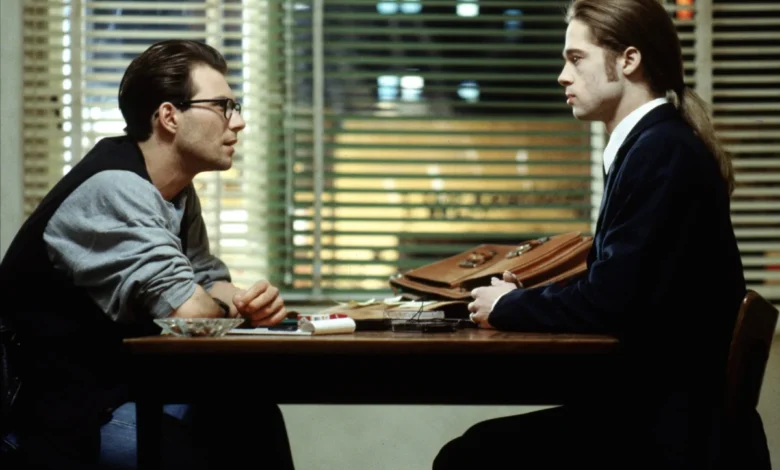
At its core, the film functions as a deconstruction of the vampire mythos. By shifting the perspective to the monster—a trope popularized by Rice—the story moves away from the traditional "Dracula" archetype of a nameless terror and toward a character-driven drama. The film’s structure, framed as an interview between Louis and the journalist Daniel Molloy (played by Christian Slater, replacing the late River Phoenix), allows for a non-linear exploration of memory, loss, and the burden of immortality.
The film intentionally eschews the "jump scare" tactics common in contemporary horror, opting instead for a pervasive atmosphere of dread. Neil Jordan’s commitment to this atmospheric storytelling remains a point of academic interest. By focusing on the "monstrous" nature of his protagonists, Jordan forced audiences to reconcile their attraction to the characters with the horrific violence they perpetrate. This nuance is supported by the production’s high-caliber art design, with Dante Ferretti’s sets providing a tactile, decaying sense of history that reinforces the film’s theme of being "trapped" in time.
Comparative Context: AMC’s Modern Adaptation
The landscape of The Vampire Chronicles has evolved significantly with the introduction of AMC’s television series adaptation. While the 1994 film remains a singular, distilled vision of the first book, the series has expanded the lore, notably by aging the character of Claudia and recontextualizing the relationship dynamics between the leads.
Neil Jordan, reflecting on these changes, has expressed a specific interest in the narrative choice to make Claudia a teenager rather than a child. He contends that the original, younger version of the character was essential to the story’s central conceit: that Lestat "baby-trapped" Louis to prevent him from leaving. In Jordan’s view, the tragedy of the character is inherently tied to the perpetual childhood that prevents her from ever reaching the maturity she craves, a dynamic he feels is fundamentally altered by the show’s casting choices.
![‘Interview With the Vampire’ Director Talks Anne Rice, Lestat, Claudia & the Legacy of All Three [Exclusive]](https://www.dreadcentral.com/cdn-cgi/image/width=787%2Cheight=518%2Cfit=crop%2Cquality=75%2Cgravity=auto%2Csharpen=1%2Cmetadata=none%2Cformat=auto%2Conerror=redirect/wp-content/uploads/2026/09/DANIEL-LOUIS-1.jpg)
The Legacy of the 4K Restoration
The recent 4K Ultra HD restoration serves as a testament to the film’s endurance. The technical process involved cleaning the original film negatives, which has brought a new level of clarity to the cinematography of Philippe Rousselot. For cinephiles, the inclusion of previously unseen deleted scenes and retrospective featurettes provides a comprehensive view of the production’s internal conflicts and creative successes.
Data regarding the film’s 30-year cultural footprint suggests that it continues to perform well in the secondary and digital markets. Its influence is frequently cited in the "Gothic Revival" aesthetic of the late 90s and has served as a touchstone for subsequent vampire media. By maintaining a balance between the erotically charged atmosphere of the novels and the polished production value of a 90s studio film, Jordan created a work that avoids the "dated" label often applied to other films of that era.
Implications for the Horror Genre
The enduring success of Interview with the Vampire underscores a broader shift in the horror genre: the transition from external threats to internal, psychological horror. By centering the story on the "doomed outsider," the film provided a blueprint for modern supernatural dramas.
As the film marks its 30th anniversary and the source novel celebrates its 50th, the consensus among critics and scholars is that Anne Rice effectively reinvented the vampire figure. She moved the creature from the realm of the gothic antagonist to the realm of the romantic, tragic hero—or, more accurately, the anti-hero. Neil Jordan’s ability to translate this complex, often contradictory vision into a coherent cinematic language remains the defining reason why the 1994 production continues to be the standard against which all other adaptations are measured. The restoration of this film ensures that new audiences can engage with its dark, sumptuous, and deeply human exploration of the eternal night.
Related posts: