‘In a Violent Nature 2’ Review: A Shocking Crowd Pleaser Chock Full of Guts [Fantastic Fest]

The Evolution of the Franchise Narrative
The original In A Violent Nature functioned as a deconstructionist exercise, positioning the audience as a silent observer to the reanimated entity known as Johnny. By prioritizing the killer’s internal logic and his quest for a specific object, the film challenged the audience’s patience and expectations. Conversely, the 2026 sequel establishes a new mythology centered on the ritualistic summoning of the antagonist.
The narrative of the second installment picks up shortly after the conclusion of the first, introducing a new protagonist: a 14-year-old camper named Alex, portrayed by Lucas Nguyen. The plot centers on a specific lore mechanic—a three-whistle summoning ritual—which dictates that the killer, Johnny, is bound to eliminate those who have wronged the caller, though the cost of this summoning is the caller’s own life. This shift from the villain’s interiority to the emotional turmoil of a bullied adolescent marks a significant departure from the artistic experimentation that characterized the series’ origins.
Chronology and Plot Progression
The development of the sequel reflects a deliberate move toward genre accessibility. The film begins with a familiar coming-of-age trajectory, as Alex experiences social isolation at Camp Puddingstone. After missing his departure transportation, he is integrated into an end-of-summer celebration organized by camp counselors. This sequence serves as a bridge between standard teenage drama and the eventual slasher spectacle.
Once the summoning ritual is completed, the narrative transitions rapidly into a series of high-intensity, practical-effects-heavy sequences. Unlike the first film, which utilized lengthy, unbroken shots to emphasize the mundanity of the killer’s movement, the sequel utilizes a more frenetic editing style. The latter half of the film attempts to reintroduce the slower, atmospheric pacing of its predecessor, though critics have noted a friction between these two distinct stylistic approaches, which complicates the film’s narrative cohesion.
Technical Craft and Practical Effects
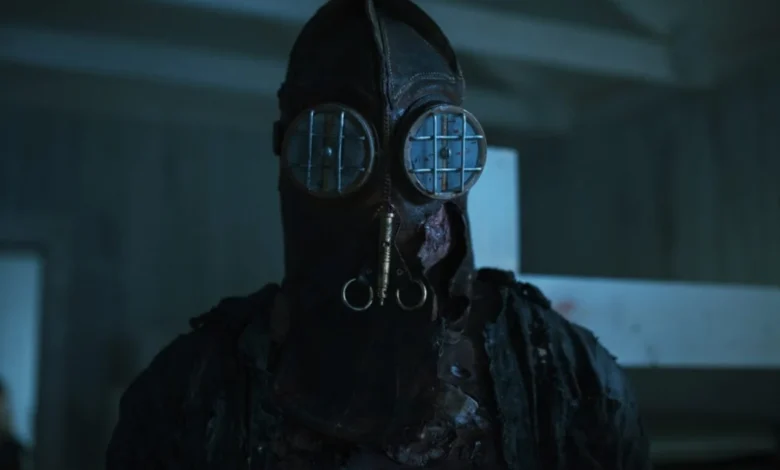
A primary focus of In A Violent Nature Part 2 is the elevation of its practical effects. Production notes and early screenings indicate that the visual design team aimed to push the boundaries of visceral horror. The death sequences are engineered to be more complex and numerous than those in the original, with many observers noting an aesthetic influence reminiscent of 1980s body horror and the Hellraiser series.
Ry Barrett reprises his role as Johnny, maintaining the physical embodiment of the killer that anchored the first film. However, the performance is framed differently here; where Barrett was previously a vessel for the viewer’s exploration of the forest, he is now an antagonist in a more traditional sense. This shift highlights a strategic decision by the filmmakers to prioritize audience impact and shock value over the abstract, art-house sensibilities that garnered the first film critical acclaim at the Sundance Film Festival in 2024.
![‘In a Violent Nature 2’ Review: A Shocking Crowd Pleaser Chock Full of Guts [Fantastic Fest]](https://www.dreadcentral.com/wp-content/uploads/2026/02/PS-378-DUCK-AND-COVER-photo-by-D-scaled-e1789918851973.jpg)
Industry Context and Festival Reception
Fantastic Fest, known for its focus on genre cinema, provided the platform for the secret premiere of the sequel. The decision to unveil the film in this environment suggests a desire to gauge the reaction of a dedicated horror audience accustomed to subgenre deconstructions. The reception has been characterized by a distinct split: while long-time fans of the first film’s experimental pacing may find the sequel’s conventionality a step backward, those seeking a more traditional, high-body-count horror experience have identified the film as a significant achievement in practical effects.
The broader implications for the franchise are notable. By moving from an "art-house slasher" experiment to a crowd-pleasing, trope-heavy narrative, the production team has essentially transitioned the brand from an experimental indie darling to a more standard horror series. This move mirrors trends in the modern horror industry, where successful indie films are often followed by sequels that aim to satisfy broader market expectations.
Comparative Analysis of Franchise Strategies
When analyzing the two films side-by-side, the divergence in strategy becomes clear:
- Pacing: The first film utilized "agonizing" long takes to simulate the presence of a predator. The sequel employs rapid-fire pacing designed to maximize the volume of horror imagery.
- Perspective: The 2024 film was told largely through the lens of the killer. The 2026 sequel centers its first act on the psychological development of the victim, Alex, before shifting to the slasher format.
- Lore: The introduction of the whistle-summoning ritual provides a clear "ruleset" for the killer, moving the franchise closer to the established logic of classic 1980s slasher series like Friday the 13th.
Broader Implications for the Genre
The shift in In A Violent Nature Part 2 raises questions about the sustainability of meta-horror. While the first film was lauded for its ability to critique the slasher genre by subverting its core tenets, the sequel suggests that such subversion may have a limited shelf life before the audience—or the creators—demand a return to the comfort of traditional horror beats.
Industry analysts observe that the success of the sequel will likely be measured by its ability to balance the technical proficiency of its gore effects with the narrative expectations of its audience. By intentionally delivering a film that feels "expected" after the "unexpected" nature of the first, Nash and Wilson are engaging in a meta-commentary on the lifecycle of horror franchises. The film serves as both a visceral entertainment product and a commentary on how audiences consume and eventually demand the replication of familiar tropes.
As the industry continues to monitor the performance of this sequel, the discourse remains centered on whether the departure from the original’s experimental roots was a necessary evolution or a dilution of the franchise’s unique identity. Regardless, the film has firmly cemented its place in the 2026 festival circuit as a polarizing but technically masterful entry in the modern slasher canon. The reliance on practical effects over digital enhancements continues to be a hallmark of the series, ensuring that even as the narrative structure changes, the commitment to tactile, grounded horror remains a core component of the brand.
For the production team, the challenge moving forward lies in reconciling these two disparate approaches—the meditative, patient killer of the first film and the efficient, unstoppable force of the second. Whether these elements can be successfully synthesized in future installments remains a point of significant interest for horror enthusiasts and industry professionals alike.