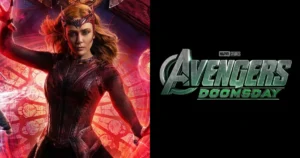
Elizabeth Olsen Addresses Avengers: Doomsday Speculation Amidst Lingering Scarlet Witch Impact

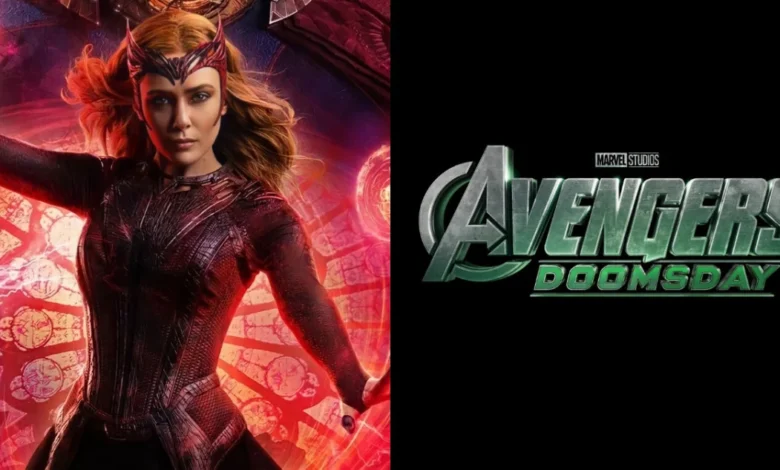
Elizabeth Olsen, the acclaimed actress behind the Marvel Cinematic Universe’s formidable Scarlet Witch, recently addressed persistent rumors regarding her potential involvement in the highly anticipated Avengers: Doomsday. Her statements, delivered at the Chicago Comics and Entertainment Expo (C2E2), offered a mixture of apparent ignorance and carefully worded ambiguity, leaving fans and industry observers to decipher the true extent of her knowledge and the character’s future. Given the Scarlet Witch’s pivotal role in the MCU’s recent narrative arcs and the impending "Multiverse Saga" culmination, Olsen’s comments have reignited fervent speculation about one of Marvel’s most powerful and complex characters.
The Scarlet Witch’s Enduring Legacy in the MCU
Wanda Maximoff, a.k.a. the Scarlet Witch, has evolved into arguably one of the most impactful and central figures within the Marvel Cinematic Universe over the past decade. Her journey began with a tragic origin story as a Sokovian orphan, introduced alongside her twin brother Pietro (Quicksilver) in Avengers: Age of Ultron (2015). Initially a powerful but volatile antagonist influenced by Hydra and Ultron, Wanda’s powers—a unique blend of telekinesis, telepathy, and energy manipulation—quickly established her as a force to be reckoned with. Her early appearances showcased a character grappling with immense power and profound grief, particularly after Pietro’s death.
Her narrative deepened significantly through Captain America: Civil War (2016), where she was forced to confront the consequences of her powers, leading to her being confined and ultimately aligning with Captain America’s faction. In Avengers: Infinity War (2018) and Avengers: Endgame (2019), Wanda’s personal stakes escalated dramatically with her romantic relationship with Vision, only for her to endure his repeated deaths at the hands of Thanos. These experiences solidified her as a character defined by loss, power, and an increasingly fragile mental state, capable of immense destruction when pushed to her limits, as demonstrated by her near-defeat of Thanos in Endgame.
However, it was the Disney+ series WandaVision (2021) that truly cemented her status as a primary protagonist and a foundational element of the Multiverse Saga. The series explored Wanda’s deep grief following Vision’s final demise, leading her to unconsciously construct an idyllic suburban reality – the "Hex" – around the town of Westview. Within this manufactured reality, she resurrected Vision and created two sons, Billy and Tommy. This arc not only showcased the terrifying extent of her reality-warping abilities but also formally introduced her as the Scarlet Witch, a mythical nexus being destined to wield chaos magic. The series delved into the Darkhold, an ancient grimoire of dark magic, and hinted at her connection to greater magical forces, setting the stage for future conflicts.
Her subsequent appearance in Doctor Strange in the Multiverse of Madness (2022) saw her fully embrace her role as the Scarlet Witch, driven by a desperate desire to reunite with her children by any means necessary, including traversing the multiverse. This transformation saw her become a formidable, albeit tragic, antagonist, terrorizing multiple realities and demonstrating an unprecedented level of destructive power. Her apparent demise at Mount Wundagore, seemingly crushing herself beneath the collapsing Darkhold temple, left her fate ambiguous. While the visual suggested a definitive end, the inherent nature of comic book deaths, especially for characters of her power level, often leaves room for a dramatic return. The lingering impact of her actions, her immense power, and her connection to both magic and emerging mutant narratives mean her absence is felt, and her return is constantly anticipated.
The Looming Specter of Avengers: Doomsday
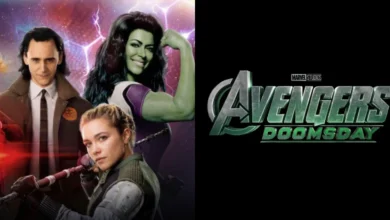
Avengers: Doomsday, slated for a December 2026 release, represents a critical juncture in the Marvel Cinematic Universe, serving as the penultimate film in the overarching Multiverse Saga before Avengers: Secret Wars. While details remain scarce, the title itself strongly hints at the involvement of Doctor Doom, one of Marvel Comics’ most iconic and formidable villains. Victor Von Doom, the monarch of Latveria, is not merely a scientific genius but also a powerful sorcerer, often depicted as a geopolitical and multiversal threat. His presence elevates the stakes considerably beyond previous Avengers confrontations.
The context of the Multiverse Saga implies a narrative framework where alternate realities collide, existential threats emerge from across the dimensional fabric, and the very fabric of existence is at stake. In such a scenario, characters possessing immense power, particularly those capable of manipulating reality or magic, become invaluable. The Scarlet Witch, with her demonstrated ability to warp reality on a grand scale, to manipulate minds, and to wield chaos magic, fits this description perfectly. Her powers could be instrumental in either causing a multiversal crisis or providing the means to resolve one.
Furthermore, the MCU is increasingly moving towards integrating mutant characters, a development often referred to by fans and commentators as the "Mutant Saga." Wanda Maximoff’s comic book history is intrinsically linked to mutantkind. While her MCU origin initially presented her powers as a result of Hydra experimentation with the Mind Stone, in the comics, she was long believed to be a mutant, the daughter of Magneto. Later retcons altered this, but her most famous comic storyline, House of M, saw her declare "No More Mutants," dramatically altering reality and significantly reducing the mutant population. Should the MCU adapt elements of this intricate history, or even acknowledge her as a mutant variant or a catalyst for mutant emergence, her role becomes even more critical. Her return could either facilitate the introduction of mutants, provide a powerful force against mutant threats, or even connect to the source of mutant powers within the MCU’s lore. The potential for her to reshape reality, as she did in WandaVision, makes her an unparalleled asset or threat in any multiversal or mutant-centric storyline.
Elizabeth Olsen’s C2E2 Remarks: A Study in Marvel Secrecy
During her appearance at the Chicago Comics and Entertainment Expo, Elizabeth Olsen was inevitably pressed for information regarding Avengers: Doomsday. Her response was both direct and evasive: "I know nothing. I know about VisionQuest, because I’ve seen Paul [Bettany] in the last six months. I know nothing about any of it. Is [Secret Wars] what happens after? I’m not kidding. Why did I think there were two Secret Wars? Are there not?"
Olsen’s claim of ignorance regarding Avengers: Doomsday and her apparent confusion about the order and number of Secret Wars films (there are indeed two planned, Avengers: Doomsday and Avengers: Secret Wars, which were previously known as Avengers: The Kang Dynasty and Avengers: Secret Wars before a title change for the former) has been met with a mixture of amusement and skepticism by the fan base. While her confusion could be genuine, it’s also a tactic frequently employed by Marvel Studios actors under strict non-disclosure agreements (NDAs).

The reference to VisionQuest and her interaction with Paul Bettany (who plays Vision) is a notable piece of information. VisionQuest is a confirmed Disney+ series that will reportedly explore Vision’s attempts to regain his memories and identity after the events of WandaVision. Olsen’s knowledge of this project and her recent interaction with Bettany suggests that threads related to Wanda’s story, and Vision’s, are indeed active within Marvel Studios. This indirect confirmation of VisionQuest‘s progress, and by extension, the ongoing relevance of Vision’s character, naturally fuels speculation about Wanda’s eventual return. It implies that while Wanda may be "dead," her narrative impact and connections remain very much alive.
Marvel Studios is legendary for its ironclad secrecy protocols. Actors are routinely required to sign extensive NDAs that prevent them from divulging any plot details, casting news, or even their involvement in upcoming projects. This practice is so deeply ingrained that it has become a running joke among fans, who expect actors to deny any and all rumors, often with theatrical feigned ignorance. Notable examples include Andrew Garfield and Tobey Maguire vehemently denying their involvement in Spider-Man: No Way Home for months, only for them to appear prominently in the film. Similarly, Tatiana Maslany initially denied being cast as She-Hulk. This consistent pattern lends significant weight to the theory that Olsen’s denial is less an admission of true ignorance and more a strategic deflection designed to protect major plot spoilers. For a character as impactful and potentially pivotal as the Scarlet Witch, her return in a film like Avengers: Doomsday would undoubtedly be considered a monumental spoiler, warranting the highest level of secrecy.
Fan Theories and the Weight of Expectation
The fan community has actively engaged in theorizing about the Scarlet Witch’s potential return, driven by her immense popularity and the narrative potential she represents. One prominent theory posits that her "death" at Mount Wundagore was not a true demise but rather a form of transfiguration or transportation. Given her reality-warping powers, it’s plausible she simply relocated herself to another dimension, a different point in time, or even a pocket universe. In a multiverse-spanning narrative, traditional concepts of death are often fluid.
Another compelling theory involves the introduction of a multiversal variant of Wanda. The Multiverse Saga opens up endless possibilities for alternate versions of characters to appear. Even if the prime MCU Wanda is truly gone, a variant from another reality, perhaps one who never became corrupted by the Darkhold, or one with a different set of experiences, could be introduced to fill the void and contribute to the Doomsday narrative. This would allow for Olsen’s return without negating the emotional impact of the prime Wanda’s sacrifice.
Furthermore, the sheer power level of the Scarlet Witch makes her an almost indispensable asset against a threat like Doctor Doom. Her ability to dismantle reality, project powerful energy blasts, and manipulate minds would be crucial in a confrontation that could involve multiversal incursions and existential threats. Her comics history also ties her to powerful magical artifacts and cosmic entities, suggesting avenues for her re-introduction that could be deeply woven into the MCU’s evolving lore. Many fans anticipate a potential redemption arc for Wanda, allowing her to atone for her actions in Multiverse of Madness by using her powers for the greater good.
The thematic resonance with House of M also cannot be overlooked. While a direct adaptation is unlikely, the idea of Wanda having a profound impact on the existence of mutants, either through her powers or her historical connection, remains a powerful narrative tool. This could manifest in subtle ways, such as her powers being a catalyst for mutant emergence, or her somehow being tied to the source of mutant abilities within the MCU.
Broader Implications for the MCU’s Future
The potential return of Elizabeth Olsen as the Scarlet Witch carries significant implications for the future trajectory of the Marvel Cinematic Universe. Firstly, it reinforces the idea that no character, regardless of their apparent fate, is truly gone in a multiversal saga. This sets a precedent for other fan-favorite characters to potentially make a comeback, broadening the narrative scope and increasing the emotional stakes for future films.
Secondly, her presence would dramatically alter the power dynamics within the Avengers roster. The Scarlet Witch, at her peak, is arguably one of the most powerful beings in the MCU, capable of challenging even cosmic entities. Her inclusion would provide an immense offensive and defensive capability against threats like Doctor Doom, but also introduce the inherent risk associated with such raw power. How the Avengers, or other heroes, would react to her return, especially after her actions in Multiverse of Madness, would be a compelling narrative thread.
Thirdly, the way her character is handled could define the emotional core of Avengers: Doomsday. Her story is one of profound grief, immense power, and moral ambiguity. A redemption arc, a new variant, or a resurrected original Wanda, each presents unique storytelling opportunities to explore themes of responsibility, consequence, and forgiveness on a multiversal scale.
Finally, the constant speculation surrounding her return underscores the unparalleled fan engagement that Marvel Studios cultivates. The mystery surrounding character appearances, plot points, and overarching narratives keeps the global audience invested and constantly theorizing, acting as an organic, powerful marketing engine for the franchise. The anticipation for Avengers: Doomsday is already sky-high, and the mere whisper of the Scarlet Witch’s involvement only amplifies that excitement.
As Avengers: Doomsday approaches its December 2026 release, the wait for official confirmation regarding Elizabeth Olsen’s role, if any, will continue. Until then, fans and critics alike will remain vigilant, dissecting every interview and rumor for clues, knowing that in the ever-expanding Marvel Multiverse, the Scarlet Witch’s story is likely far from over.