Freak War Bridges the Gap Between Pokémon Trading Card Games and Casual Party Mechanics Through Successful Kickstarter Campaign

Freak War, a newly developed tabletop experience from cartoonist Nate Galbraith and Sheltonshire Games, has successfully secured its initial funding goal on Kickstarter, signaling a growing consumer interest in accessible alternatives to traditional trading card games (TCGs). By synthesizing the creature-evolution mechanics popularized by the Pokémon franchise with the high-speed, chaotic interactions characteristic of party games like Exploding Kittens, Freak War aims to remove the high barrier to entry typically associated with competitive card gaming. The project, which emphasizes ease of play without sacrificing the tactical depth of deck customization, represents a strategic shift in the hobbyist market toward "hybrid" games that cater to both casual social gatherings and dedicated card enthusiasts.
Conceptual Origins and Design Philosophy
The genesis of Freak War can be traced to a specific observation made by its creator, Nate Galbraith, known professionally in the illustration world as "sketchnate." Galbraith noted a recurring phenomenon among younger players who attempted to simulate complex Pokémon battles using standard Uno cards or other simplified decks. Recognizing that the intricate rulesets, resource management systems, and high cost of entry associated with modern TCGs often alienated younger or more casual audiences, Galbraith sought to create a system that utilized the foundational logic of "War"—a classic playing card game also known as "Battle"—as its core engine.
The design philosophy behind Freak War is rooted in "immediate playability." Unlike established titles such as Magic: The Gathering or the Pokémon Trading Card Game, which require players to spend significant time and capital on deck construction and rule memorization before a single match can begin, Freak War allows participants to simply shuffle a shared deck and begin play. This approach addresses a significant pain point in the tabletop industry: the "onboarding lag" that often prevents new players from engaging with the TCG genre. By utilizing the "War" mechanic—where players simultaneously reveal cards and the highest value wins—the game ensures that even those with no prior experience can participate immediately.
Gameplay Mechanics and Dual Modes of Engagement
Freak War distinguishes itself from its predecessors by offering two primary modes of play: the "War" mode and the "Battle" mode. This dual-structure allows the game to scale in complexity based on the preferences of the group.
In the standard "War" mode, the gameplay is characterized by high-speed randomness and "take-that" mechanics. Players split a deck evenly and simultaneously flip the top card of their respective piles. The player with the highest attack power wins the round and collects the played cards. In the event of a tie, a "face-off" occurs, requiring players to discard a card before revealing a new one to determine the winner. This mode is designed for large groups—supporting four or more players—and emphasizes the social, unpredictable nature of party gaming.
The "Battle" mode introduces a layer of strategic agency. In this version, players hold a hand of cards, allowing them to choose which creatures to deploy and when to utilize modifiers. This mode incorporates the "evolution" mechanic, where certain creatures can transform into more powerful versions of themselves, provided the player meets specific conditions. This mirrors the progression systems found in digital monster-battling games but is executed through a simplified physical card interface.
Furthermore, the game includes "Modifier Cards," which serve as the primary source of disruption. These cards can be used to equip weapons—such as the "Super Sword" or "Super Duper Sword"—to boost a creature’s attack power, or to sabotage opponents by reducing their stats or canceling their active modifiers. Some cards even introduce "meta" elements, such as the "Fly Guy" creature, which gains power based on the presence of physical objects in the players’ real-world environment, adding a layer of humor and environmental interaction common in modern party games.
Thematic Narrative and Artistic Direction
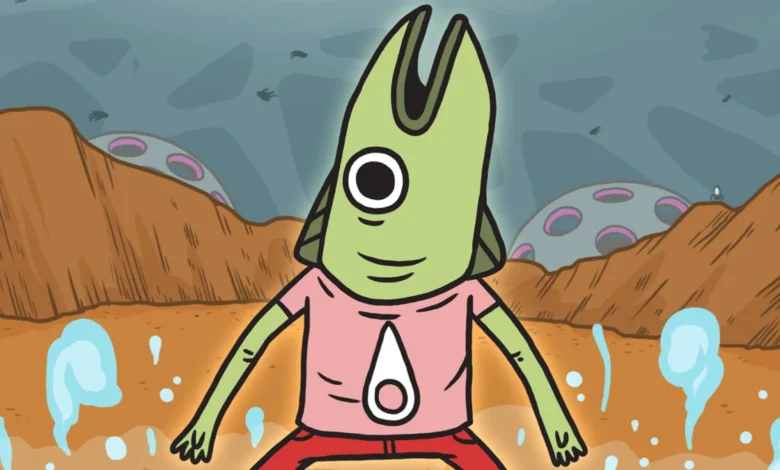
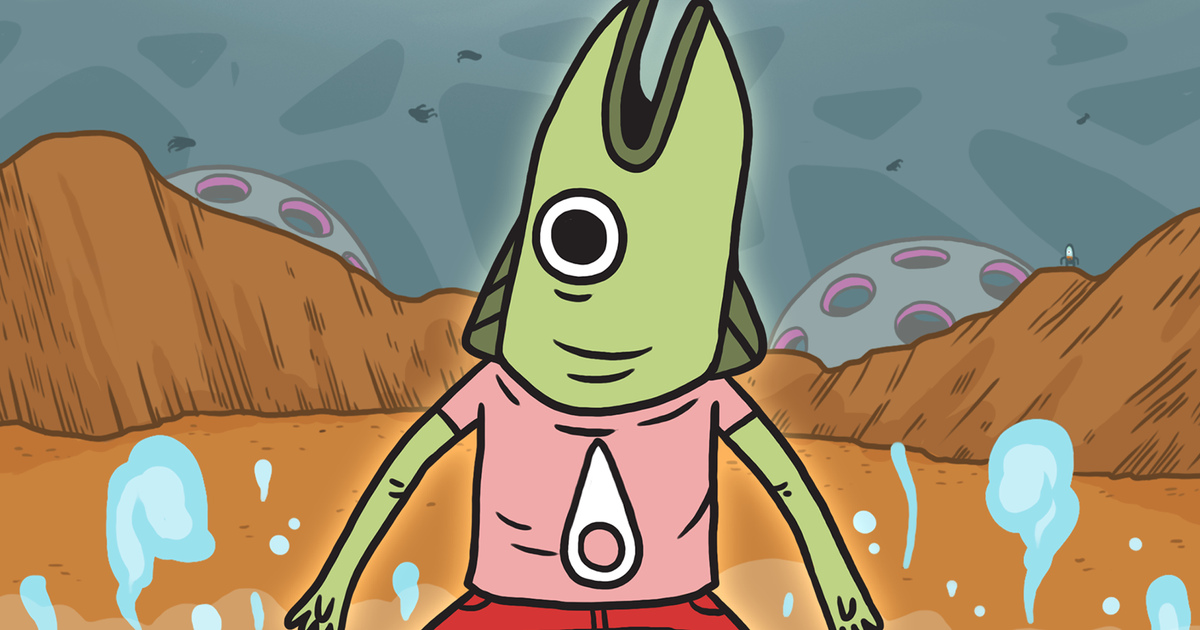
The aesthetic of Freak War is a deliberate departure from the high-fantasy or polished corporate styles of major TCGs. Galbraith has utilized his background as a cartoonist to create a world defined by "weird and wonderful" mutations. The lore of the game posits that the emergence of a "second sun" has caused rapid, bizarre mutations among Earth’s fauna.
The resulting character designs are intentionally idiosyncratic. Players encounter creatures such as a "Man Cat" (a human in an unconvincing cat costume), a "Partying Platypus," a dog with a goldfish bowl for a head, and a time-traveling tiger. This irreverent tone is intended to foster a lighthearted atmosphere, contrasting with the often high-stakes and serious nature of competitive TCG circuits. The card layout itself pays homage to classic 1990s trading cards, utilizing bold borders and clear iconography that serves as both a nostalgic nod to long-time collectors and a functional aid for new players.
Market Analysis and Crowdfunding Success
The tabletop gaming industry has seen a significant surge in "indie" TCGs and party games over the last five years, driven largely by crowdfunding platforms like Kickstarter and Gamefound. Freak War’s performance reflects this trend. With a modest initial goal of $10,000, the campaign surpassed its target shortly after launch, indicating a viable niche for games that offer a "TCG-lite" experience.
Industry analysts suggest that the success of such projects is tied to the "fatigue" experienced by consumers in the face of increasingly complex and expensive "living" games. As major publishers move toward subscription models, frequent set releases, and "power creep" (where new cards consistently outclass older ones), there is a growing demand for "self-contained" experiences. Freak War’s $20 price point per deck positions it as an impulse purchase or a low-risk entry point for families, a demographic that is often priced out of the competitive Pokémon or Disney Lorcana scenes.

Chronology and Future Roadmap
The development and rollout of Freak War follow a structured timeline aimed at ensuring quality control and timely fulfillment for backers.
- Pre-Development (2022-2023): Nate Galbraith develops the initial concept and playtests the "War/Pokémon" hybrid mechanics with local gaming groups and family members.
- Artistic Production (Late 2023): The first set of dozens of unique creatures is illustrated, and the modifier system is refined to ensure game balance.
- Kickstarter Launch (May 2024): The crowdfunding campaign goes live, quickly meeting its $10,000 goal through a combination of social media outreach and the support of the "sketchnate" art community.
- Campaign Conclusion (June 13, 2024): The funding window closes, allowing Sheltonshire Games to move into the final manufacturing phase.
- Manufacturing and Quality Assurance (Late 2024 – Early 2025): The game enters mass production. The developers have indicated that multiple "packs" or expansions are already in the planning stages to introduce new creatures, such as "buff penguins" and specialized snails.
- Fulfillment (June 2025): The game is scheduled to be delivered to backers worldwide. This timeline provides a one-year window for production and international shipping, a standard but cautious approach in the post-pandemic logistics landscape.
Implications for the Tabletop Sector
The emergence of Freak War highlights a broader shift in game design: the "de-mechanization" of complex genres. By stripping the TCG down to its most basic elements—math-based combat and card-based effects—Galbraith is testing whether the "collectible" aspect of gaming can survive without the "competitive" baggage.
If Freak War maintains its momentum post-launch, it could serve as a blueprint for other indie developers looking to disrupt the dominance of "The Big Three" (Magic, Pokémon, and Yu-Gi-Oh!). The success of the campaign suggests that players are not necessarily looking for the most complex system, but rather the most engaging social experience. Furthermore, the game’s ability to function as both a standalone party game and a customizable TCG provides it with a unique versatility, allowing it to occupy shelf space in both mainstream retail outlets and specialized hobby shops.
As the campaign heads toward its final days, the focus shifts to stretch goals and community engagement. The long-term viability of Freak War will depend on its ability to sustain a community through future expansions and perhaps a digital presence. However, its current trajectory confirms that there is ample room in the market for games that prioritize "goofy fun" and accessibility over tournament-grade complexity. For now, Freak War stands as a testament to the power of simple mechanics reimagined through a creative, independent lens.
Related posts: