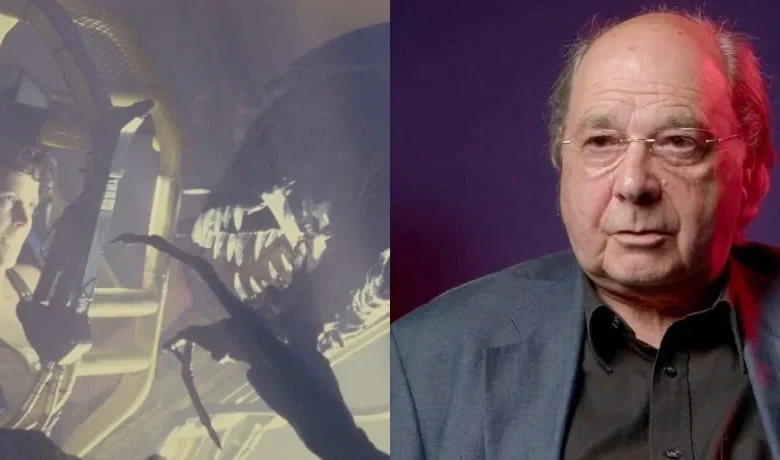
Forty years after its groundbreaking release, James Cameron’s Aliens continues to be lauded not only for its visual spectacle and relentless action but also for its meticulously crafted soundscape. Chief Dubbing Mixer Graham V. Hartstone, whose Academy Award-nominated work on the film is a testament to its auditory prowess, recently shared insights into the creation of this iconic sonic universe. His contributions, which helped define the terrifying vocalizations of the Xenomorph and the immersive environments of Hadley’s Hope, stand as a crucial element in the film’s enduring legacy. Hartstone’s extensive career, spanning blockbusters like Blade Runner, Superman, and multiple James Bond installments, provides a unique vantage point on the evolution of film sound and the collaborative process that brings cinematic visions to life.
The Genesis of a Sonic Masterpiece: Early Involvement and Ambitious Timelines
Hartstone’s involvement with Aliens began with a pivotal meeting with producers Tim Hampton and Gale Anne Hurd. Unbeknownst to him at the time, the production was operating under an exceptionally tight schedule, a stark contrast to the more leisurely post-production timelines common in the UK. "I knew very little ahead of time," Hartstone recalled. "The first thing I knew, I had lunch with Tim Hampton and Gale Anne Hurd, and they talked about mixing at Pinewood." The conversation quickly turned to the practicalities of the mixing process. Hartstone, accustomed to the 12 weeks required for Superman and the approximate 10 weeks for a James Bond film, estimated a similar duration for Aliens. The producers, however, presented a challenge: "They came straight back and said, ‘Well, in LA, they’ll do it in seven weeks.’ I don’t know how true that was, but I said, ‘Okay, well, we’ll do it in seven weeks.’"
Remarkably, the team not only met this ambitious deadline but exceeded expectations. The efficiency of their work reportedly surprised even the filmmakers themselves. "And we did it," Hartstone stated. "Funnily enough, when Gale and Jim took [the film] to their first screening in LA, the reaction was, ‘How the hell did you do that in seven weeks?’" This rapid turnaround underscores the intense pressure and dedication that characterized the production, forcing innovative solutions and a highly focused approach to sound design.
Bridging Worlds: The Influence of Alien and Collaboration with James Cameron
While Aliens stands as a distinct entity, its predecessor, Ridley Scott’s Alien, cast a long shadow. Hartstone acknowledged the original film’s brilliance but emphasized the shift in tone and scope for the sequel. "The original Alien was a fantastic film, but Aliens was a completely different sort of film. The time schedule was obviously a great deal of pressure, but, as ever, I put everything I had into the movie." This difference in approach was crucial; Aliens traded the claustrophobic horror of its predecessor for a more militaristic, action-packed experience, demanding a sound design that reflected this amplified intensity.
A significant aspect of the Aliens production was the collaborative dynamic with director James Cameron. Cameron, known for his multifaceted expertise, admitted to having limited prior knowledge of sound mixing, relying heavily on Hartstone’s guidance. "I was very, very proud of that praise from Jim. Goodness me, from Jim Cameron, that’s amazing praise," Hartstone remarked. He recalled Cameron’s dissatisfaction with the sound mix of his previous film, The Terminator, which likely spurred a greater emphasis on audio quality for Aliens. "I learned, I forget who told me now, may have been Gale, that he was not at all happy with the sound mix on The Terminator."
The technical capabilities available for Aliens were also a significant upgrade. Hartstone noted that while he had a print of The Terminator to study, it was in mono. For Aliens, the team had access to 70mm six-track stereo, a considerable advantage that facilitated a more dynamic and immersive sound experience. "And in fact, he was quite impressed with everything we did from day one," Hartstone added, highlighting Cameron’s immediate appreciation for the team’s sonic contributions.
Crafting the Terrors: The Iconic Alien Warrior Vocalization
One of the most debated and celebrated aspects of Aliens‘ sound design is the chilling vocalization of the Alien Warrior. The process of creating these terrifying sounds involved a complex layering of various animal and human noises, processed and manipulated to achieve an otherworldly effect. "I’m afraid I can’t remember the exact animals other than I know there were pigs and some of it was human sounds. There might’ve been tigers," Hartstone explained. "But basically it was all highly processed and mixed together to try and represent the alien’s emotions and sound scary, but everything was pitch-shifted and mixed together."
This intricate process of sound manipulation was crucial for conveying the creature’s primal fear and aggression without resorting to anthropomorphism. The pitch-shifting and mixing techniques allowed for a sound that was both visceral and alien, contributing significantly to the Xenomorph’s terrifying presence on screen. The resulting vocalizations became an indelible part of the Alien franchise’s sonic identity, a testament to the creative ingenuity employed by Hartstone and his team.
The Art of Sonic Immersion: Collaboration and Layering
Hartstone’s approach to sound design extended beyond individual effects to the creation of cohesive and immersive sonic environments. His collaboration with individuals like Don Sharp, who provided the foundational sound elements, and composer James Horner was integral to the film’s final mix. Hartstone’s philosophy emphasized building complexity and depth into every sound. "Don’s tracks were all ordinary sounds, so we had to make them spacey," he noted. He frequently employed tools like the Publison harmonizer to achieve this effect.
A key tenet of his methodology was avoiding single, isolated sounds. For instance, a simple sonar beep was transformed into a dynamic auditory experience. "When the ship was approaching at the minute, there’s like a sonar beep. Well, I was given one sonar beep, but that’s no good to me. So I made it go beep, beep, beep, beep from the surround to the screen. So it’s moving and it’s got more than one sound." Similarly, the heavy clang of a ship’s door was layered with multiple variations to create a more impactful and memorable sound. "When the big door shuts in the top of the hangar of the ship there, it’ll have one clank, but that’s not good for me. So with the Publison, I would pitch down and time shift so it went clunk, clank, clonk… three sounds for one thing happening because one can be easily missed." This meticulous attention to sonic detail ensured that the film’s auditory landscape was as engaging and dynamic as its visual counterpart.
The Enduring Appeal: Storytelling Through Sound
Looking back at Aliens forty years later, its continued resonance can be attributed to a confluence of factors, with sound design playing a pivotal role. Hartstone believes the film’s exceptional storytelling and pacing are fundamental to its longevity. "It’s a fantastic story and the pace moves so fast and the tension just builds, but in waves, which is a bit like what we have to do with the soundtrack," he explained.
The sound team’s ability to mirror the film’s narrative structure through auditory dynamics was crucial. "We can’t just be loud all the way through. And Jim understood that very much so," Hartstone stated. He described this dynamic as "sawtooths," where tension builds and then recedes, creating peaks and valleys that keep the audience engaged. "We build up to the tension and then we go quiet. There’s a pause while something else starts to happen, and the whole story goes through like that." This understanding of narrative pacing, applied to both the visual and auditory realms, contributed to the film’s immersive and captivating experience. Hartstone’s initial viewing of the film, even in its early stages, convinced him of its potential: "The first time I sat down and watched the movie, which was just in its very early stages, I was totally engaged in it from the beginning to the end and I thought, ‘This is a winner.’"
A Career Forged in Sound: Reflections and Legacy
Hartstone’s illustrious career at Pinewood Studios has seen him contribute to an impressive array of cinematic landmarks. His work spans genres, from the gritty realism of Blade Runner to the thrilling espionage of the Bond films and the classic horror of Hammer productions. This extensive experience has instilled in him a deep appreciation for the craft and the directors with whom he has collaborated. He has consistently sought out directors who understand the critical importance of sound. "I’ve always enjoyed working best with directors who are sound-conscious, who realize how important sound is," he affirmed. His list of esteemed collaborators includes Martin Campbell, David Lean, Ridley Scott, Stanley Kubrick, and, of course, James Cameron.
His time on location, learning about outside shooting, and then transitioning into post-production, the "actual final creative process," has been particularly satisfying. The ability to shape the final auditory experience before a film leaves the mix theater, with only minor adjustments like color grading remaining, represents the pinnacle of his creative process.
Mentoring the Next Generation: Advice for Aspiring Sound Engineers
With a wealth of experience, Hartstone has also dedicated himself to nurturing the next generation of sound professionals. He teaches at the National Film School in England and other institutions across Europe, imparting invaluable wisdom to aspiring sound engineers. His core message to his students is the primacy of supporting the narrative. "Above all, the most important thing is to support the story," he advises.
This support is multifaceted, beginning with ensuring clear and intelligible dialogue. Crucially, it also involves fostering strong collaborative relationships with the entire film crew. "Collaboration with the whole crew. Everybody’s working [toward] the same end of the film, so you’ve got to collaborate with everybody." He also emphasizes the importance of networking and seizing every opportunity. "Don’t ever turn a job down because it’s a people business. Just get to know as many people as possible."
Furthermore, Hartstone encourages proactive engagement and foresight on set. "When you’re on a job in a junior position, try and think ahead about the next thing that’s going to be needed in the process and see if you can make a bit of preparation for the sound editor or the editor so that they’ll appreciate that and they’ll probably want you on the next project." This forward-thinking approach, combined with a deep understanding of the collaborative nature of filmmaking and an unwavering commitment to serving the story, forms the bedrock of Hartstone’s enduring success and his invaluable advice for those looking to follow in his footsteps. The sonic tapestry of Aliens, a product of such dedication and expertise, remains a powerful testament to the art of film sound design.