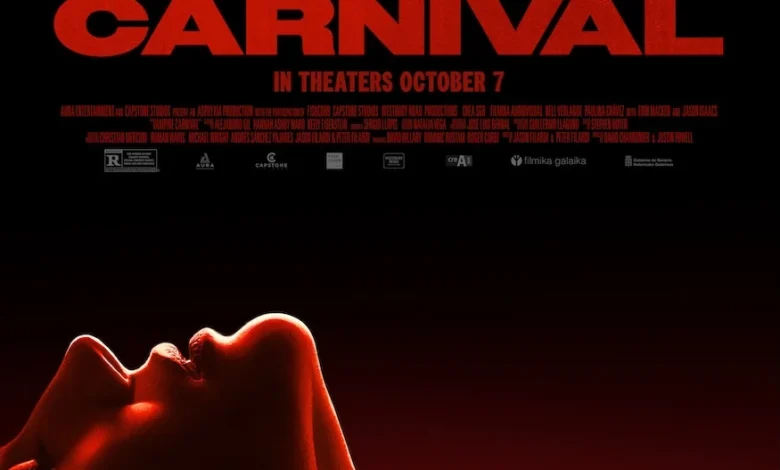
The landscape of modern cinematic horror is continually shaped by filmmakers who understand how to weaponize psychological vulnerability into tangible, supernatural threats. Directors David Charbonier and Justin Powell, widely recognized for their acclaimed work on tension-driven thrillers such as The Djinn and The Boy Behind the Door, are set to return with their latest feature, Vampire Carnival. Distributed by Aura Entertainment, the film is scheduled to hit theaters on October 7, bringing a uniquely psychological twist to classic creature lore.
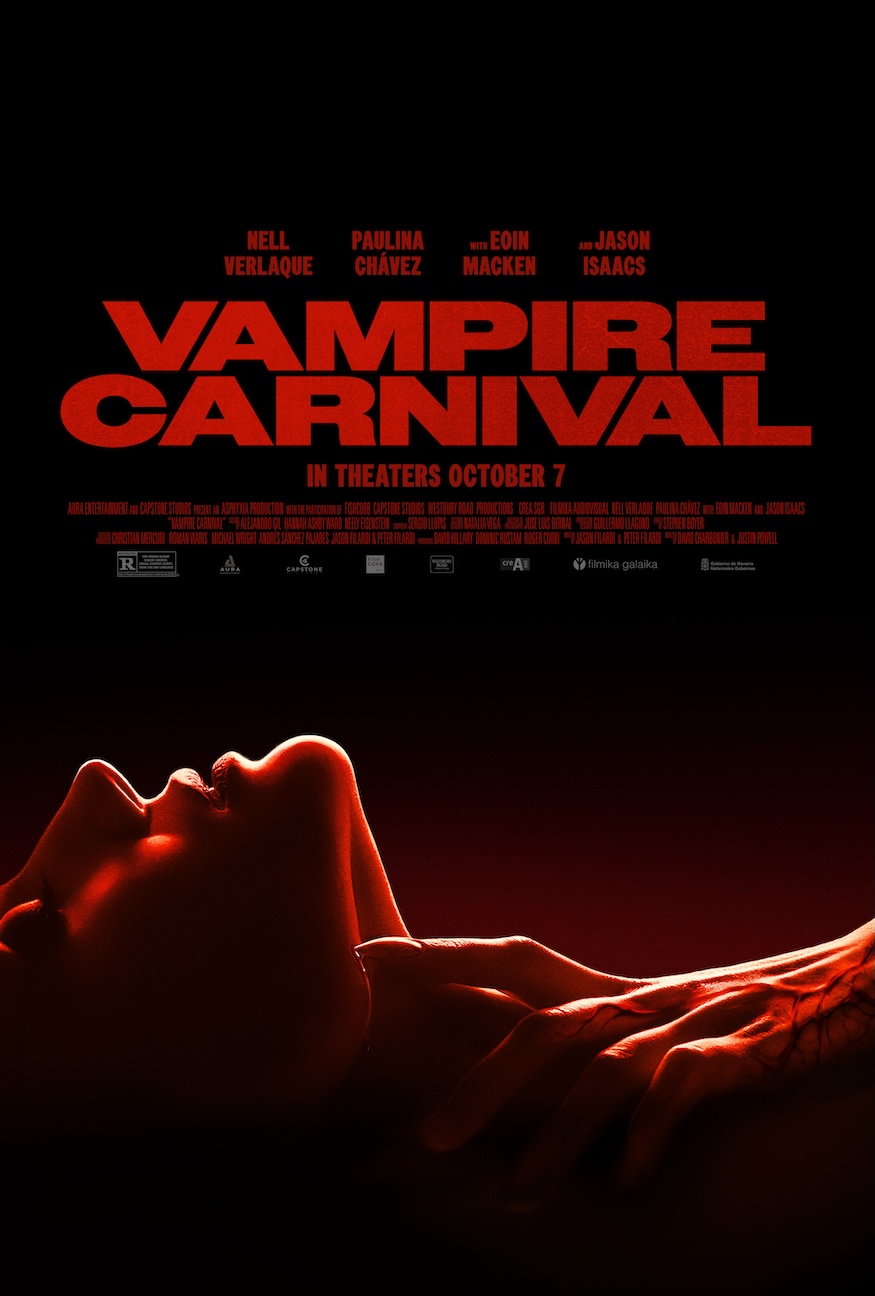
Written by the veteran screenwriting duo Jason Filardi and Peter Filardi—whose collective credits include genre staples like The Craft and Flatliners—the film boasts a robust ensemble cast. Headlined by Nell Verlaque and Kieron Moore, Vampire Carnival also features performances from Paulina Chávez, Alicia Sanz, Cedrick Cooper, Eion Macken, and seasoned actor Jason Isaacs. The project has steadily generated anticipation among genre enthusiasts for its fresh conceptual approach to the traditional vampire mythology, shifting the focus away from classic tropes toward contemporary themes of grief and emotional desolation.

Plot Dynamics and the Conceptual Core of Vampire Carnival
At the center of Vampire Carnival is a grieving young protagonist who finds herself adrift in the wake of personal tragedy. When a mysterious traveling carnival appears without warning on the outskirts of her small, isolated town, its eerie spectacle and seductive promises of escape exert a powerful gravitational pull on her vulnerable state of mind. Seeking solace from her lingering sorrow, she crosses the threshold into the fairgrounds, only to discover that the attraction is far more than a simple roadside diversion.

The narrative introduces a distinct evolutionary twist to the classic vampire archetype: rather than subsisting on biological blood, the supernatural entities inhabiting this hidden world feed exclusively on human despair. As the protagonist becomes increasingly ensnared by the carnival’s alluring illusions and hypnotic spectacles, the boundary between comforting escapism and psychological entrapment begins to blur. To survive, she is forced to confront the very trauma she has spent months running from; failure to do so threatens to seal her fate as the carnival’s next permanent, despair-fueled attraction.
This thematic focus on emotional trauma aligns with Charbonier and Powell’s previous directorial efforts, which frequently utilized claustrophobic settings and high-stakes isolation to explore deep-seated psychological wounds. By pairing these filmmakers with the Filardi brothers—who have decades of experience crafting socially resonant and atmospheric horror narratives—Aura Entertainment has positioned the film as a notable mid-autumn theatrical release for genre fans.

Production Background and Creative Lineage
The development of Vampire Carnival represents a convergence of established horror talent both behind and in front of the camera. Directors Charbonier and Powell first gained widespread critical recognition within the independent horror community with their 2021 supernatural thriller The Djinn, followed by the harrowing home-invasion suspense film The Boy Behind the Door. Both films established the directors’ facility for building sustained suspense through meticulous pacing and tight character focus, traits they carry into the expansive and visually striking world of a midnight carnival.

On the screenwriting front, the involvement of Jason and Peter Filardi bridges two distinct eras of Hollywood horror. Peter Filardi’s work on 1990s touchstones such as Flatliners and The Craft helped define a generation of dark fantasy and psychological thrillers, while Jason Filardi brings a complementary structural sensibility to the collaboration.

The casting process further elevates the production profile of Vampire Carnival. Nell Verlaque and Kieron Moore anchor the emotional core of the film, supported by an international cast that brings both television and film experience to the ensemble. Meanwhile, the inclusion of Jason Isaacs—a veteran of major studio franchises and prestige dramas alike—adds a commanding presence to the carnival’s sinister hierarchy.

Industry Context and Theatrical Release Strategy
Aura Entertainment’s decision to grant Vampire Carnival a theatrical window on October 7 places the film squarely within the lucrative pre-Halloween release corridor. Historically, the weeks leading up to October 31 represent a prime theatrical window for horror releases, as audiences actively seek out seasonal entertainment. By launching early in the month, Aura Entertainment aims to capture the initial wave of Halloween-season moviegoers before the late-month blockbuster rush.

The film’s arrival also reflects a broader industry trend favoring mid-budget, high-concept horror films that rely on strong stylistic identities and psychological themes rather than massive intellectual property backing. Independent horror continues to prove resilient at the box office, often outperforming traditional studio counter-programming through targeted marketing and passionate genre fandoms.

Broader Implications for Modern Horror
The thematic premise of Vampire Carnival—where monsters prey upon emotional exhaustion and existential despair—resonates strongly with contemporary cultural anxieties. In recent years, horror cinema has increasingly turned toward metaphors of mental health, burnout, and unresolved grief, transforming abstract emotional burdens into literal, physical antagonists. Films like Talk to Me, Smile, and the works of Ari Aster and Robert Eggers have demonstrated that audiences respond enthusiastically to horror that uses the supernatural as a vehicle for internal healing or destruction.
By setting this exploration within the iconic, inherently uncanny backdrop of a traveling carnival, Charbonier and Powell tap into a rich cinematic tradition of roadside dread. From Ray Bradbury’s Something Wicked This Way Comes to classic carnivalesque thrillers, the carnival setting has long served as a mirror for human temptation and moral reckoning.
As October 7 approaches, industry analysts will be monitoring the box office performance and critical reception of Vampire Carnival to gauge the appetite for original supernatural thrillers in the theatrical marketplace. With its experienced creative team, recognizable cast, and timely psychological themes, the film stands as one of the more closely watched independent horror releases of the autumn season.