The Many Faces of Sauron: A Deep Dive into the Shapeshifting Origins of Middle-earth’s Greatest Antagonist

In J.R.R. Tolkien’s expansive legendarium, the ability of the Dark Lord Sauron to manipulate his physical form serves as the primary engine of conflict, driving the political instability and catastrophic wars of the Second Age of Middle-earth. While the character is often remembered for his eventual manifestation as the Great Eye, his earlier history is defined by a sophisticated capacity for deception, diplomacy, and subversion. Through his shape-shifting, Sauron transitioned from a servant of Morgoth to an independent architect of ruin, orchestrating the creation of the Rings of Power and manipulating the most powerful figures of the Elven and human realms. As depicted in the Prime Video series The Rings of Power, this fluid identity is not merely a narrative device but a central thematic element that explores the nature of evil as a force that can disguise itself behind a veil of beauty and altruism.

A Chronology of Deception: From the First Age to the Forging
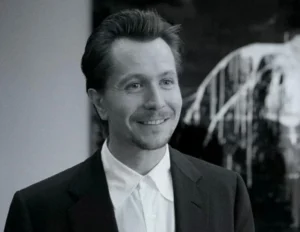
To understand the scope of Sauron’s influence, one must look at the timeline of his manifestations. Following the defeat of his master, Morgoth, during the War of Wrath, Sauron retreated into the shadows. The early years of the Second Age saw him in a state of vulnerability, characterized in the series by the portrayal of the character played by Jack Lowden. This iteration represents the remnants of Morgoth’s regime—a militant, remnant force attempting to consolidate power in the vacuum left by the collapse of Angband.

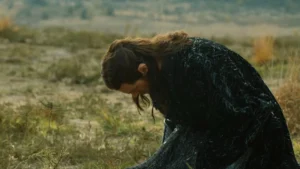
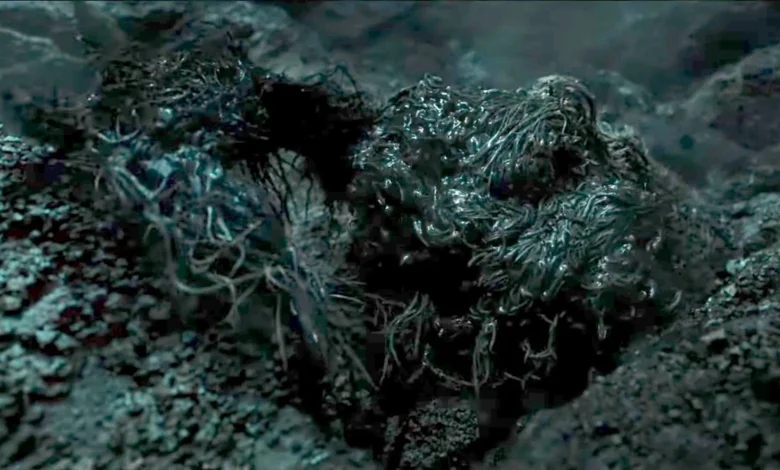
However, this form was short-lived. Following a confrontation with the progenitor of the Orcs, Adar, Sauron was effectively stripped of his physical vessel. This transition led to the "Black Goo" phase, an interstitial state that serves as a visceral representation of a Maia’s spirit without a permanent anchor. In this form, the entity exists as raw, malevolent intent, requiring the consumption of organic life—be it vermin or unfortunate travelers—to regain enough vitality to reconstruct a tangible, humanoid form. This biological necessity highlights the fragility of Sauron’s power; despite his immense stature as a fallen angelic being, his influence remains tethered to his ability to inhabit and manipulate physical matter.

The Strategic Evolution of Identities
The most significant shift in Sauron’s methodology occurred when he realized that brute force was no longer a viable path to domination. Adopting the guise of Halbrand, a supposed displaced king of the Southlands portrayed by Charlie Vickers, Sauron executed a masterclass in psychological manipulation. By positioning himself as a sympathetic, wounded hero, he managed to secure the trust of Galadriel. This was a calculated gambit: Sauron did not merely mimic the appearance of a man; he synthesized a backstory of regality and loss that resonated with the Elf’s own desire for order and vengeance.

The transition to the Annatar persona—the "Lord of Gifts"—marked the culmination of this strategy. While Halbrand was a vehicle for emotional manipulation, Annatar was a tool for intellectual seduction. In this form, Sauron targeted the Elven smith Celebrimbor, preying on his ambition to create works that could rival the legendary Silmarils. By presenting himself as an emissary of the Valar, Sauron gained access to the inner sanctums of Eregion. Historical analysis of the narrative suggests that this period was the turning point for Middle-earth; by offering knowledge of metallurgy and magic, Sauron ensured that the Elven smiths would unknowingly forge the very instruments that would lead to their own eventual subjugation.

The Duality of the Dark Lord: Production and Performance
From a production standpoint, the decision to have one actor, Charlie Vickers, portray multiple facets of Sauron underscores the character’s internal consistency. Showrunners have emphasized that while the outward appearances change—from the weary traveler to the divine counselor to the armored tyrant—the underlying motivation remains static: the imposition of absolute order through absolute control.

Vickers has noted in various promotional discussions that the "Annatar" form is distinct in its affectation. Where Halbrand utilized vulnerability to draw out protective instincts in others, Annatar uses arrogance and wisdom to command respect. This nuanced performance reflects the source material’s depiction of Sauron as a being of immense intellect and charisma, capable of appealing to the highest aspirations of the free peoples of Middle-earth before twisting them toward darkness. The inclusion of more visceral, combat-oriented forms—such as the "Dark Halbrand" or the "Dark Lord" in heavy, industrial-style armor—represents the final stage of this evolution, where the facade of benevolence is discarded in favor of overt dominion.
The Metaphysical Implications of the Eye
A frequent point of debate among viewers and scholars of Tolkien’s work is the status of the "Eye of Sauron." In the source material, the Eye is not merely a literal biological organ but a symbol of Sauron’s omnipresent gaze and his inability to manifest a fair form after the destruction of Númenor. The series faces a significant challenge in adapting this: how to reconcile the physical, shapeshifting antagonist of the early Second Age with the disembodied, atmospheric threat of the Third Age.

The text of The Silmarillion notes that after the sinking of Númenor, Sauron was robbed of the ability to appear fair to the eyes of Men. This creates a hard limit on his shapeshifting capabilities. As the series progresses, the narrative arc must eventually account for this loss of agency. The transition from a character who can walk among the Elves to a stationary, spectral force occupying Barad-dûr serves as the tragic conclusion to Sauron’s attempts at diplomacy. Once the ability to deceive through beauty is stripped away, the Dark Lord is forced into a state of permanent, unconcealable malice.

Broader Impact: The Nature of Evil in Modern Fantasy
The narrative focus on Sauron’s shifting forms provides a unique case study in how modern television adaptations handle complex literary antagonists. By detailing the specific mechanics of his transformation—from the "Black Goo" essence to the specific personas of Halbrand and Annatar—the show grounds the metaphysical threat of the Dark Lord in tangible, character-driven stakes.

This approach shifts the perspective from viewing Sauron as a distant, abstract force of nature to seeing him as a proactive agent of political destabilization. His actions, from the manipulation of Celebrimbor to the exploitation of Adar’s resentment, demonstrate that the greatest threat posed by Sauron is not his physical strength, but his ability to exploit the existing fractures within societies. As the series moves into subsequent seasons, the focus on his transition into the "Dark Lord" suggests an escalation from covert subversion to overt military campaign.

The inclusion of potential animalistic forms—such as the wolf or serpent, references to his First Age history—suggests that the show is committed to a deep-lore exploration of his capabilities. However, these forms serve a dual purpose: they are both a nod to the fans of Tolkien’s broader works and a foreshadowing of the dehumanization that accompanies his descent into pure, concentrated malice.

Conclusion: The Cost of Ultimate Power
Ultimately, Sauron’s shapeshifting is a story of diminishing returns. Each form he adopts, while effective for a time, requires a greater expenditure of his inherent power and a further distortion of his spirit. By the time he reaches the "Dark Lord" stage, the cost of his ambition is fully manifest: he has conquered the physical landscape of Middle-earth, but at the price of his own identity. The series portrays this not just as a victory for the villain, but as a cautionary tale about the corrosive nature of the desire for absolute control. As the narrative continues to unfold, the audience is left to witness the transformation of a master of disguise into the singular, unblinking sentinel of the Third Age, marking the end of an era where evil could wear a fair face.