The landscape of modern prestige television and cinema is undergoing a significant shift toward dark fantasy and historical horror, and the latest report suggests that Amazon Studios may be the next major entity to capitalize on this trend. According to industry insider Daniel Richtman, Amazon is currently in the early stages of developing an adaptation of Christopher Buehlman’s critically acclaimed 2012 novel, Between Two Fires. While the project remains unconfirmed by Amazon officially, the report has generated substantial interest within the literary and genre-film communities, where the book has long been cited as a masterpiece of "grimdark" historical fiction.
A Narrative Defined by Apocalyptic Dread
To understand the potential gravity of this adaptation, one must first examine the source material. Set against the backdrop of 1348, at the height of the Black Death, Between Two Fires is a harrowing exploration of faith, morality, and supernatural existentialism. The narrative centers on Thomas, a disgraced knight who has spent his life in the shadow of his own failures. His existence is irrevocably altered when he encounters a young girl, Delphine, who claims to have been touched by divinity.
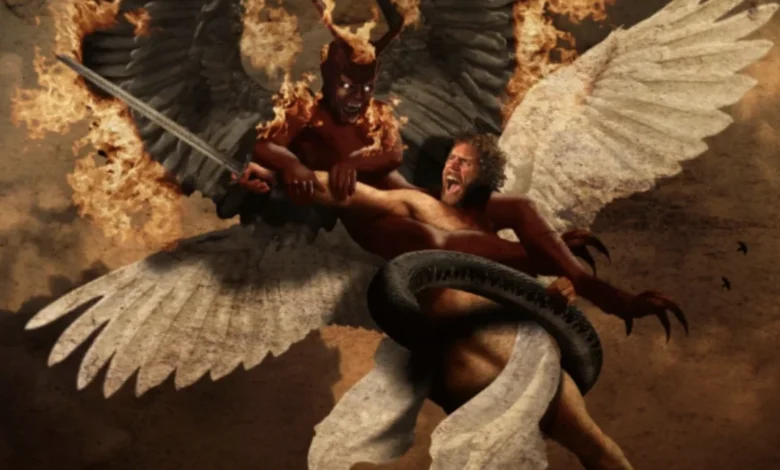
Delphine’s arrival is not merely a coincidental meeting; she asserts that the plague ravaging Europe is not a natural occurrence but rather a symptom of a grand, cosmic war between Lucifer’s fallen angels and the forces of Heaven. As humanity is caught in the crossfire, the world is physically manifesting the horrors of this celestial conflict. The journey that ensues—a trek across a decimated France toward the papal seat in Avignon—serves as the primary vehicle for the story’s horror, where the protagonists encounter not only the physical decay of the plague but also grotesque manifestations of demonic influence and the risen dead.
The Evolution of the Property
First published in 2012, Between Two Fires initially garnered a cult following, with its reputation growing steadily through word-of-mouth among enthusiasts of historical horror. The novel’s status was further cemented in 2024 when Tor Nightfire released a new hardcover edition featuring an introduction by Joe Hill. This reissue signaled a broader industry recognition of Buehlman’s work as a cornerstone of contemporary dark fantasy.
The book’s sustained popularity is a testament to its unique blend of rigorous historical research and supernatural terror. By grounding its narrative in the visceral reality of the 14th century—a time when death was an constant, tangible presence—Buehlman elevated the horror genre beyond traditional tropes. Critics and readers alike have frequently highlighted the novel’s ability to treat its medieval setting with the same gravity as its theological stakes, creating a narrative that is as emotionally grounded as it is terrifying.

Industry Context and the Rise of Medieval Horror
The potential adaptation arrives at a time when audiences are demonstrating an increased appetite for "prestige" genre television. Amazon’s own track record, highlighted by high-budget projects like The Lord of the Rings: The Rings of Power and The Wheel of Time, suggests an infrastructure capable of handling the logistical complexity of a period piece involving elaborate set design, historical costumes, and sophisticated visual effects.
However, Between Two Fires would mark a departure from the high-fantasy aesthetic of those programs. If produced, the show would join a lineage of bleak, atmospheric historical horror projects such as the 2010 film Black Death, directed by Christopher Smith, which similarly utilized the Black Death as a catalyst for human depravity. The shift toward this sub-genre suggests that streaming services are looking for stories that offer more than simple escapism, seeking instead narratives that challenge the viewer with complex philosophical questions regarding religion and the nature of suffering.
The Logistics of a Potential Adaptation
As of late 2026, the report from Daniel Richtman remains the primary source of the news. Crucially, the information does not clarify the format of the project—whether it will be developed as a limited series, an ongoing television show, or a standalone feature film.
From a production standpoint, the format choice will be pivotal. A limited series would likely allow for the most faithful adaptation, as the novel’s expansive, episodic nature—modeled after the structure of a pilgrimage—naturally lends itself to an eight-to-ten-episode arc. A feature film, conversely, would require significant condensation, potentially losing the intricate development of Thomas and Delphine’s dynamic.
Amazon’s interest in the project likely stems from the "prestige" nature of the intellectual property. In an era of content saturation, adapting a critically beloved book with an established, vocal fanbase provides a built-in audience and a level of creative credibility that original pitches often lack.
Implications for the Genre
Should this project move forward, it will serve as a bellwether for the marketability of "unrelenting" horror. Unlike more mainstream horror titles that rely on jump scares or slasher mechanics, Between Two Fires relies on a pervasive sense of dread and moral ambiguity. Its success—or failure—will inform how streaming platforms invest in dark fantasy moving forward.

Furthermore, the adaptation would represent a significant milestone for Christopher Buehlman’s career. A successful transition to screen would likely elevate his profile in Hollywood, potentially leading to further adaptations of his other works, such as Those Across the River or The Lesser Dead.
Challenges and Future Considerations
Any adaptation of Between Two Fires will face significant hurdles. The most obvious is the balance between historical accuracy and supernatural fantasy. The plague, as depicted in the book, is a character in its own right, and recreating the sheer scale of the devastation in mid-14th-century France will require a substantial budget and a vision that avoids the pitfalls of CGI-heavy production.
Additionally, the tone of the novel is notoriously dark. To maintain the integrity of the source material, the creative team will need to preserve the grim, often bleak, atmosphere without alienating a broader viewing audience. The industry has seen successful "dark" adaptations before, such as The Last of Us, which proved that mainstream audiences are willing to engage with somber, emotionally taxing material if the character work is of a sufficiently high caliber.
Conclusion
While the reports regarding an Amazon adaptation of Between Two Fires are currently unconfirmed, the news has effectively placed the novel back in the center of the cultural conversation. As audiences and critics wait for official word from Amazon Studios, the focus remains on the immense potential of the material. A narrative that balances the harsh realities of history with the high-stakes conflict of a war between Heaven and Hell offers a unique opportunity for visual storytelling.
If realized with the necessary budget and creative vision, the project has the potential to redefine historical horror on television. For now, the story serves as a reminder of the enduring power of literature to drive the evolution of modern entertainment, bridging the gap between a 14th-century nightmare and the 21st-century streaming landscape. The industry will be watching closely to see if Amazon officially greenlights the pilgrimage of Thomas and Delphine, bringing one of the most haunting tales of the century to the screen.
Related posts: