Saros Confirmed for Significant PS5 Pro PSSR 2 Upgrade, Signaling Potential Shift in Premium Console’s Fortunes

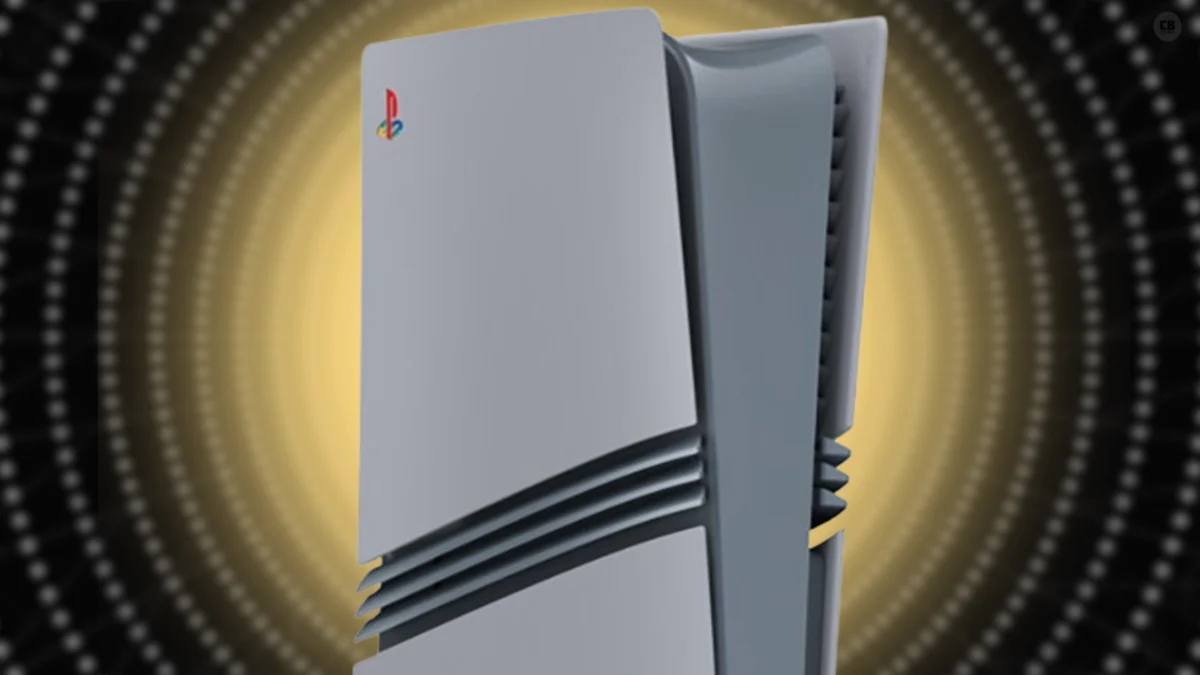
The highly anticipated PlayStation 5 exclusive title, Saros, slated for release next month, has officially confirmed a substantial PS5 Pro enhancement, poised to revolutionize the game’s performance and visual fidelity on Sony’s premium console. This development arrives at a critical juncture for the PS5 Pro, which has, since its market introduction, faced considerable scrutiny regarding its value proposition. A perceived lack of robust developer support—even from PlayStation’s own studios at times—and initially modest hardware differentiators contributed to this skepticism. While the challenge of widespread developer adoption persists, the recent introduction and subsequent upgrade of PlayStation Spectral Super Resolution (PSSR 2) has emerged as a pivotal technology, significantly bolstering the console’s capabilities.
The PS5 Pro’s Initial Trajectory and the Need for Justification
Launched to a mixed reception, the PS5 Pro was positioned by Sony as an evolution of the standard PlayStation 5, targeting enthusiasts seeking the absolute pinnacle of console gaming performance. However, its initial market penetration was hindered by several factors. Unlike previous mid-generation refreshes such as the PlayStation 4 Pro or Xbox One X, which offered clearer performance advantages and a more compelling suite of enhanced titles at their respective launches, the PS5 Pro’s early library of optimized games was comparatively sparse. Many existing titles received only minor patches, if any, leading to a perception that the console’s benefits did not sufficiently outweigh its higher price point. This created a dilemma for early adopters and potential buyers alike, as the "Pro" moniker promised a significant upgrade that, for a period, felt largely theoretical outside of specific, limited demonstrations. Industry analysts frequently pointed to the lack of a "killer app" or a substantial roster of games explicitly designed to leverage its enhanced hardware as a primary impediment to its widespread acceptance.
The core hardware improvements in the PS5 Pro, while technically superior, initially struggled to translate into consistently visible, game-changing experiences across the board. While offering increased GPU power and faster memory, the true potential of these upgrades required dedicated optimization efforts from game developers. Without these efforts, many games ran similarly to their performance on the base PS5, or offered only incremental improvements that were difficult to discern without direct comparison or specific display setups. This scenario underscored the critical importance of software optimization in realizing the full potential of hardware, a lesson that has been reiterated across various console generations.
PSSR and the Evolution of AI Upscaling on PlayStation
At the heart of the PS5 Pro’s differentiating technology lies PlayStation Spectral Super Resolution (PSSR), an advanced AI-driven upscaling solution. PSSR, in its original iteration, was a key selling point upon the console’s launch. It functions by rendering games at a lower internal resolution and then intelligently reconstructing the image to a higher output resolution, such as 4K or even 8K, utilizing machine learning algorithms. This process not only aims to achieve higher resolutions but also to maintain or even improve frame rates by reducing the rendering workload on the GPU. The AI component is crucial, as it learns from vast datasets of images to intelligently fill in missing pixel data, reduce aliasing, and mitigate visual artifacts that often plague traditional upscaling methods.
The recent introduction of PSSR 2 marks a significant leap forward in this technology. While the original PSSR was well-received for its ability to enhance image quality, PSSR 2 builds upon this foundation with more sophisticated algorithms, improved neural networks, and potentially greater integration with the PS5 Pro’s dedicated AI hardware accelerators. The upgrade has been widely lauded by early adopters and developers who have had access to it, with many in the gaming community referring to it as a "game changer." User testimonials highlight noticeably sharper images, greater detail preservation, and a reduction in artifacts previously seen in upscaled content, all while maintaining or achieving higher, more stable frame rates. This technological advancement directly addresses one of the PS5 Pro’s initial criticisms by providing a tangible, visible improvement in game presentation, provided games are developed or patched to support it. The challenge, however, has been the rate of adoption, with many titles still not leveraging even the original PSSR, let alone its enhanced successor.
"Saros": A Beacon for PS5 Pro’s Enhanced Capabilities
The announcement that Saros will fully support PSSR 2 upon its release is particularly significant due to the game’s pedigree and the reputation of its developer, Housemarque. For those unfamiliar, Housemarque is a Finnish game development studio wholly owned by Sony Interactive Entertainment, renowned for its distinct blend of arcade-style action, bullet-hell mechanics, and stunning visual presentation. The studio gained widespread critical acclaim and commercial success with its previous title, Returnal, released in 2021 as a PlayStation 5 exclusive. Returnal was lauded for its challenging roguelike gameplay, atmospheric science-fiction narrative, and groundbreaking technical achievements, including its utilization of the PS5’s DualSense controller haptic feedback and tempest 3D audio. Its fast-paced, visually intense combat sequences demonstrated the PS5’s raw power and Housemarque’s ability to push hardware to its limits.
The anticipation surrounding Saros is thus intrinsically linked to Returnal‘s triumph. Promotional materials for Saros have hinted at a continuation of Housemarque’s signature style, promising intense action, high replayability, and cutting-edge graphics. The studio’s commitment to visual fidelity and performance makes Saros an ideal candidate to showcase the PS5 Pro’s PSSR 2 capabilities. For a game where every frame and visual cue can impact gameplay, the promise of higher resolutions at sustained high frame rates—enabled by PSSR 2—is not merely an aesthetic upgrade but a functional enhancement. Players can expect a more fluid, responsive, and visually stunning experience, which aligns perfectly with Housemarque’s design philosophy. The decision by a first-party studio like Housemarque, under the Sony umbrella, to embrace PSSR 2 for a major exclusive is a strong endorsement of the technology’s potential and a clear signal from PlayStation itself regarding the PS5 Pro’s strategic importance. Saros is scheduled for release on April 30, offering PS5 Pro owners a compelling reason to engage with the console’s advanced features.
Developer Adoption and the Broader Industry Implications
The statistic that only 33% of PlayStation’s first-party releases so far this year have received PS5 Pro enhancements underscores the existing challenge. This figure, while representing a portion of the catalog, highlights a broader trend where developers must weigh the benefits of dedicating resources to a mid-generation refresh against the effort required to optimize for the much larger install base of the standard PS5. The development cycle for modern AAA games is already incredibly complex and resource-intensive, often stretching over several years and costing hundreds of millions of dollars. Adding another layer of optimization for a smaller, albeit premium, segment of the market can be a difficult decision for studios, particularly third-party developers who need to consider multi-platform releases.
However, Saros embracing PSSR 2 could serve as a significant catalyst. When a high-profile, first-party exclusive demonstrates a clear and tangible advantage on the PS5 Pro, it provides a powerful proof-of-concept for other developers. It showcases not only the technical prowess of PSSR 2 but also Sony’s commitment to differentiating the premium console experience. This could encourage more studios to invest in PSSR 2 integration, potentially through improved development tools, direct support from Sony’s technical teams, or even financial incentives. The gaming community has a strong appetite for graphical fidelity and performance, and clear demonstrations of the PS5 Pro’s capabilities could influence purchasing decisions and elevate expectations for future titles.
Chronology of Key Events and Technological Milestones
The narrative surrounding the PS5 Pro and PSSR 2 unfolds through a series of significant events:
- November 2020: Launch of the standard PlayStation 5, setting new benchmarks for console performance and features.
- September 2023 (Inferred): Unofficial leaks and official confirmations begin to surface regarding the PS5 Pro’s development and impending release.
- November 2024 (Approx.): PS5 Pro officially launches, featuring the initial iteration of PlayStation Spectral Super Resolution (PSSR).
- Late 2024 – Early 2025: Initial developer support for PS5 Pro is slow, leading to public debate about its value.
- Early 2025: Sony releases PSSR 2, an enhanced version of its AI upscaling technology, which garners positive feedback from early testers and the gaming community for its improved performance.
- Late 2025: Housemarque announces Saros, building anticipation based on Returnal‘s success.
- March 2026: Confirmation emerges that Saros will fully leverage PSSR 2 on the PS5 Pro, becoming one of the most prominent titles to do so.
- April 30, 2026: Saros is set to release, offering PS5 Pro users a definitive showcase of PSSR 2’s capabilities.
This timeline illustrates a gradual but determined effort by Sony to refine its premium console strategy, with PSSR 2 emerging as a cornerstone technology.
Broader Impact and Future Implications
The success of Saros in showcasing PSSR 2 could have far-reaching implications for the PS5 Pro and the broader console market. Firstly, it could reinvigorate sales of the premium console by providing a compelling, tangible reason for purchase beyond incremental frame rate bumps. Enthusiasts who have held off on upgrading might be swayed by a high-profile exclusive that truly pushes the boundaries of console performance. Secondly, it could set a new standard for graphical fidelity and performance expectations on console. As AI upscaling technologies like PSSR 2 become more prevalent, players may come to expect these enhanced experiences as the norm for high-end gaming.
Furthermore, this move by Sony and Housemarque highlights the ongoing "resolution vs. frame rate" debate in console gaming. PSSR 2’s ability to deliver both high resolutions and high frame rates simultaneously offers a potential solution, allowing developers to target ambitious visual goals without sacrificing performance. This also puts pressure on competitors, particularly Microsoft’s Xbox Series X, to continue innovating in similar areas of visual enhancement and performance optimization. While Xbox has its own suite of developer tools and relies on AMD’s FSR (FidelityFX Super Resolution), Sony’s first-party PSSR provides a proprietary advantage within its ecosystem.
The long-term success of the PS5 Pro, however, will ultimately depend on consistent and widespread developer adoption of PSSR 2 and future enhancements. One game, no matter how impressive, cannot carry an entire console. Sony will need to continue to provide robust tools, support, and incentives to ensure that a significant portion of upcoming titles—both first-party and third-party—take full advantage of the PS5 Pro’s capabilities. If Saros can indeed serve as the "game changer" that PSSR 2 users have hoped for, it could mark a pivotal moment in the PS5 Pro’s journey from a niche upgrade to a truly justified premium gaming experience. The industry will be closely watching Saros‘s performance and the subsequent ripple effect it may have on developer interest and consumer perception.