AOC and Philips Unveil New Gaming Monitor Lineup Highlighting Technological Advancements and Competitive Pricing in the Global Display Market


In a strategic move to consolidate their positions in the competitive gaming hardware industry, AOC and its sister brand Philips have announced a comprehensive new lineup of monitors designed to meet the evolving demands of both enthusiast gamers and professional esports competitors. During a recent international press conference held in Croatia, Cesar Reyes Acosta, the European Commercial Leader for AOC, presented a series of high-performance displays that signal a shift in the price-to-performance ratio of modern monitors. The unveiling focused not only on the technical specifications of the new hardware but also on a broader economic argument regarding the accessibility of high-end display technology in a period of global inflation.
The cornerstone of the presentation was the introduction of several flagship models under the AOC and Philips Evnia brands, ranging from ultra-fast refresh rate OLED panels to high-resolution dual-mode displays. These announcements come at a time when the PC gaming market is grappling with fluctuating prices for core components like GPUs and memory, positioning the monitor as a segment where consumers may currently find the most significant technological gains for their investment.
The Economic Evolution of Display Technology
A central theme of the event was the comparative analysis of monitor value over the last half-decade. Cesar Reyes Acosta presented a compelling "food for thought" session, posing the question of whether monitors are effectively "anti-inflationary." To support this claim, AOC provided a direct comparison between a popular model from five years ago and its contemporary equivalent.
In 2019, the AOC 24G2SPU was a staple of the mid-range market, retailing for approximately €239. For this price, consumers received a 23.8-inch Full HD (1080p) display with a 165 Hz refresh rate and a 4 ms response time. In contrast, the newly announced AOC 127G4ZR enters the market at the same €239 price point but offers a 27-inch 1440p (QHD) panel with a significantly higher 260 Hz refresh rate, a 1 ms response time, and HDR 400 certification.
This data suggests that while other PC components have seen price hikes or stagnated in value, display technology has continued to scale in both size and performance without increasing the barrier to entry for the average consumer. This trend is attributed to advancements in panel manufacturing efficiency and the maturation of IPS and OLED production lines, allowing manufacturers to pass cost savings onto the end-user while pushing the boundaries of refresh rates and pixel density.
Flagship OLED Innovations: AOC AGON Pro Series
AOC’s premium gaming sub-brand, AGON Pro, is set to receive two major additions that leverage the latest in OLED technology. These models are designed to address long-standing criticisms of earlier OLED generations, such as text clarity and brightness limitations.
The first major reveal is the AOC AGP346UCSD, a 34-inch ultrawide monitor utilizing 5th-generation QD-OLED (Quantum Dot OLED) technology. This generation of panels specifically targets the "font fringe" issue—a common complaint where sub-pixel layouts caused text to appear blurry or color-fringed on screen. The AGP346UCSD features a 1440p resolution and is certified for HDR 500 TrueBlack, ensuring the deep, infinite contrast ratios that OLED is known for while maintaining high peak brightness for HDR content. It is slated for release at a retail price of €999.
For the competitive esports market, AOC introduced the AGP277QCKD. This 27-inch monitor utilizes 4th-generation W-OLED technology to achieve a staggering 540 Hz refresh rate. This refresh rate represents the current pinnacle of motion clarity, aimed specifically at professional players of fast-paced titles like Counter-Strike 2 or Valorant. Despite the high refresh rate, the monitor maintains a 1440p resolution, moving away from the industry standard of sacrificing resolution (dropping to 1080p) to achieve ultra-high speeds. This model is expected to be available in June with a retail price of €899.
Philips Evnia and the Dual-Mode Breakthrough
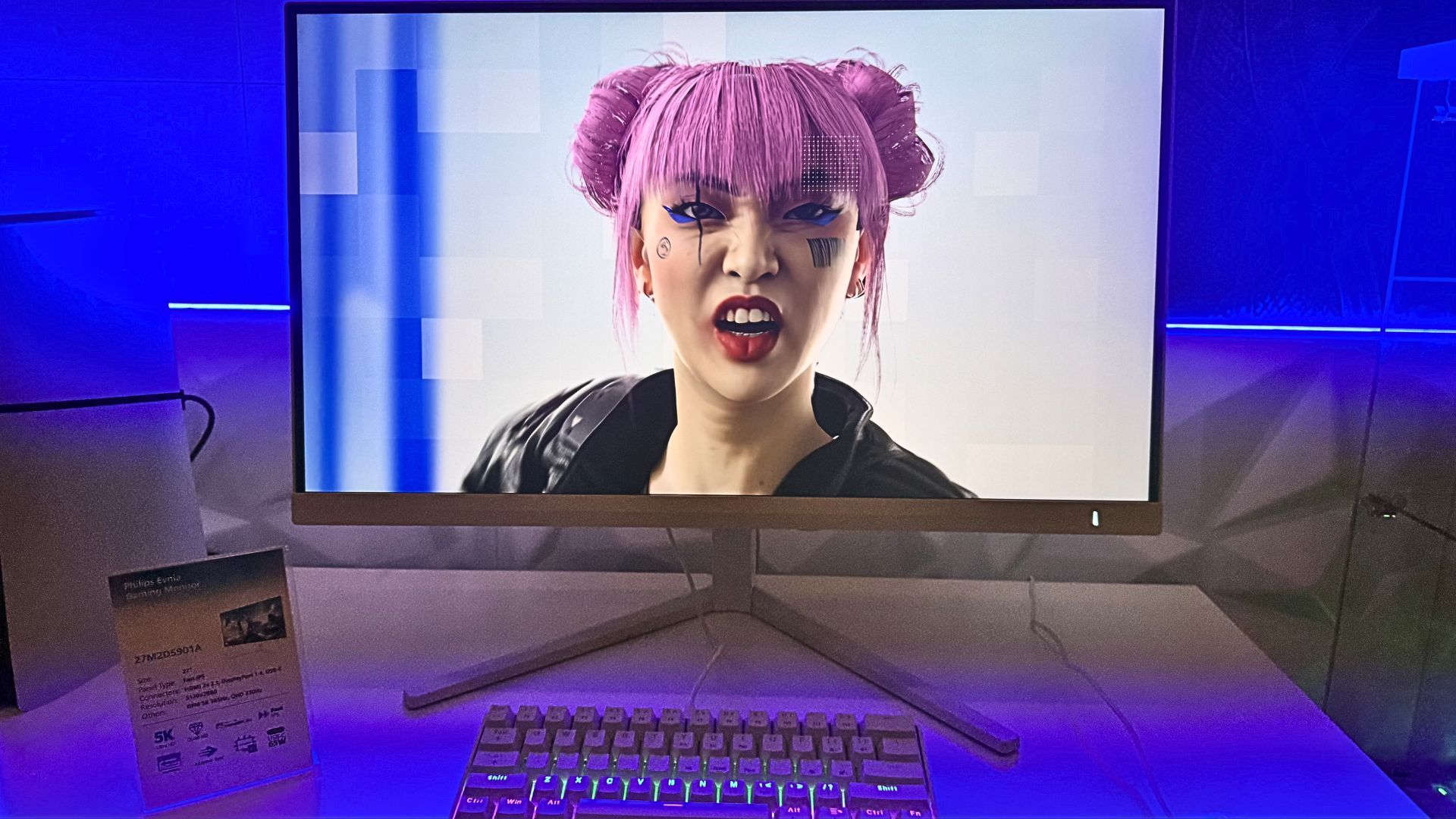
Philips, operating under the same corporate umbrella as AOC through TPV Technology, unveiled its own innovation in the form of the Evnia 27M2K5901A. This monitor is designed to bridge the gap between content creation and high-level gaming by offering a "dual-mode" functionality.
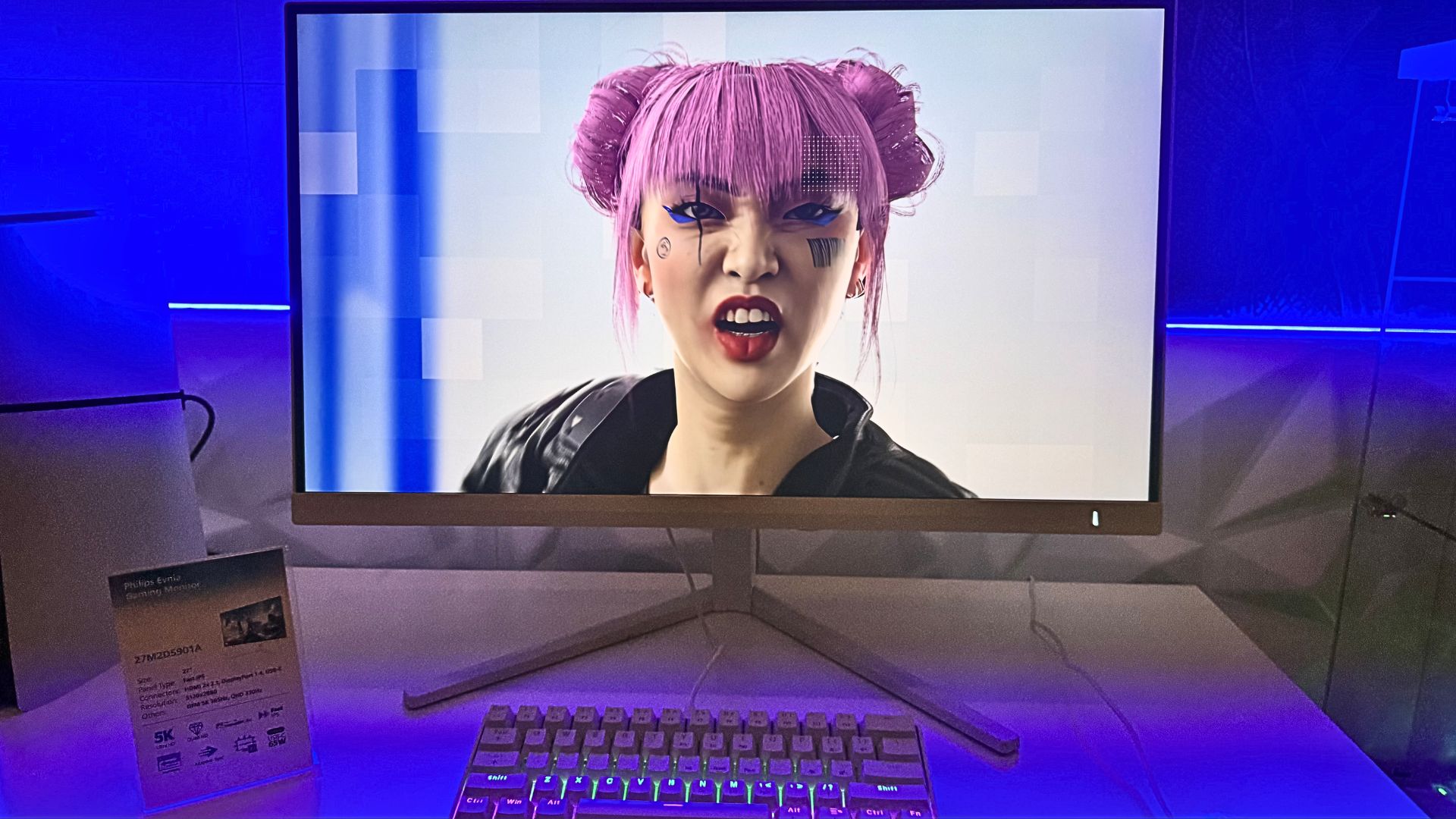
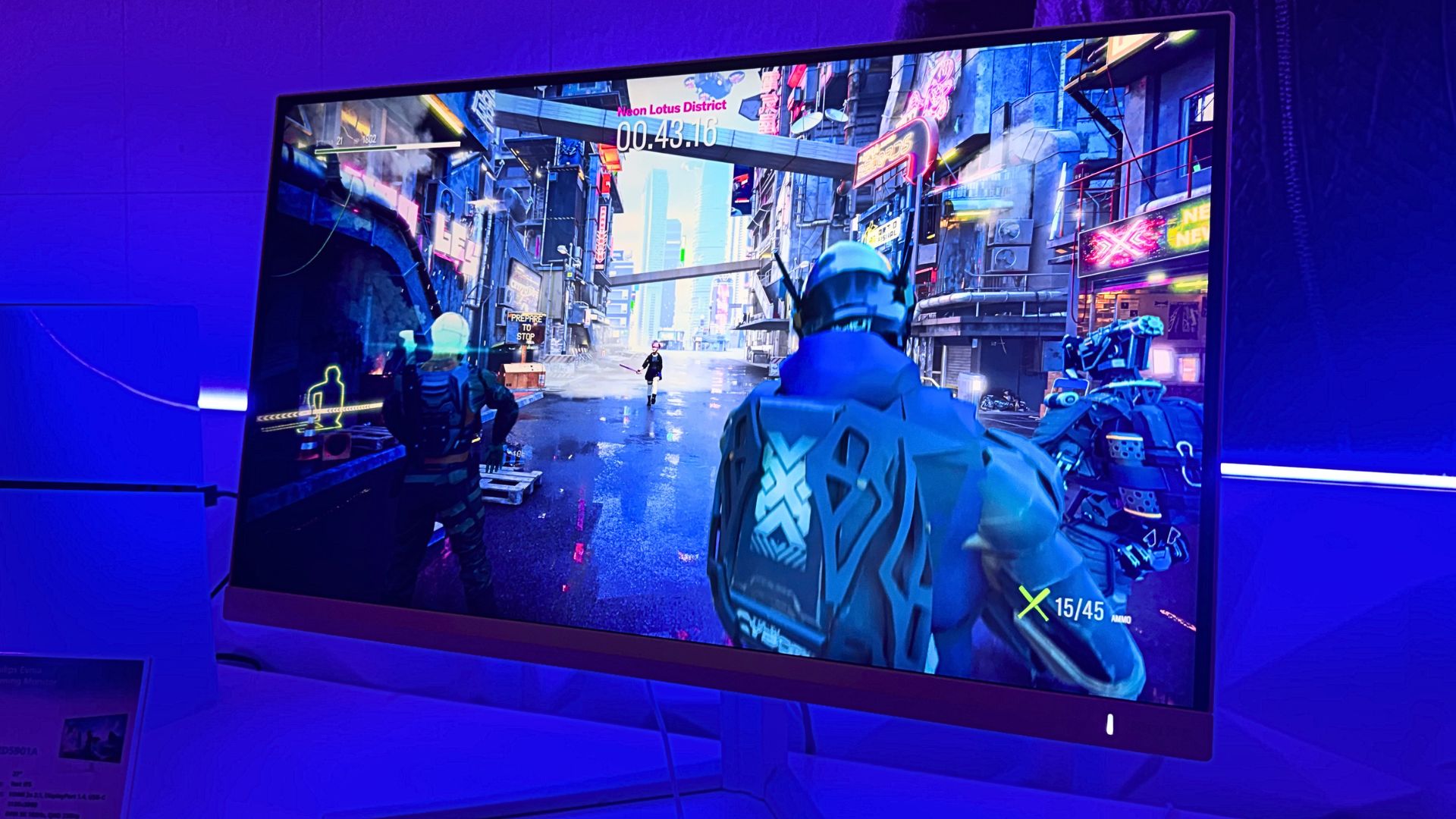
The 27M2K5901A features a native 5K resolution with a 165 Hz refresh rate, providing the high pixel density required for professional photo and video editing or immersive single-player gaming. However, the monitor can be toggled into a high-performance gaming mode that drops the resolution to 1440p while doubling the refresh rate to 330 Hz. This flexibility allows users to enjoy a crisp, high-resolution desktop experience during the day and a fluid, high-frame-rate gaming experience at night without needing two separate displays. The Philips Evnia 27M2K5901A is priced at €799 and features a distinctive white shell, catering to the growing trend of "clean" or "all-white" PC aesthetics.
Timeline and Market Availability
The rollout of these new displays is scheduled to begin in mid-2024, with specific models hitting shelves at different intervals:
- June 2024: Expected launch of the AOC AGP277QCKD (540 Hz W-OLED) and the AOC 127G4ZR (260 Hz 1440p).
- July 2024: Wider availability of the AOC AGP346UCSD (34-inch QD-OLED) and the Philips Evnia 27M2K5901A.
- Q3 2024: Global distribution of secondary models in the G4 and Evnia series.
Industry analysts suggest that the timing of these releases is intended to coincide with the mid-year refresh of gaming hardware and the lead-up to the back-to-school and holiday shopping seasons. By offering a range of prices from €239 to €999, AOC and Philips are effectively covering the entire spectrum of the market, from entry-level enthusiasts to professional-grade users.
Technical Analysis and Market Implications
The decision to focus on 1440p as the new baseline for gaming monitors is a significant indicator of market trends. For several years, 1080p remained the dominant resolution due to the hardware requirements of pushing more pixels. However, with the advent of AI upscaling technologies like NVIDIA’s DLSS and AMD’s FSR, mid-range graphics cards can now comfortably handle 1440p gaming. AOC’s aggressive pricing of 1440p high-refresh panels suggests that the industry is ready to phase out 1080p as the standard for 27-inch displays.
Furthermore, the integration of 5th-generation QD-OLED technology marks a maturation point for OLED in the PC space. Early adopters of OLED monitors often faced compromises in productivity due to the sub-pixel layout affecting text legibility. By moving to newer panel generations, AOC is positioning OLED not just as a gaming luxury, but as a viable all-around display for users who spend their time between gaming and professional work.
The "anti-inflationary" argument presented by Acosta also highlights a unique divergence in the hardware market. While the cost of semiconductor fabrication has risen, the cost of large-scale panel production has benefited from increased competition between major manufacturers like Samsung Display and LG Display. As these giants compete for dominance in the OLED and high-refresh IPS markets, secondary manufacturers like AOC can negotiate better rates, leading to the consumer-friendly pricing seen in the new lineup.
Official Responses and Industry Outlook
While competitors like ASUS, Dell (Alienware), and MSI have also released high-end OLED monitors recently, the AOC and Philips strategy appears to be focused on aggressive value-positioning. During the conference, the sentiment expressed by AOC leadership was one of confidence in the display’s role as the most impactful upgrade for a modern PC setup.
"Monitors are kind of important," Acosta noted playfully during the session, emphasizing that the screen is the final output for all the expensive hardware hidden inside a PC case. The company’s stance is that even if a user cannot afford a top-tier GPU upgrade this year, a move to an OLED or a high-refresh 1440p panel will provide a more tangible improvement to the gaming experience than almost any other component swap.
The broader implications for the industry are clear: the "spec war" has moved beyond just resolution. We are now seeing a multi-faceted competition involving refresh rates (surpassing 500 Hz), panel chemistry (QD-OLED vs. W-OLED), and hybrid functionality (dual-mode resolution). As AOC and Philips bring these technologies to market at lower price points than previously seen, it forces the rest of the industry to follow suit, likely leading to a year of significant price corrections and technological leaps across the entire display sector.
In conclusion, the announcements made in Croatia represent a major push by TPV Technology’s brands to dominate the mid-to-high-end monitor market. By combining cutting-edge OLED tech with a value-driven approach to the traditional IPS market, AOC and Philips are setting a high bar for the remainder of 2024. Consumers can look forward to a summer where high-performance gaming at 1440p and beyond becomes more accessible than ever before.