Marc Spector: Moon Knight #6 Unleashes Transdimensional Horror with Blade’s Arrival at the Midnight Mission

Marvel Comics is set to escalate the supernatural stakes in its critically acclaimed Marc Spector: Moon Knight series with issue #6, scheduled for release on Wednesday, July 22, 2026. This installment, crafted by the renowned creative team of writer Jed MacKay and artist Devmalya Pramanik, promises a thrilling crossover event as the iconic daywalker, Blade, joins Moon Knight at the Midnight Mission. Their combined forces will be tested against an unprecedented threat: a ravenous, transdimensional house intent on devouring everything in its path, signaling a new chapter of cosmic horror within the Marvel Universe.
The Escalation of a Supernatural Crisis: A Sentient, Hungry Structure

The narrative leading into Marc Spector: Moon Knight #6 has been marked by a series of increasingly bizarre and dangerous supernatural incursions. Weeks prior to the events of this issue, the Midnight Mission, Marc Spector’s sanctuary and operational base, suffered a catastrophic assault, impaled and seemingly destroyed by a "living sword." While Spector and his dedicated allies managed to resurrect their vital headquarters, this act of restoration appears to have inadvertently drawn a far more ancient and terrifying entity to Earth. The official solicit for the issue describes this new adversary as "another horrifying house from across space-time" that "heard its death cry and has come to Earth hungry for flesh and blood." This development marks a significant departure from conventional threats, presenting a challenge that blurs the lines between architectural structure and sentient predator.
The concept of a "living house" or an entity that manifests as a structure is not entirely new in horror or speculative fiction, but its integration into the superhero genre, particularly one as grounded yet mystical as Moon Knight, injects a fresh layer of dread. Such a monstrosity represents a threat that cannot be reasoned with, contained, or simply punched into submission. Its fundamental nature as a consuming force, driven by an insatiable hunger, demands a unique approach to combat and a deep understanding of arcane lore. The destruction and subsequent resurrection of the Midnight Mission, a place deeply tied to Moon Knight’s identity and mission, serves as a poignant backdrop, highlighting the fragility of even the most fortified sanctums in the face of interdimensional malevolence. The choice of "flesh and blood" as its sustenance underscores the visceral and existential horror of the situation, transforming a familiar concept like "home invasion" into a cosmic-level catastrophe.
Blade’s Crucial Intervention: A Hunter Beyond the Veil
The severity of this new threat necessitates the involvement of a specialist, and Marc Spector: Moon Knight #6 delivers with the return of Eric Brooks, the legendary Blade. Known throughout the Marvel Universe as the Daywalker, Blade is a half-human, half-vampire hybrid who has dedicated his existence to hunting and eradicating all forms of supernatural evil, particularly vampires. His unique physiology grants him superhuman strength, speed, agility, and a formidable healing factor, coupled with an immunity to most vampiric weaknesses. More importantly, his centuries of experience have equipped him with an unparalleled knowledge of occult practices, supernatural entities, and the most effective means to dispatch them.
Blade’s inclusion in this narrative is strategic. While Moon Knight operates primarily within the realm of Khonshu’s lunar mysticism and street-level vigilantism, Blade’s purview extends to the darkest corners of the supernatural world. His expertise in combating monstrous entities, including those that defy conventional understanding, makes him an indispensable ally against a transdimensional house that feeds on life itself. The solicit text acknowledges this, stating, "Luckily, that’s a hunger Blade knows how to handle, though this monstrosity may be beyond even HIS pay grade." This line suggests that even for a seasoned hunter like Blade, this particular threat poses an exceptional challenge, hinting at the sheer power and alien nature of the entity. The collaboration between the Fist of Khonshu and the Daywalker forms a formidable, albeit unconventional, alliance rooted in their shared commitment to protecting humanity from the things that go bump in the night, and beyond. Their dynamic, one driven by divine mandate and psychological fragmentation, the other by a personal vendetta against evil, promises compelling character interactions amidst the chaos.
The Midnight Mission: A Vulnerable Nexus
Central to Moon Knight’s current narrative arc, the Midnight Mission serves as more than just a base of operations; it is a symbol of Marc Spector’s reformed purpose. Eschewing the more brutal and often chaotic vigilantism of his past, Spector, under the guidance of Khonshu, established the Mission as a sanctuary for those who travel at night, a place where the vulnerable and the lost can find aid. It functions as both a community center and a command post, housing Spector’s various personas and his growing network of allies. Its initial destruction by the living sword was a significant blow, not just physically but symbolically, challenging the very foundation of Moon Knight’s new mission.
The resurrection of the Midnight Mission was a testament to Moon Knight’s resilience and the loyalty of his associates. However, this act, steeped in mystical energies, inadvertently created a beacon for something far worse. The arrival of the transdimensional house, drawn by the Mission’s "death cry," transforms this haven into a primary target. This raises critical questions about the consequences of wielding ancient powers and the unforeseen repercussions of interacting with the supernatural. The Mission’s vulnerability to such an existential threat underscores the constant peril faced by Spector and his team, reinforcing the idea that in the world of Moon Knight, even safety is temporary and often comes at a steep price. The battle to save the Midnight Mission is not just about protecting a building, but about safeguarding the very principle of sanctuary it represents.
Jed MacKay’s Acclaimed Storytelling and Artistic Collaboration
The Marc Spector: Moon Knight series has garnered significant critical acclaim since its inception, largely due to the masterful storytelling of writer Jed MacKay. MacKay has been praised for his nuanced exploration of Marc Spector’s complex psyche, his multiple dissociative identities, and his often-strained relationship with the Egyptian moon god, Khonshu. His run has successfully balanced street-level crime-fighting with deep dives into supernatural lore and psychological drama, solidifying Moon Knight’s place as one of Marvel’s most unique and compelling characters. The series has maintained a consistent quality, earning praise for its sharp dialogue, intricate plotting, and innovative character development.
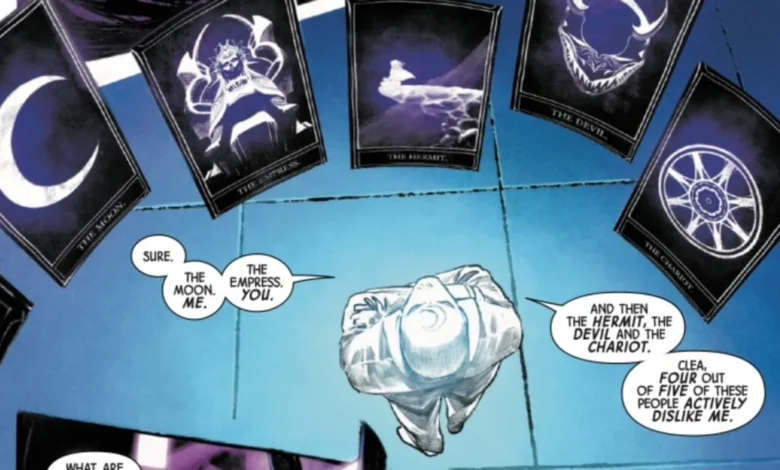
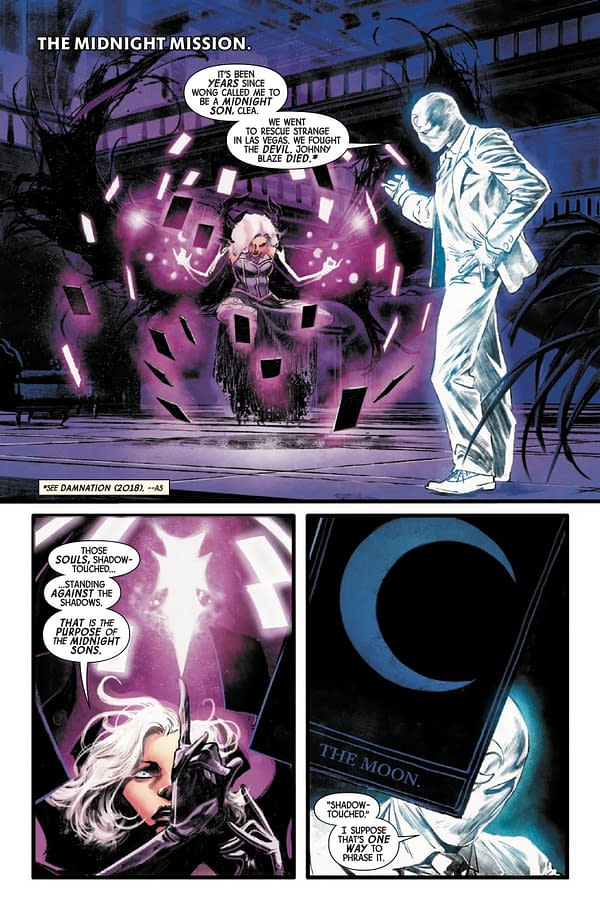
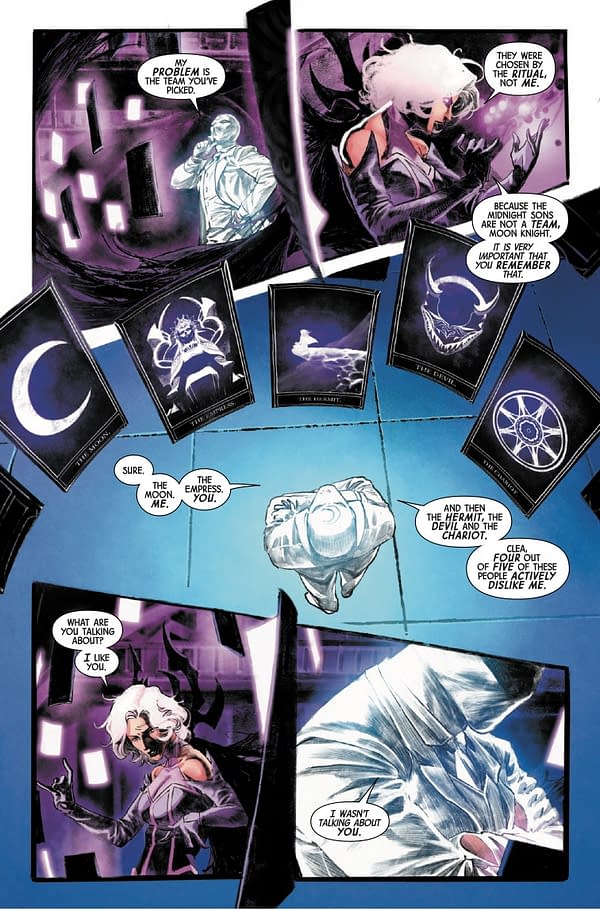
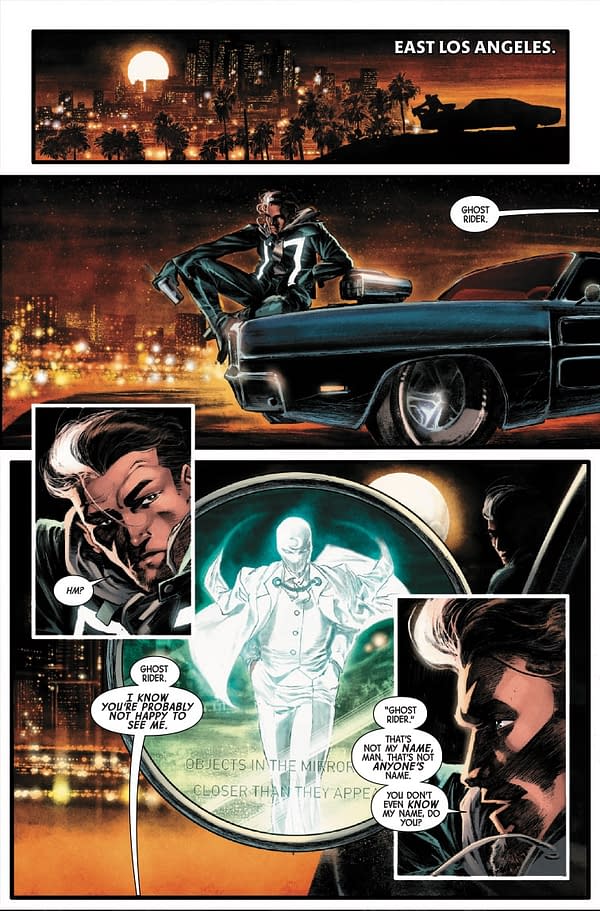
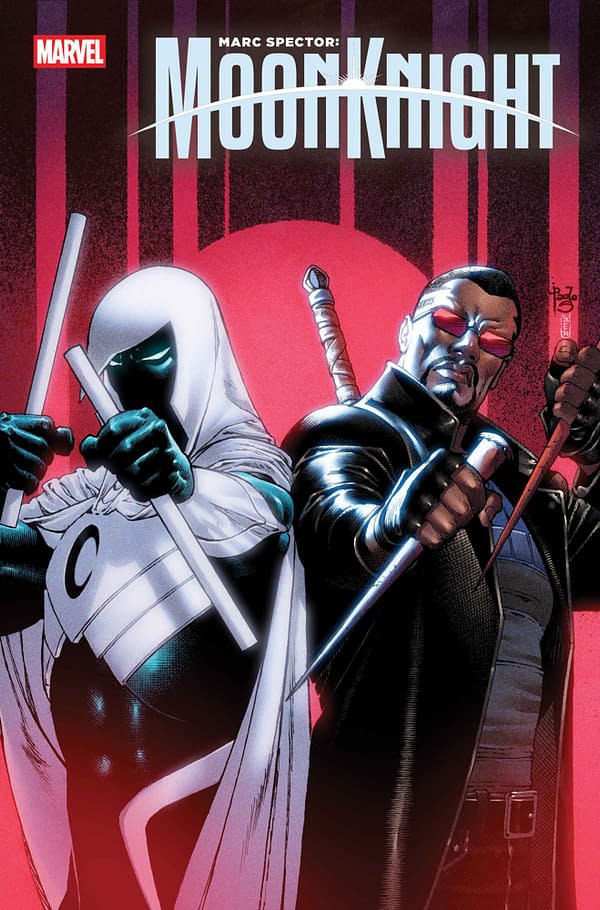
For Marc Spector: Moon Knight #6, MacKay is joined by artist Devmalya Pramanik, whose visual storytelling is crucial in bringing the fantastical elements of the narrative to life. Pramanik’s art style, known for its dynamic action sequences and atmospheric detail, is well-suited to the blend of gritty realism and mystical horror that defines Moon Knight’s world. The preview pages offer glimpses into the artistic direction, showcasing Moon Knight consulting with Clea, the current Sorcerer Supreme, through what appears to be mystical tarot readings. This interaction suggests a deeper dive into the magical aspects of the Marvel Universe, with Clea providing vital arcane insight into the nature of the transdimensional house. The dramatic confrontation unfolding in East Los Angeles, as depicted in the previews, promises intense action and a visually striking portrayal of the monstrous entity. The main cover by Paulo Siqueira, along with variants by German Peralta, Netho Diaz, and Dike Ruan, further enhance the anticipation, each offering a distinct artistic interpretation of the looming conflict. The cohesive vision of this creative team is pivotal in translating MacKay’s ambitious narrative into a captivating comic book experience.
Thematic Undercurrents: Identity, Trauma, and Cosmic Horror
The upcoming issue is rich with thematic potential, particularly concerning identity, trauma, and the encroachment of cosmic horror. Both Moon Knight and Blade are characters profoundly shaped by their origins and personal struggles. Marc Spector grapples with Dissociative Identity Disorder, his various personas (Marc Spector, Steven Grant, Jake Lockley, Mr. Knight) each contributing to his complex identity and methods. Blade, born from a mother bitten by a vampire, lives with the duality of his human and vampiric heritage, constantly fighting the darkness within and without. The original article’s satirical observation that the team-up is "less a team-up and more a support group for beings with serious identity issues" highlights this shared struggle in a more lighthearted context, but journalistically, it points to a profound thematic connection. Their individual battles with internal and external monstrousness make them uniquely equipped, yet also vulnerable, to a foe that defies conventional existence.
The introduction of a "transdimensional house hungry for flesh and blood" pushes the series further into the realm of cosmic horror. This type of threat, often characterized by entities beyond human comprehension and driven by primal, indifferent desires, challenges the very fabric of reality. It forces heroes to confront their limitations and the terrifying vastness of the unknown. Unlike a tangible villain, a sentient structure embodies an impersonal, environmental threat that can warp and consume its surroundings, making it an embodiment of existential dread. The fight against such a creature is not merely physical; it is a battle for sanity and the preservation of reality itself. MacKay’s use of such a threat deepens the horror elements inherent in Moon Knight’s mythos, where the line between reality and hallucination, divine intervention and madness, is always thin.
Marvel’s Strategy: Expanding Character Interactions and Universe Building
The crossover event in Marc Spector: Moon Knight #6 also reflects Marvel Comics’ ongoing strategy of expanding character interactions and enriching its shared universe. By bringing together Moon Knight and Blade, two characters with distinct yet complementary supernatural backgrounds, Marvel fosters excitement and cross-pollinates readership. Such team-ups allow for fresh narrative dynamics, exploring how different heroes approach similar challenges and how their personalities clash or coalesce under pressure. It also serves to underscore the interconnectedness of the Marvel Universe, demonstrating that even seemingly disparate corners of its continuity can converge to face a common, escalating threat.
The inclusion of Clea, the current Sorcerer Supreme, further emphasizes this interconnectedness. Her role, even if limited to providing mystical counsel, signifies that the events unfolding in Moon Knight have implications that resonate with the broader magical community of Earth. It positions the "transdimensional house" as a significant magical threat, one that might require the combined wisdom of multiple mystical practitioners to fully comprehend and defeat. These crossovers are not just about spectacle; they are vital tools for world-building, allowing creators to explore new facets of established characters and to introduce new layers of complexity to the Marvel continuity.
Release Details and Collectibility
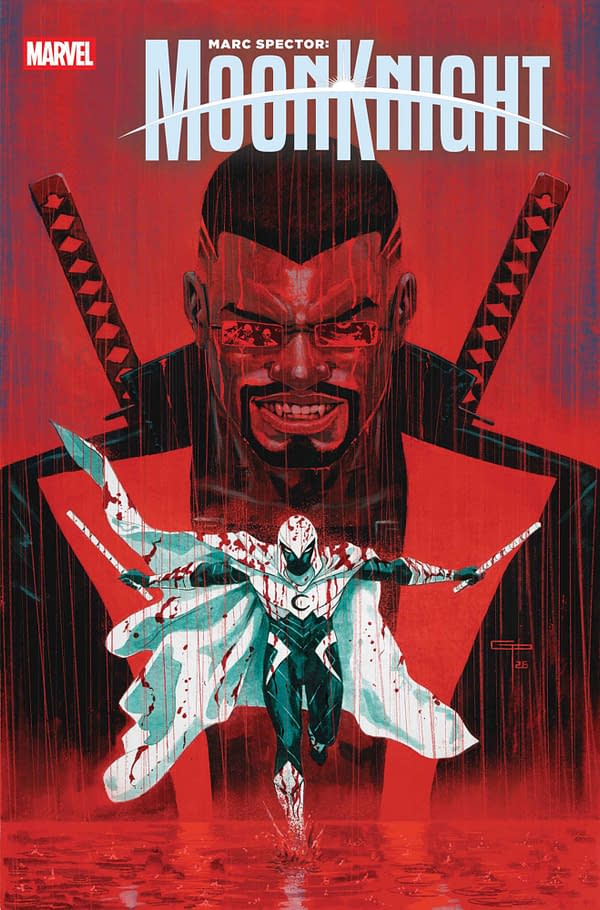
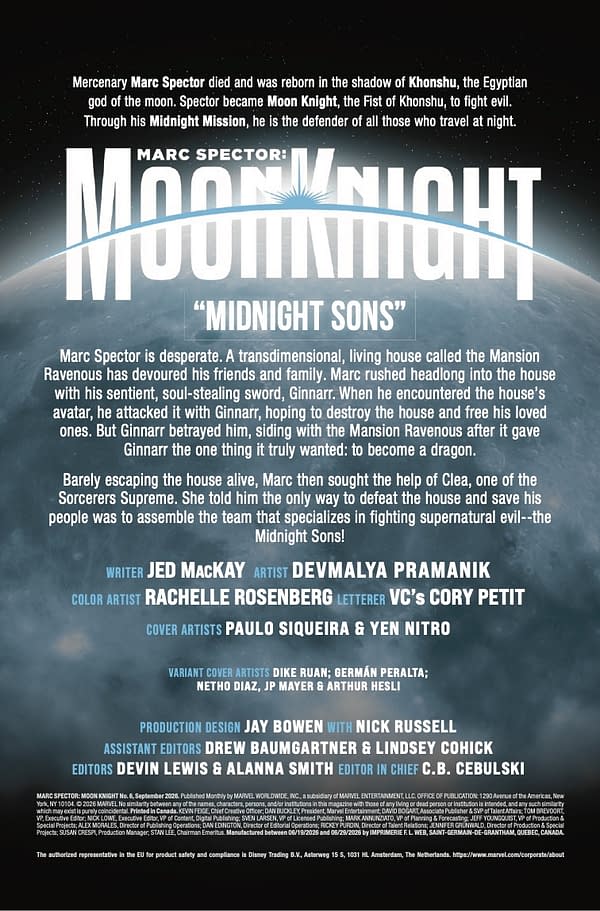
Marc Spector: Moon Knight #6 is set to be a significant issue for collectors and fans alike. Published by Marvel Comics, the standard edition will retail for $4.99 US, with a Canadian price of $6.25. The comic comprises 32 pages and features a standard dimension of 6.62"W x 10.19"H x 0.05"D, weighing approximately 2 oz. It carries a ‘Rated T+’ classification, indicating content suitable for teens and up due to its potentially mature themes and action sequences.
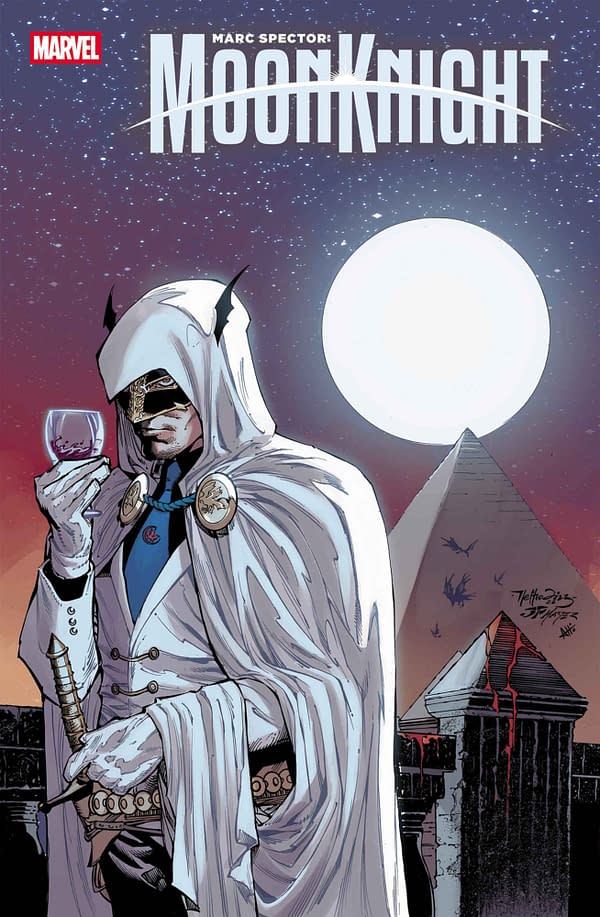
In addition to the main cover by Paulo Siqueira, Marvel is offering several variant covers, which are highly sought after by collectors. These include:
- 75960621496900616 – MARC SPECTOR: MOON KNIGHT #6 GERMAN PERALTA VARIANT – $4.99 US | $6.25 CAN
- 75960621496900621 – MARC SPECTOR: MOON KNIGHT #6 NETHO DIAZ HELLFIRE COSTUME SWAP VARIANT – $4.99 US | $6.25 CAN
- 75960621496900631 – MARC SPECTOR: MOON KNIGHT #6 DIKE RUAN VARIANT – $4.99 US | $6.25 CAN
These variants provide diverse artistic interpretations of the issue’s themes and characters, offering fans multiple options to celebrate this pivotal story arc. The inclusion of a "Hellfire Costume Swap Variant" by Netho Diaz suggests a thematic tie-in or homage that will be appreciated by long-time Marvel enthusiasts.
Conclusion
Marc Spector: Moon Knight #6 represents a compelling nexus of psychological drama, supernatural horror, and superhero action. Jed MacKay and Devmalya Pramanik are set to deliver an impactful chapter that not only advances Moon Knight’s ongoing saga but also integrates one of Marvel’s most formidable monster hunters into his world. The confrontation with a transdimensional house offers a fresh and terrifying challenge, pushing the boundaries of what Moon Knight and Blade have faced before. This issue promises to be a pivotal moment for both characters, testing their resolve and their understanding of the true horrors that lurk beyond conventional reality. As the release date approaches, anticipation builds for this unique crossover, poised to leave a lasting mark on the supernatural landscape of the Marvel Universe.