Legendary Game Director Hideki Kamiya Expresses Desire to Lead a New Castlevania Project Under Konami

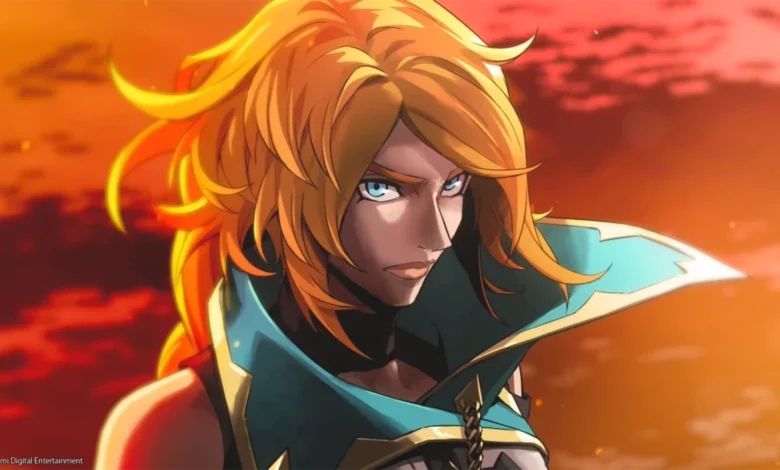
The landscape of action video games has long been shaped by visionary directors whose distinct creative signatures define entire genres. Among these luminaries is Hideki Kamiya, a master architect of fast-paced, high-octane combat and intricate game design. In a recent broadcast on his personal YouTube channel, Kamiya publicly turned his attention toward one of the most revered and historic franchises in the interactive entertainment medium: Konami’s Castlevania. While delivering his trademark candor, the director issued a direct call to the publisher, signaling his eagerness to spearhead a radical, high-energy revival of the gothic vampire-hunting series if given the opportunity.
This unexpected public overture highlights a recurring theme in contemporary game development, where veteran creators look back at historical intellectual properties with ambitions to modernize them through contemporary design philosophies. However, while the prospect of a Kamiya-led Castlevania has captured the imagination of industry enthusiasts, the reality of development pipelines, existing studio commitments, and Konami’s current corporate strategy suggests that any potential collaboration remains firmly in the realm of speculation.
The Genesis of a Proposal and Kamiya’s Legacy
The remarks in question stem from a video uploaded to Kamiya’s YouTube channel. Although the footage was initially recorded during the previous calendar year, its digital publication has offered a transparent look into the director’s post-departure ambitions following his departure from PlatinumGames and the subsequent founding of his independent studio, Clovers. Discussing properties he would relish the chance to direct, Kamiya addressed Konami directly regarding the dormant state of the vampire-hunting epic.
"We’ll definitely make Castlevania," Kamiya remarked during the broadcast. "If you let us work on it, we can make something truly insane, so just contact us and we’ll be at your service."
Such statements are characteristic of Kamiya, whose career is defined by genre-defining hits that have left an indelible mark on the industry. Having begun his career at Capcom, Kamiya served as the director for Resident Evil 2 (1998), establishing a gold standard for survival horror pacing and cinematic tension. He subsequently directed Devil May Cry (2001), a title widely credited with inventing the 3D character action genre. His portfolio also includes the critically acclaimed mythological fable Okami (2006) and the stylized combat masterclass Bayonetta (2009).
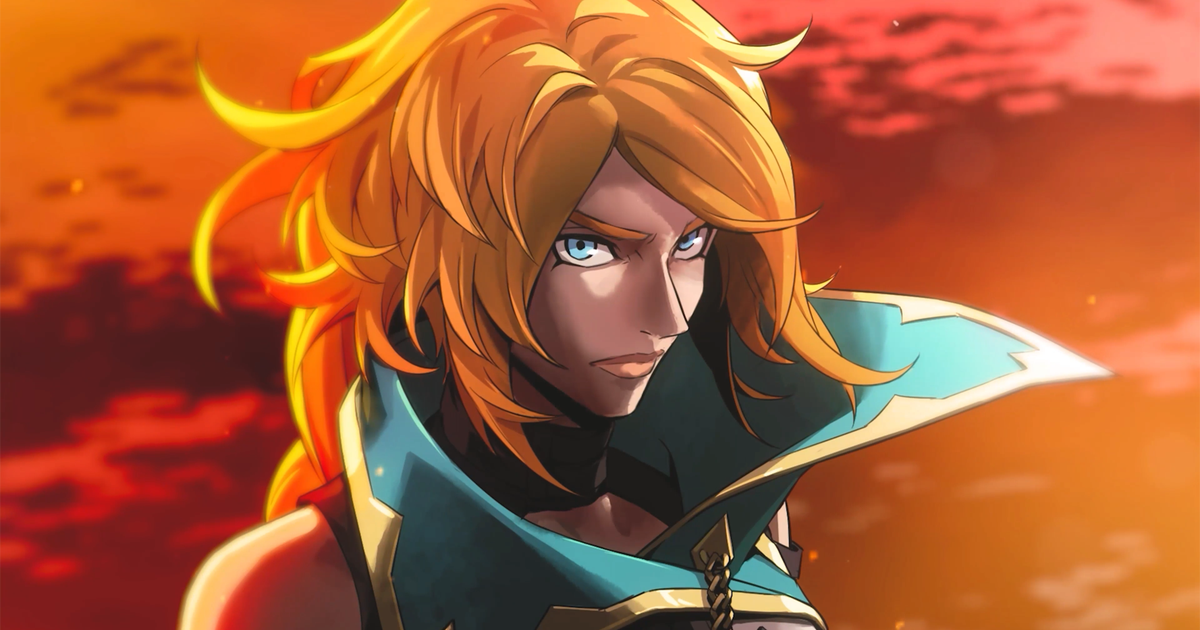
Given this extensive pedigree in crafting responsive, mechanically deep action titles, industry observers note that Kamiya’s design sensibilities align closely with the traditional fast-paced combat and platforming challenges associated with early Castlevania entries, as well as the later exploration-heavy "Metroidvania" sub-genre popularized by Castlevania: Symphony of the Night.
Current Studio Commitments and Timeline
Despite the enthusiasm surrounding his public pitch, logistical hurdles currently prevent any immediate realization of a Kamiya-led Castlevania project. Kamiya is currently occupied with a major undertaking at his independent studio, Clovers: the production of Okami 2. Officially teased during The Game Awards, the sequel to his 2006 masterpiece has placed significant demands on the director’s time and creative focus.
Because Okami 2 is currently in active development, any external collaboration with Konami is virtually impossible in the short term. Development cycles for AAA action titles routinely span multiple years, requiring extensive resource allocation, team scaling, and pre-production planning. Consequently, any potential venture into the halls of Dracula’s castle by Kamiya and his team would need to wait until their current obligations to Capcom and Clovers reach completion.
This situation echoes other historical ambitions voiced by the director. Kamiya has previously expressed a "100% serious" desire to resurrect Scalebound, the high-profile action role-playing game originally developed by PlatinumGames exclusively for Microsoft’s Xbox One before its high-profile cancellation in 2017. His willingness to lobby for legacy franchises underscores a broader industry trend where veteran creators actively seek out dormant properties to revitalize using modern hardware capabilities.
Konami’s Modern Strategy for Castlevania
While Kamiya’s pitch is entirely contingent upon Konami’s corporate willingness to outsource its valuable intellectual property, the publisher has recently shown a renewed commercial interest in the Castlevania brand. For years following the release of Castlevania: Lords of Shadow 2 in 2014, the franchise remained largely dormant in terms of traditional console releases, surviving primarily through multi-platform classic collections, mobile adaptations, and a critically acclaimed animated adaptation on Netflix.
However, corporate messaging from Konami has shifted. Earlier this year, executives indicated that "numerous new products around Castlevania" are officially in the pipeline. While this statement did not explicitly confirm the immediate development of a brand-new AAA mainline video game, it signaled that Konami is actively exploring avenues to expand the franchise’s footprint across various media and interactive formats.

This strategy has already seen external partnerships bear fruit. Notably, developer Evil Empire—known for its work on the sustained success of Dead Cells—recently released Castlevania: Belmont’s Curse. The title introduced a fresh, aggressive action-platforming perspective to the universe. Critical reception to the release highlighted the inherent challenges of matching the heavy historical legacy of the franchise, with reviewers noting that while the game exhibited brilliance, intelligence, and earnest design choices, it occasionally struggled to navigate the enormous shadow cast by decades of industry-defining predecessors.
By demonstrating a willingness to collaborate with external studios like Evil Empire, Konami has proven receptive to outside development talent. Whether this openness extends to veteran auteurs like Hideki Kamiya remains to be seen, but the publisher’s current trajectory leaves the door open for high-profile pitches.
Broader Industry Implications and Fan Reception
The public nature of Kamiya’s pitch reflects a growing transparency between veteran game developers and their audiences. In an era where traditional announcements are often tightly controlled through corporate marketing channels and major industry showcases, unfiltered statements from prominent directors offer genuine insight into the creative desires driving the gaming sector.
For fans of both Kamiya and Castlevania, the proposition of a collaboration presents an enticing scenario. The marriage of Kamiya’s penchant for over-the-top, stylish combat choreography with the gothic aesthetics, monster bestiaries, and intricate architectural designs of the Castlevania universe could yield a distinctive entry in the series. Modern hardware capabilities would allow a director of Kamiya’s caliber to realize environments and combat encounters on a scale previously unattainable during the franchise’s 16-bit or early 3D eras.
At the same time, industry analysts point out that resurrecting dormant intellectual properties through external directors involves significant financial and creative risk. Franchise purists often hold strong opinions regarding what constitutes an authentic Castlevania experience—oscillating between the linear, stage-based action of early titles and the expansive, exploration-driven design of later installments. Entrusting the license to a director known for subverting conventions and establishing entirely new sub-genres could result in a divisive final product, albeit one guaranteed to generate substantial market attention.
As Okami 2 continues its development cycle at Clovers, Hideki Kamiya’s vision for a revamped vampire-hunting epic remains a hypothetical scenario. Whether Konami ultimately chooses to pick up the phone and answer the director’s public call will depend entirely on the publisher’s long-term portfolio management and its willingness to entrust its historic crown jewel to one of the industry’s most idiosyncratic and celebrated creators. Until then, the project exists solely in the realm of industry commentary—waiting, much like the inhabitants of Castle Dracula, for the right moment to rise again.