Kalan.FrFr Honors West Coast Hip-Hop Legacy with Historic Headlining Performance at Long Beach VIP Records Presented by FX

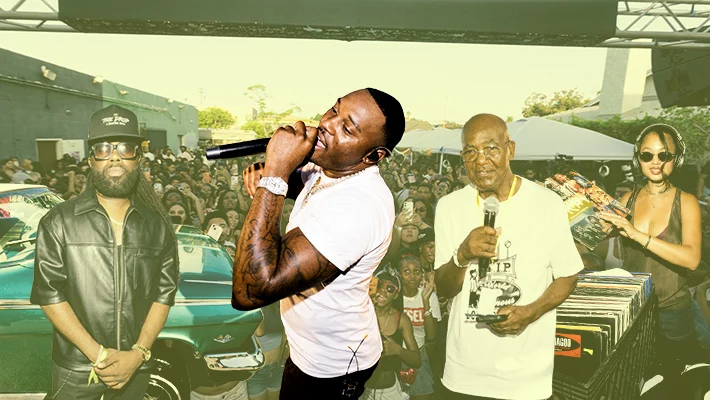
The intersection of musical heritage and contemporary culture was on full display this past weekend as West Coast hip-hop artist Kalan.Frfr took the stage for an exclusive headlining performance at the legendary World Famous VIP Records in Long Beach, California. Presented by FX in conjunction with The Drop: A Snowfall Saga, the event functioned as both a high-energy concert and a profound historical homage to the architects of the G-Funk era and the enduring socio-cultural impact of West Coast rap music.
The gathering drew hundreds of fans, industry insiders, and local residents who braved hours of waiting in serpentine queues that wrapped entirely around the block. Against a backdrop of iconic, vintage photography captured by renowned lensman Mike Miller—images that documented the formative years of West Coast gangsta rap and hip-hop culture—attendees experienced an immersive celebration of Southern California’s rich artistic lineage. The afternoon and evening featured classic regional cuisine provided by local culinary staples Woody’s BBQ and Glizzy Street Dogs, while pristine, candy-painted lowriders lined the curbside, anchoring the event firmly in authentic local traditions.
Historical Significance of VIP Records
To understand the cultural weight of the weekend’s festivities, one must examine the foundational history of VIP Records. Long before it became a historic landmark for music historians, the establishment was a modest community record shop in Long Beach. In the late 1980s and early 1990s, store owner Kelvin Anderson made a decision that would permanently alter the trajectory of American popular music: he transformed the backroom of the record store into an ad-hoc recording studio.
During an era marked by intense socioeconomic turbulence, systemic neglect, and the height of the crack cocaine epidemic in Los Angeles County, Anderson’s backroom functioned as a vital community safe haven. It provided neighborhood youth with a constructive alternative to street violence, offering access to rudimentary audio equipment and a space to channel their creative energies.
It was within these humble four walls that legendary trio 213—comprising a young Calvin Broadus (later known globally as Snoop Dogg), his cousin Ricardo Brown (Warren G), and the late, great Isaiah Chaplin (Nate Dogg)—cut their very first professional demo tape. That singular recording catalyzed the G-Funk movement, characterized by smooth synthesizer lines, heavy basslines, and soulful P-Funk samples that came to define the sound of West Coast hip-hop throughout the 1990s. Consequently, hosting a major contemporary musical event at VIP Records represented a full-circle moment for the community, validating the neighborhood’s historical contributions to global pop culture.
Event Chronology and Performances
The programming for the afternoon was meticulously curated to bridge generational divides within the hip-hop community. Festivities commenced with sets from prominent regional disc jockeys, led by the legendary DJ Hed, who maintained an electric atmosphere by spinning foundational West Coast anthems interspersed with contemporary cuts.
As twilight approached, the cultural exchange deepened with special guest appearances. Andre Troutman, serving as Kanye West’s creative director, took to the stage to demonstrate his virtuosic mastery of the talk box—an instrument inextricably linked to the sonic identity of 1990s West Coast funk and hip-hop. Troutman’s performance culminated in a stirring, crowd-pleasing rendition of the definitive regional anthem, “California Love,” which elicited an enthusiastic chorus from the assembled masses.
The emotional and energetic peak of the evening arrived when Kalan.Frfr stepped into the spotlight. Representing the modern vanguard of West Coast hip-hop, Kalan.Frfr delivered a dynamic set that seamlessly synthesized the genre’s storied past with its forward-thinking contemporary trajectory. The crowd’s reaction was immediate and vocal, illuminating the venue with smartphone screens and physical expressions of hometown pride as the artist performed tracks that honor the melodic, introspective, and club-ready realities of modern Los Angeles life.
Supporting Data and Cultural Context
The collaboration between FX and the local music community is part of a broader, sustained effort by entertainment conglomerates to contextualize the historical roots of urban storytelling. The event served as a promotional activation for FX’s acclaimed programming, specifically The Drop: A Snowfall Saga, a series that explores the complex socio-political landscapes of Los Angeles during the exact historical window in which VIP Records and its resident artists were first finding their voices.
Economic and cultural data underscore the immense global market value generated by the West Coast hip-hop diaspora. According to recent music industry analyses, catalog streams for foundational West Coast acts from the late 1980s and 1990s continue to experience double-digit year-over-year growth, driven heavily by sync licensing in television, film, and high-profile sporting events such as the 2022 Super Bowl Halftime Show. By investing in localized, ground-level activations like the Kalan.Frfr concert at VIP Records, media networks tap directly into this lucrative, highly loyal demographic while simultaneously investing in the preservation of living cultural history.
Furthermore, the partnership builds upon Kalan.Frfr’s broader multimedia footprint. Earlier this year, the artist collaborated on the comprehensive documentary How LA Found Its Sound, an in-depth exploration of how geography, migration, politics, and local subcultures forged the distinct auditory identity of Los Angeles.
Official Responses and Stakeholder Perspectives
While corporate sponsors and artists alike have remained largely focused on the celebratory nature of the weekend, cultural analysts and community leaders have pointed to the deeper implications of such events. Industry observers note that corporate investment in historical neighborhood landmarks like VIP Records helps combat the erasure of Black and Brown cultural spaces amidst rapid gentrification in Southern California.
Though specific financial figures regarding the FX-sponsored partnership have not been publicly disclosed, representatives from the production and marketing teams emphasized the necessity of authenticity. By utilizing real neighborhood spaces, employing local vendors like Woody’s BBQ, and platforming legendary figures alongside rising stars, the event avoided the pitfalls of generic corporate marketing, opting instead for a community-first approach that resonated deeply with attendees.
In statements surrounding the release of How LA Found Its Sound and promotional tours for The Drop: A Snowfall Saga, network executives have repeatedly stressed the importance of honoring the true architects of West Coast culture. The decision to bring Kalan.Frfr—an artist known for blending traditional Los Angeles bravado with contemporary R&B sensibilities—to the exact coordinates where Snoop Dogg and Warren G launched their careers was viewed internally as a masterclass in experiential marketing and historical continuity.
Broader Impact and Industry Implications
The success of the VIP Records event points to a growing trend within the entertainment and music industries: the hyper-localization of promotional campaigns. Rather than relying solely on traditional advertising billboards or digital banner ads, media companies are increasingly investing in physical, place-based activations that offer consumers a tangible connection to the content they consume on streaming platforms.
For Long Beach and South Los Angeles, events of this caliber provide a vital economic and cultural boost. They drive foot traffic to local legacy businesses, create temporary employment opportunities for regional service providers, and reinforce the civic pride of residents who have historically seen their neighborhoods misrepresented or exploited in mainstream media.
As streaming services like Hulu continue to host content that examines the intricate history of America’s urban centers—exemplified by the ongoing availability of The Drop: A Snowfall Saga and How LA Found Its Sound—live activations of this nature serve as a physical bridge between past struggles and modern triumphs.
Ultimately, the gathering at World Famous VIP Records transcended a typical album release party or promotional concert. It was a living museum installation, a community reunion, and a testament to the resilience of a musical culture that continues to dictate the global pulse of contemporary youth culture. For those who witnessed Kalan.Frfr command the stage where hip-hop royalty once recorded their earliest cassette tapes, the message was clear: the lineage of West Coast hip-hop is not merely preserved in archives; it remains alive, evolving, and fiercely protected by each successive generation.
Related posts: