Five of the Best: Eerie In-Game Radio Signals and Unsettling Broadcasts That Define Video Game Horror

The atmospheric integration of audio transmissions, hidden frequencies, and distorted distress signals has long served as a cornerstone of psychological tension within interactive entertainment. As developers seek innovative methods to immerse players in narratives characterized by isolation, dread, and mystery, the use of in-game radios and aberrant broadcasts has evolved from a simple environmental detail into a sophisticated storytelling mechanism. Examining five distinct titles—Portal, Dead Space, Oxenfree, P.T., and Pokémon Gold, Silver, and Crystal—illustrates how sonic manipulation can fundamentally alter player perception and psychological engagement.
The Evolution of Environmental Audio and Hidden Transmissions
The strategic deployment of unsettling audio within video games bridges the gap between passive observation and active dread. Unlike visual jumpscares, which rely on immediate, localized stimuli, audio transmissions operate in the periphery, frequently lingering in the player’s mind long after a play session concludes. Across various genres, ranging from puzzle-platformers to survival horror and role-playing games, developers have leveraged the uncanny nature of disembodied voices, corrupted signals, and cryptographic messages to cultivate suspense.
Historically, the incorporation of audio-based puzzles and atmospheric broadcasts can be traced back to the early days of analog technology in media, but contemporary game design has elevated these elements into complex narrative pillars. By forcing players to actively listen, tune frequencies, or decipher static, games transform auditory cues into active investigations. This technique not only heightens the immediate terror of a virtual environment but also lays the groundwork for expansive, cross-media alternate reality games (ARGs) and community-driven lore exploration.
Cryptographic Anomalies and ARG Marketing in Portal
Valve Corporation’s 2007 critically acclaimed puzzle-platformer Portal initially presents itself as a clinical, darkly comedic experiment governed by a seemingly malfunctioning artificial intelligence, GLaDOS. However, the game transitions seamlessly into a visceral survival scenario once the player breaches the pristine testing chambers and navigates the decaying, mechanical underbelly of the Aperture Science Enrichment Center.
The psychological tension of the original game was amplified significantly in 2010 through an unexpected update deployed ahead of the release of Portal 2. Valve retrofitted the game’s hidden radio units to emit a series of analog squeals, dial-up noises, and cryptographic Morse code. Far from mere environmental flavor, these transmissions formed an elaborate Alternate Reality Game (ARG). When dedicated players recorded and analyzed the audio files using spectrogram software, the visual output revealed hidden images, including human skulls and cryptic alphanumeric strings.
This marketing strategy demonstrated the profound impact of diegetic audio manipulation. By embedding eerie, real-world data formats into a fictional corporate intranet, Valve bridged the boundary between the player’s reality and the oppressive confines of Aperture Science, turning a standard puzzle game into an unnerving digital mystery.
Psychological Scars and Distress Signals in Dead Space
In the realm of survival horror, few auditory motifs are as central to a franchise’s emotional core as the distress transmission in Visceral Games’ 2007 title, Dead Space. The narrative centers on engineer Isaac Clarke as he responds to a routine maintenance call aboard the massive planetary mining ship, the USG Ishimura. Upon arrival, the crew discovers the vessel decimated by grotesque extraterrestrial entities known as Necromorphs.
The narrative anchor of the entire experience is an encrypted, heavily distorted video message left by Isaac’s partner, Nicole Brennan, who was stationed aboard the Ishimura. The transmission serves a dual narrative purpose: it acts as the primary catalyst for Isaac’s perilous journey and establishes a profound sense of tragedy. The slow revelation of the message’s true context—revealing Nicole’s grim fate prior to Isaac’s arrival—infuses the visceral, action-heavy horror with deep emotional resonance.
Furthermore, this audio-visual transmission casts a long shadow over the franchise. In Dead Space 2, Isaac’s compounding psychological trauma, exacerbated by the mysterious alien artifact known as the Marker, manifests as auditory and visual hallucinations. Nicole returns not as a memory, but as a persistent psychological tormentor, guiding Isaac through hostile environments while simultaneously coercing him toward self-destruction. This seamless integration of past transmissions into ongoing psychological deterioration underscores the lasting power of auditory trauma in game design.
Meta-Narrative Manipulation and Temporal Anomalies in Oxenfree
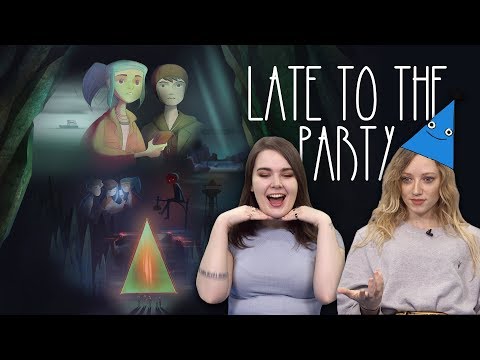
Night School Studio’s 2016 narrative adventure game Oxenfree approaches auditory horror through the lens of supernatural mystery and adolescent grief. Players control Alex, a teenager whose weekend beach party on a decommissioned military island goes awry when the group inadvertently tunes a portable radio to a frequency that tears open a rift in reality, releasing malicious ghost-like entities known as the Parentage.
The game’s primary mechanic revolves around a handheld radio used to tune into various frequencies, manipulating the environment, solving spatial puzzles, and communicating with supernatural forces. However, the game achieved a notable milestone in interactive storytelling leading up to the release of its sequel, Oxenfree II: Lost Signals. Developers quietly introduced new, aberrant radio broadcasts into the original game years after its initial launch.

Players returning to the first title discovered previously non-existent audio clips: fragmented conversations, reversed speech, and cryptic warnings about reality fractures orchestrated by the Parentage. By updating an older game with new, temporally anomalous broadcasts, Night School Studio utilized the medium’s digital nature to create a living, breathing narrative ecosystem. This meta-narrative approach leveraged the core mechanic of signal-scanning to blur the lines between past gameplay and ongoing franchise lore, reinforcing themes of isolation and cosmic insignificance.
Auditory Purgatory and Real-World Dread in P.T.
Perhaps no single piece of media has utilized audio design to cultivate pure dread quite as effectively as Hideo Kojima’s 2014 interactive teaser, P.T. (Playable Teaser), designed as a precursor to the canceled Silent Hills project. Confined entirely to a single, infinitely looping L-shaped residential hallway, P.T. strips away traditional gameplay mechanics, relying instead on environmental storytelling, surreal visual loops, and masterclass sound design to terrorize the player.
While the visual progression—marked by creeping decay, supernatural apparitions, and unsettling physical distortions—is vital, the environment’s haunted radio serves as the primary destabilizer. The radio continuously broadcasts a chilling mix of static, dramatic pauses, and horrifying news reports detailing family annihilation incidents within suburban neighborhoods. These broadcasts gradually shift from objective reporting to a direct, personalized taunt aimed squarely at the protagonist.
Lines such as "Don’t touch that dial now, we’re just getting started" and the ominous command to "Look behind you" exploit the player’s natural hesitation and fear of the unknown. The psychological impact of the radio is compounded by the incessant, rhythmic squeak of a hanging ceiling lamp swinging overhead. Together, these audio elements create an atmosphere of inescapable claustrophobia, proving that the human imagination, fueled by disembodied audio cues, is far more terrifying than any direct visual confrontation.
Artificial Evolution and Sinister Frequencies in Pokémon Gold, Silver, and Crystal
Even within franchises ostensibly designed for all ages, the strategic use of radio broadcasts can introduce unexpectedly dark and unsettling subplots. In Game Freak’s critically acclaimed second-generation role-playing games—Pokémon Gold, Silver, and Crystal (alongside their Nintendo DS remakes, HeartGold and SoulSilver)—the nefarious criminal syndicate Team Rocket establishes a clandestine operations base beneath a mundane storefront in Mahogany Town.
Utilizing a specialized radio wave generator powered by captive, exploited Pokémon known as Electrode, the syndicate broadcasts high-frequency pulses across the Johto region. The explicit purpose of these artificial transmissions is to disrupt the neurological growth patterns of wild Pokémon, forcibly accelerating their evolutionary cycles. This sinister broadcast is the direct cause of the unnatural evolution of the legendary Red Gyarados at the Lake of Rage, weaponizing nature for criminal gain and attempting to lure the organization’s exiled leader, Giovanni, out of hiding.
Players can actively tune their in-game radio transceiver to this specific frequency during the campaign, listening to a harsh, piercing static noise that underscores Team Rocket’s cruelty. The inclusion of this mechanic birthed enduring community lore, including popular fan theories suggesting that the Champion of the region, Lance, utilized Pokémon whose levels were artificially manipulated by exposure to these very radio waves. By integrating a mundane mechanic like a radio tuner into a plot involving biochemical and neurological tampering, the developers added a layer of systemic dread to an otherwise traditional adventure.
Chronological Overview of In-Game Audio Horrors
- 2007 (Portal): Valve introduces environmental puzzles featuring mysterious tones, culminating in the 2010 ARG update that embedded hidden visual transmissions within analog signals.
- 2008 (Dead Space): Visceral Games establishes a narrative driven by systemic distress signals, utilizing Nicole Brennan’s tragic transmission to anchor both the immediate horror and subsequent psychological trauma in sequels.
- 2014 (P.T.): Hideo Kojima redefines psychological horror within a single looping corridor, utilizing a haunted radio to deliver personalized threats and real-world-inspired terror.
- 2016 (Oxenfree): Night School Studio innovates with meta-narrative updates, injecting anomalous, reality-fracturing radio broadcasts into an existing game to tease an upcoming sequel.
- 1999–2009 (Pokémon Gold/Silver/Crystal and Remakes): Game Freak employs high-frequency radio waves as a plot device for forced artificial evolution, marrying mundane exploration with dark corporate exploitation.
Analytical Implications of Audio-Driven Game Design
The persistent effectiveness of these audio implementations highlights a fundamental principle in interactive media: sound design frequently supersedes visual fidelity in generating long-lasting psychological impact. While high-definition graphics can shock the senses temporarily, auditory cues interface directly with the player’s imagination, allowing the mind to fill in the most terrifying blanks.

From a production standpoint, embedding cryptographic messages, ARG elements, and dynamic radio frequencies offers developers a cost-effective yet highly engaging method to extend community interaction far beyond the initial completion of a game. Whether functioning as a clever marketing campaign, a core narrative catalyst, or a subtle world-building detail, the humble in-game radio remains one of the most potent tools in the horror and adventure developer’s arsenal. As technology advances toward spatial audio and increasingly sophisticated procedural generation, the capacity for virtual transmissions to blur the line between fiction and player anxiety will only continue to expand.