Elizabeth Olsen’s Enigmatic Silence on Avengers: Doomsday Fuels Speculation Amidst MCU’s Shifting Landscape

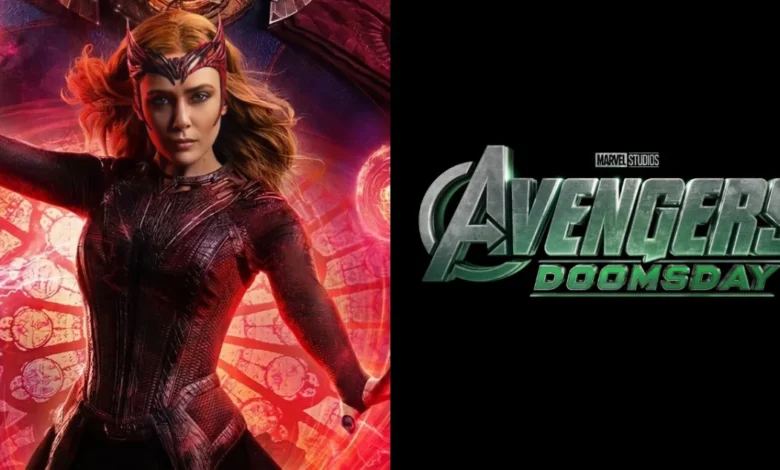
Elizabeth Olsen, the acclaimed actress behind the Scarlet Witch, recently addressed persistent inquiries regarding her potential involvement in the highly anticipated Avengers: Doomsday, offering a response that has only intensified speculation among fans and industry observers alike. During an appearance at the Chicago Comics and Entertainment Expo (C2E2), Olsen claimed to possess no knowledge of the upcoming Marvel Cinematic Universe tentpole, a statement that, while seemingly straightforward, is frequently met with skepticism given Marvel Studios’ well-documented penchant for extreme secrecy regarding major plot developments and character appearances. Her character, Wanda Maximoff, has arguably been one of the most pivotal figures in the MCU’s recent narrative trajectory, leading many to believe her absence from the climactic Multiverse Saga would be a significant oversight.
The Scarlet Witch’s journey through the MCU has been marked by unparalleled emotional depth and escalating power, positioning her as a central force whose influence reverberates even after her apparent demise. Introduced initially in a post-credits scene for Captain America: The Winter Soldier (2014) alongside her brother Pietro, Wanda Maximoff made her full debut in Avengers: Age of Ultron (2015) as a powerful Sokovian enhanced individual. Her powers, initially presented as telekinesis and mental manipulation, gradually expanded and were later revealed to be intrinsically linked to chaos magic, a mystical force of immense magnitude. Over subsequent appearances in Captain America: Civil War (2016), Avengers: Infinity War (2018), and Avengers: Endgame (2019), Wanda’s character developed from a Sokovian orphan seeking revenge to a formidable Avenger grappling with immense loss and burgeoning capabilities.
However, it was the Disney+ series WandaVision (2021) that irrevocably reshaped her destiny and solidified her status as the Scarlet Witch, a mythical nexus being capable of altering reality. The series explored her grief following Vision’s death in Infinity War, leading her to inadvertently create an idyllic suburban reality within Westview, New Jersey, complete with a resurrected Vision and two children, Billy and Tommy. This period saw her fully embrace her powers, albeit with tragic consequences for the innocent inhabitants of Westview. Her subsequent arc in Doctor Strange in the Multiverse of Madness (2022) depicted a corrupted Wanda, driven by the Darkhold’s influence and a desperate desire to reunite with her children across the multiverse. Her actions in the film positioned her as a formidable antagonist, culminating in an apparent sacrifice atop Mount Wundagore, seemingly destroying the Darkhold and collapsing the temple upon herself. Despite this seemingly definitive end, the ambiguity surrounding her "death" – a common trope in comic book narratives – has left the door wide open for her return, with many fans anticipating her resurgence in a crucial capacity.
Olsen’s recent remarks at C2E2, where she posed with a replica of Doctor Doom’s helmet, naturally drew questions about her future in the MCU, particularly concerning Avengers: Doomsday. When pressed about her knowledge of the film, she stated, "I know nothing. I know about VisionQuest, because I’ve seen Paul [Bettany] in the last six months. I know nothing about any of it. Is [Secret Wars] what happens after? I’m not kidding. Why did I think there were two Secret Wars? Are there not?" Her playful denial and apparent confusion about the upcoming Secret Wars titles – Avengers: Doomsday is currently slated to precede Avengers: Secret Wars – are characteristic of Marvel actors navigating the studio’s rigorous non-disclosure agreements. This pattern of denial is deeply embedded in Marvel’s corporate strategy to safeguard narrative twists, a strategy famously employed by actors like Andrew Garfield and Tobey Maguire regarding their appearances in Spider-Man: No Way Home, and Mark Ruffalo concerning Hulk’s numerous transformations.
The reference to VisionQuest is particularly noteworthy. VisionQuest is an upcoming Disney+ series centered on Paul Bettany’s Vision, expected to delve into the character’s attempts to regain his memories and identity after his resurrection as White Vision in WandaVision. Given Wanda Maximoff’s deep connection to Vision and her role in his initial creation and subsequent "rebirth" in Westview, Olsen’s awareness of this project suggests a potential avenue for her character’s reintroduction or at least a continued thematic link. Should Vision embark on a quest to understand his past, it is almost inconceivable that Wanda, the architect of his most recent existence, would not be a part of that narrative, even if only through flashbacks or spectral appearances. This series could serve as a crucial bridge, setting the stage for Wanda’s return in a major cinematic event like Doomsday.

Avengers: Doomsday, scheduled for release in December 2026, is poised to be a pivotal chapter in the Multiverse Saga, leading directly into Avengers: Secret Wars in May 2027. The title itself, Doomsday, strongly hints at a cataclysmic event, potentially involving iconic Marvel villain Doctor Doom, whose helmet Olsen coincidentally posed with. In the comics, Doctor Doom is not only a formidable foe of the Fantastic Four but also a central figure in various Secret Wars storylines, most notably the 2015 iteration where he essentially became God-Emperor Doom of Battleworld. His presence in the MCU would signal a new level of threat and complexity, and his historical comic book ties to powerful magic users like the Scarlet Witch could provide a compelling narrative hook for her return.
The timing of these events also aligns with the impending "Mutant Saga," a long-anticipated integration of the X-Men and other mutant characters into the MCU following Disney’s acquisition of 20th Century Fox. In the comics, Wanda Maximoff has a complex and often retconned history with mutants, having been famously believed to be Magneto’s daughter for decades before recent retcons altered her parentage. Regardless of her current comic book status, her cultural perception remains intertwined with mutantkind. More importantly, her reality-warping powers, as demonstrated in the seminal "House of M" storyline where she famously uttered "No More Mutants," have the potential to profoundly impact the establishment or re-establishment of mutants within the MCU. Her immense power could be the catalyst for the appearance of mutants, a consequence of multiversal incursions, or even a solution to a multiversal crisis.
Given the narrative framework of the Multiverse Saga, the concept of variants and alternate realities provides ample opportunity for Wanda Maximoff to reappear, even if the "main" MCU version is indeed gone. A variant Scarlet Witch, perhaps one who never succumbed to the Darkhold or one who survived her sacrifice, could be introduced. This approach would allow Marvel to leverage Olsen’s popularity and the character’s immense power without necessarily undoing the emotional weight of her arc in Multiverse of Madness.
Marvel Studios’ strategy of absolute secrecy has historically been a double-edged sword. While it preserves cinematic surprises that delight audiences, it also necessitates actors delivering misleading statements, often to the frustration of fans seeking definitive answers. Kevin Feige, the architect of the MCU, has consistently emphasized the importance of safeguarding these narrative secrets, understanding their value in an era of pervasive leaks and instantaneous information sharing. The denials from Olsen should therefore be viewed through this lens: a professional adherence to contractual obligations rather than a definitive statement on her character’s future.
The implications of Wanda Maximoff’s potential return in Avengers: Doomsday are vast and multifaceted. Narratively, her presence would dramatically raise the stakes. As one of the most powerful beings in the MCU, her allegiance – whether as a hero, anti-hero, or even a reluctant antagonist – could tip the balance in a multiversal conflict. Her complex moral compass and history of both heroic sacrifice and catastrophic mistakes make her a uniquely unpredictable force. From a character development perspective, a return would offer an opportunity for a redemption arc, exploring the aftermath of her actions in Multiverse of Madness and her struggle with grief and power. Fans, deeply invested in her emotional journey, are eager to see how her story concludes, or perhaps, begins anew. Her immense popularity and Elizabeth Olsen’s captivating portrayal make her return almost a narrative imperative for many.
Ultimately, whether Elizabeth Olsen truly knows nothing or is simply maintaining Marvel’s tight-lipped tradition, her character’s shadow looms large over the impending Multiverse Saga. The Scarlet Witch’s history, her unparalleled powers, and her inextricable links to both the mystical and potentially mutant elements of the Marvel universe make her an ideal candidate for a pivotal role in Avengers: Doomsday and Secret Wars. As the December 2026 release date approaches, the question of Wanda Maximoff’s return will undoubtedly remain a central topic of discussion, fueling anticipation for what promises to be a transformative era for the Marvel Cinematic Universe.
Related posts: