
Star Trek Navigates Uncharted Waters as Franchise Faces Production Pause and Asset Sales


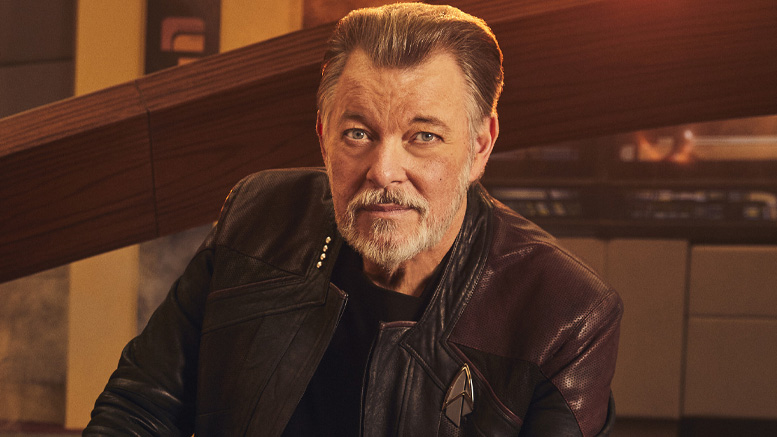
The Star Trek universe finds itself at a critical juncture in 2026, marked by the unexpected cancellation of "Star Trek: Starfleet Academy" after only one season and the subsequent dismantling of production assets from its Toronto-based operations. This period of significant transition has prompted reflections from franchise veterans, including the esteemed Jonathan Frakes, whose decades-long involvement as both an actor and director has provided him with a unique vantage point on the franchise’s enduring legacy and its current challenges.
Frakes, speaking in a recent interview with TrekMovie for the "All Access Star Trek" podcast, expressed a palpable sense of disappointment regarding the current state of production, particularly as the franchise prepares to celebrate its 60th anniversary. "I think, sadly, to celebrate the 60th anniversary of our incredible franchise, it seemed very unfortunate that they’ve chosen this moment to not have any new Trek in production," Frakes stated. "It seems like a very unfortunate irony. I’m sure that Trek will resurface, it always has, and it always will. And the power that Roddenberry invested in it seems to have made it through six decades."
This sentiment underscores a broader concern within the fanbase and among industry observers: the apparent halt in new Star Trek television series production at a time that should, by all accounts, be a period of significant celebration. The decision by Paramount+ not to renew "Starfleet Academy" for a third season, coupled with the auctioning of set pieces and props, signals a strategic shift for the iconic science fiction franchise. Paramount’s decision to sell off assets from its Toronto productions, including those associated with "Starfleet Academy" and "Star Trek: Strange New Worlds," as reported by TrekMovie on April 10, 2026, indicates a potential streamlining of resources or a re-evaluation of production strategies.
A Shifting Landscape in Star Trek Production
Jonathan Frakes, who directed episode nine of "Starfleet Academy," offered his perspective on the decisions impacting the franchise’s television output. He alluded to a confluence of factors that may have contributed to the current situation, including potential shifts in leadership at Paramount+ and CBS Studios, indecision regarding future projects, and the escalating costs associated with high-quality production.
"So some people who either didn’t like or didn’t approve or didn’t support the latest endeavors, for whatever reason," Frakes explained. "Perhaps it’s the changing of the guard at Paramount+ and CBS [Studios]. Perhaps it’s indecision. Perhaps it’s the amount of money it costs to make how beautiful the show is; the level of the production has become this sort of ‘shoot to thrill’ cinematic phenomenon that when we did the show back in the ‘80s, we counted on storytelling and acting and the occasional camera move [laughs]. It’s a different beast now, and that beast is very expensive, and as we know, it’s called show business.”
The evolution of television production, particularly in the streaming era, has seen a dramatic increase in the scale and visual fidelity of series. While this has resulted in visually stunning programs, it has also driven up production budgets significantly. For a franchise like Star Trek, which has historically relied on strong narratives and character development, the increased emphasis on cinematic spectacle may present a complex balancing act between creative ambition and financial viability. The era of "counting on storytelling and acting" has given way to an era where high production values are often a prerequisite for attracting and retaining audiences in a crowded streaming marketplace.
The Impact of Online Discourse and "Troll" Culture
Frakes also touched upon the pervasive influence of online discourse and the challenges posed by what he described as "trolls" in shaping perceptions of new Star Trek endeavors. He recounted a conversation with Alex Kurtzman and Noga Landau, the co-showrunner of "Starfleet Academy," who informed him that the show was "on ice." Frakes acknowledged their concern that negative sentiment, sometimes originating from individuals who had not even watched the series, played a role in the decision-making process.
"Yeah, isn’t that unfortunate? And that’s how [Alex] Kurtzman felt," Frakes stated. "I got a call from Alex and Noga [Landau]… They were calling people to let them know that the show was kind of ‘on ice,’ I think was the phrase they used. And it was what you just said [critiques coming from people who hadn’t watched the show], they couldn’t not mention as a factor, the trolls.”
The phenomenon of online criticism, often amplified by social media algorithms and coordinated campaigns, has become a significant factor in the entertainment industry. For established franchises with passionate fanbases, such as Star Trek, the intensity of online discussion can be both a source of support and a breeding ground for negativity. The perception that decisions about a show’s future can be influenced by vocal, and sometimes misinformed, segments of the online community highlights a complex challenge for creators and studios navigating the digital landscape. This situation raises questions about how to foster constructive dialogue and ensure that creative decisions are based on comprehensive evaluations rather than reactive responses to online sentiment.
A Look Towards the Future: Hopes and Rumors
Despite the current production hiatus and the dismantling of sets, Jonathan Frakes remains optimistic about the long-term future of Star Trek. He expressed his belief that new projects are in development, even if details remain scarce and speculative.
"I’m very optimistic about the future. I just wish that something was percolating now," Frakes shared. "I know that there’s talk of another movie. I don’t think it’s going to be one of the J.J. movies. It seems it’s going to be a brand-new [idea]. I know that there’s also a percolating idea about the Paul Wesley [Star Trek: Year One], which would be the origin of Kirk, but that’s all I’ve got. All I’ve got is rumor and innuendo, and none of it is encouraging… But in truth, there will be a Star Trek on the air through 2027. That gives us a lot of time to get something else in the oven, if you will.”
The mention of a potential new movie, distinct from the "Kelvin timeline" films produced by J.J. Abrams, suggests a desire to explore new narrative avenues within the Star Trek universe. Similarly, the reference to a potential project focusing on the origins of Captain Kirk, possibly involving actor Paul Wesley (who previously portrayed Kirk in "Star Trek: Strange New Worlds"), indicates a renewed interest in exploring foundational elements of the franchise’s lore. However, Frakes’ cautious framing of these as "rumor and innuendo" underscores the uncertainty surrounding these prospective projects.
The assurance that "there will be a Star Trek on the air through 2027" implies that existing series or content will continue to be available on Paramount+ for the foreseeable future, even if new productions are not actively filming. This provides a crucial buffer period for the development and launch of new initiatives. The franchise’s ability to adapt and reinvent itself has been a hallmark of its longevity, and the current period of transition, while perhaps unsettling, could ultimately pave the way for fresh and innovative storytelling.
Background and Context: A Legacy of Adaptation
Star Trek’s journey has been one of continuous evolution since its debut in 1966. Gene Roddenberry’s vision of a hopeful future, exploring humanity’s potential through scientific discovery and ethical dilemmas, has resonated with audiences for over six decades. The franchise has weathered cancellations, creative shifts, and the changing landscape of television, consistently finding ways to return and engage new generations of viewers.
From the original series to "The Next Generation," "Deep Space Nine," "Voyager," "Enterprise," and the more recent streaming era productions like "Discovery," "Picard," "Lower Decks," "Prodigy," and "Strange New Worlds," Star Trek has demonstrated a remarkable capacity for reinvention. Each iteration has brought new characters, new technologies, and new philosophical questions to the forefront, while striving to maintain the core spirit of exploration and optimism.
The decision to conclude "Starfleet Academy" and the subsequent asset sales represent a significant pivot in this ongoing narrative of adaptation. The high production costs associated with modern television, coupled with the competitive nature of the streaming market, necessitate careful strategic planning. Paramount’s current approach may reflect a desire to consolidate resources, focus on specific projects with perceived higher potential for success, or perhaps re-evaluate the overall distribution strategy for its flagship science fiction franchise.
Broader Implications for the Franchise
The current situation presents several implications for the future of Star Trek. Firstly, it highlights the financial realities of producing large-scale television series in the current media environment. The immense cost of creating visually sophisticated content means that studios must make difficult decisions to ensure profitability and sustainability.
Secondly, the reliance on online sentiment, even if indirectly, raises concerns about the balance between fan engagement and creative autonomy. While audience feedback is valuable, decisions about artistic direction and project viability should ideally be based on a comprehensive assessment of creative merit, market potential, and strategic alignment.
Thirdly, the continued emphasis on potential new film projects and origin stories suggests a strategy of exploring different formats and narrative approaches to engage a broad audience. The success of these ventures will likely depend on their ability to capture the essence of Star Trek while offering fresh perspectives and compelling storytelling.
As Star Trek navigates this period of transition, the franchise’s enduring appeal lies in its foundational ideals and its ability to inspire. The coming years will undoubtedly be crucial in determining the direction of this beloved universe, and the franchise’s long history suggests that it possesses the resilience to emerge from this uncharted territory with renewed purpose and compelling new voyages. The legacy of Gene Roddenberry, Frakes noted, "seems to have made it through six decades," a testament to the enduring power of Star Trek’s vision. The challenge now is to ensure that this vision continues to guide its future productions.


