Strait Of Hormuz Plunges Into Renewed Uncertainty As Commercial Ship Transits Halt Amid Escalating Tensions
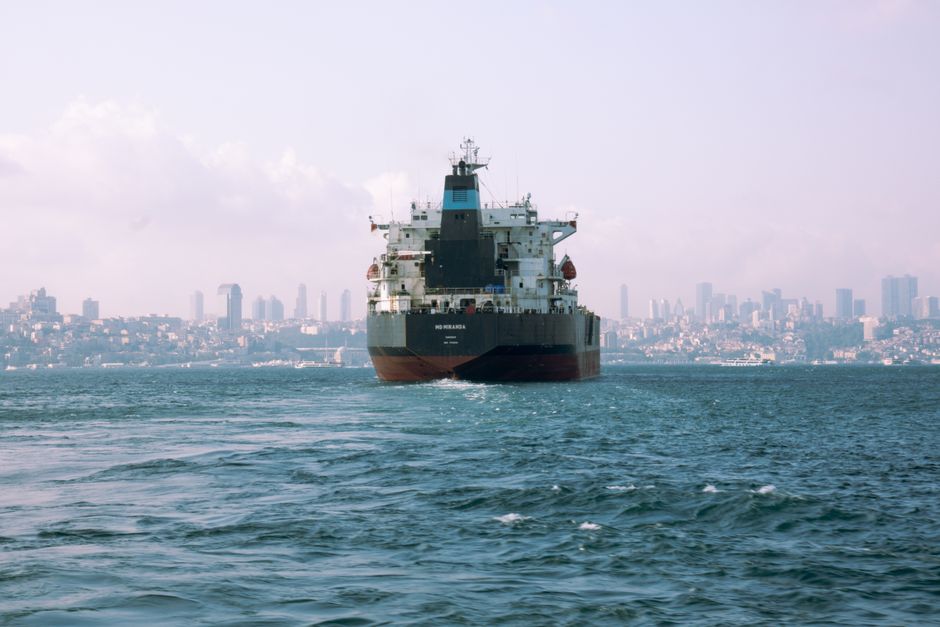
Strait of Hormuz Plunges into Renewed Uncertainty as Commercial Ship Transits Halt Amid Escalating Tensions
The Strait of Hormuz, a narrow maritime chokepoint separating Iran from the Arabian Peninsula, has once again become the epicenter of global geopolitical volatility. As commercial shipping lines announce suspensions of transit through this vital artery, the world faces the specter of a profound energy supply chain collapse. Approximately 20% of the world’s total oil consumption and a significant portion of global liquefied natural gas (LNG) pass through this 21-mile-wide passage daily. When the flow of tankers is disrupted by military posturing, drone surveillance, and the physical boarding of vessels, the tremors are felt instantly in gas stations, manufacturing hubs, and stock exchanges from Tokyo to New York. The current escalation—marked by a series of aggressive maneuvers by the Islamic Revolutionary Guard Corps (IRGC) and the subsequent withdrawal of major commercial shipping conglomerates—represents a systemic threat to the global economy that exceeds the tensions of the past decade.
The strategic importance of the Strait cannot be overstated. It is the only sea passage for much of the crude oil exported by Saudi Arabia, the United Arab Emirates (UAE), Kuwait, and Iraq, alongside the majority of Qatar’s LNG exports. For decades, the global order has relied on the assumption that this corridor remains open under the legal protections of freedom of navigation. However, the recent decision by multinational shipping giants to reroute vessels or halt operations indefinitely suggests that the risk premium for navigating these waters has reached a breaking point. Insurance premiums for vessels traversing the Persian Gulf have spiked to levels unseen since the "Tanker War" of the 1980s, effectively pricing smaller logistics firms out of the market and forcing a recalibration of global supply chain management.
The primary catalyst for this renewed uncertainty lies in the tactical evolution of regional proxy conflicts. Recent events involve the harassment and seizure of commercial vessels under the guise of legal violations or retaliatory measures against sanctions. Iran’s increasing deployment of fast-attack craft and advanced anti-ship missile batteries serves as a credible deterrent that forces the hand of Western naval coalitions. The U.S. Fifth Fleet, based in Bahrain, has repeatedly attempted to reinforce maritime security, yet the "gray zone" tactics—attacks that fall just below the threshold of declared war—make it exceptionally difficult for international maritime law to provide a functional deterrent. When commercial ships are intercepted, the legal ambiguity leaves captains and crews in a perilous limbo, prompting shipping firms to prioritize human safety and asset protection over the economic efficiency of the Hormuz route.
Economic fallout from these halts is multifaceted. Beyond the immediate jump in crude oil spot prices, the secondary impacts on shipping logistics are severe. Rerouting vessels around the Arabian Peninsula, typically via the Cape of Good Hope, adds thousands of miles and weeks of transit time to every journey. This massive influx of ships into longer, alternative routes creates port congestion, drives up bunker fuel consumption, and creates an inflationary ripple effect. As shipping costs rise, the landed cost of goods increases, exacerbating the global struggle against persistent inflation. Furthermore, the reliance on the Strait of Hormuz for the global fertilizer and petrochemical supply chains means that any protracted blockage will inevitably translate into higher food prices and a slowdown in industrial manufacturing, as these commodities are foundational to global agricultural and chemical sectors.
The geopolitical chessboard is further complicated by the intersection of the Strait of Hormuz crisis with broader regional tensions. The ongoing conflicts involving regional non-state actors have provided a backdrop of instability that Iran is increasingly utilizing to exert leverage over the West. By effectively turning the Strait into a bargaining chip, Tehran signals that its economic survival and regional influence are inextricably linked to the international community’s approach to its nuclear program and sanction regime. This "hostage-taking" of the global energy supply is a deliberate strategic choice. It forces the U.S. and its regional allies into a binary choice: either engage in a dangerous military escalation to guarantee passage or concede to diplomatic concessions that may run contrary to their long-term foreign policy objectives.
From a maritime security perspective, the situation is evolving toward a high-tech asymmetric conflict. The deployment of sea-based drones and remote-controlled explosive boats has introduced a new variable that conventional naval escort missions are struggling to mitigate. While carrier strike groups can project power against state-level threats, intercepting a swarm of low-cost, expendable suicide drones requires a level of persistence and resource expenditure that is unsustainable in the long term. Shipping companies are acutely aware that naval escorts cannot be everywhere at once. The "patrol and escort" model, which was effective during the 1980s, is ill-equipped for the modern reality of cyber-warfare and autonomous maritime threats. Consequently, the commercial sector’s decision to halt operations is as much a recognition of the technological changing of the guard in naval warfare as it is a political statement.
Global energy markets are responding with a frantic scramble to diversify. Importers in Asia—most notably China, India, Japan, and South Korea—are the most exposed to the Hormuz bottleneck. Unlike Europe, which has spent the last two years aggressively pivoting away from Russian energy, Asian economies remain deeply dependent on Gulf oil. The threat of a sustained blockage has spurred desperate efforts to secure strategic petroleum reserves and negotiate long-term supply contracts with West African and Atlantic-basin producers. However, the infrastructure to pivot energy flows on such a massive scale does not exist overnight. Pipelines, regasification terminals, and refined petroleum product distribution networks are optimized for the status quo. Disrupting this setup in the name of security results in a structurally higher cost of energy that hampers economic growth for the world’s most populous nations.
Looking ahead, the outlook for the Strait remains bleak as long as the underlying geopolitical grievances remain unaddressed. The reliance on deterrence through the presence of Western naval assets is becoming a diminishing asset. If the shipping industry continues to view the Strait as a high-risk combat zone, the result will be a permanent shift in global maritime traffic patterns. This "de-risking" of the supply chain will likely see an acceleration of investments in pipeline projects that bypass the Strait, such as the expansion of the East-West Pipeline in Saudi Arabia or potential trans-continental rail and pipeline links across the Middle East. While these projects offer long-term stability, they cannot solve the immediate crisis facing global supply chains in the coming months.
The vulnerability of the global maritime economy to the events in the Strait of Hormuz exposes the fragile nature of modern globalization. We live in an era where the hyper-connectivity of markets has outpaced the security architecture designed to protect the physical pathways that enable that connectivity. When a 21-mile stretch of water becomes a flashpoint for international conflict, the entire edifice of global trade suffers. The current pause in commercial transits is not merely a reaction to immediate danger; it is a manifestation of a structural realization that the maritime "commons" can no longer be taken for granted.
As the international community watches this situation unfold, the imperative for a diplomatic off-ramp grows more urgent. Military posturing has clearly reached its limits, and the economic toll of inaction is rising daily. Whether through a multilateral security agreement or a mediated regional de-escalation, the path forward must prioritize the restoration of trust in maritime safety. Without such an agreement, the world must prepare for a future defined by volatile energy markets and a fragmented global supply chain, where the Strait of Hormuz remains a perpetual, ticking time bomb at the heart of the international trade system. The age of unfettered, secure passage through the Persian Gulf is effectively over; the new era is one of managed risk, defensive rerouting, and the constant awareness that one of the world’s most vital veins can be constricted at the flick of a switch.
The broader implications extend to the environmental and safety risks associated with diverted shipping. Older vessels or those operating on thinner margins are being pushed to take longer, more treacherous routes around the Cape of Good Hope, increasing the statistical likelihood of maritime accidents, oil spills, and cargo loss. The shipping industry’s retreat is a rational economic response to an irrational security environment, but it creates a vacuum that is rapidly being filled by uncertainty and speculative price volatility. As long as the Strait of Hormuz remains a contested territory rather than a neutral, international highway, the risk to the global economy will remain at a critical high, casting a long, dark shadow over the prospects for a sustained and equitable global economic recovery.