Elizabeth Olsen’s Enigmatic Stance on Scarlet Witch’s Return in Avengers: Doomsday Sparks Widespread Speculation.

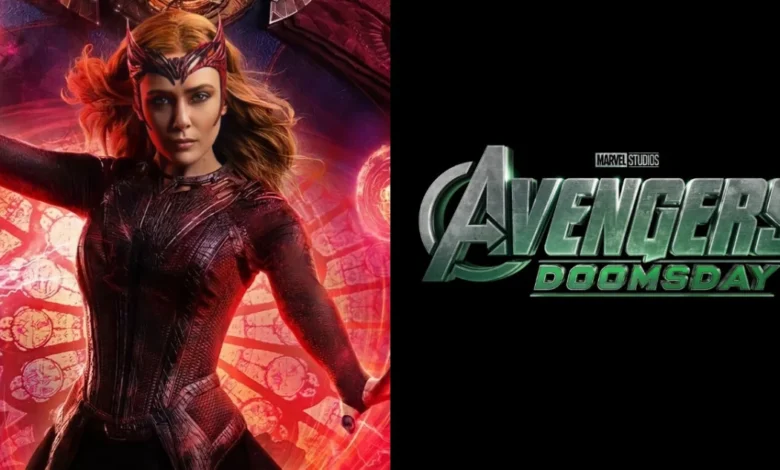
The future of Elizabeth Olsen’s Scarlet Witch, Wanda Maximoff, within the Marvel Cinematic Universe (MCU) remains a subject of intense speculation following her recent comments at the Chicago Comics and Entertainment Expo (C2E2), where the actress claimed complete ignorance regarding her potential involvement in the highly anticipated Avengers: Doomsday. Despite her character’s pivotal role in recent MCU narratives, Olsen’s public denial has only fueled further debate among fans and industry observers about Marvel Studios’ notoriously secretive long-term plans and the true fate of one of its most powerful figures.
The Enigmatic Arc of the Scarlet Witch
Wanda Maximoff’s journey in the MCU has been nothing short of transformative, establishing her as arguably one of the most central and impactful characters over the last decade. Introduced alongside her brother Pietro in Avengers: Age of Ultron (2015) as an experimental subject of Hydra, Wanda quickly evolved from a conflicted antagonist with nascent telekinetic and mental manipulation abilities into the formidable Scarlet Witch. Her powers, initially vaguely defined, expanded dramatically, demonstrating reality-warping capabilities that set her apart from other heroes.
Her character arc deepened significantly through subsequent appearances. In Captain America: Civil War (2016), she grappled with the consequences of her powers and her place in the world, aligning with Captain America. Avengers: Infinity War (2018) showcased her immense power and profound grief as she was forced to destroy the Mind Stone to prevent Thanos from completing his genocidal quest, only for her efforts to be undone by the Time Stone. Her dramatic return in Avengers: Endgame (2019) saw her unleash a vengeful fury upon Thanos, momentarily overwhelming the Mad Titan, a testament to her raw strength and emotional depth.
However, it was the Disney+ series WandaVision (2021) that truly cemented her status as a central figure. The series explored her profound grief after Vision’s death, leading her to inadvertently create a false reality in Westview, New Jersey, where she could live out her idealized life. This narrative not only delved into her psychological state but also fully unveiled her identity as the Scarlet Witch, a being of immense magical power prophesied to either save or destroy the world. The series concluded with her acquiring the Darkhold, a grimoire of dark magic, which subsequently corrupted her.
This corruption reached its tragic apex in Doctor Strange in the Multiverse of Madness (2022), where the Scarlet Witch, driven by her desire to reunite with her children, became the primary antagonist. Her rampage across the multiverse, fueled by the Darkhold’s influence, demonstrated a terrifying scale of power, culminating in her apparent self-sacrifice on Mount Wundagore to destroy all copies of the Darkhold across the multiverse. This act left her fate ambiguous, with many believing she met her definitive end, while others clung to the hope of her eventual return.
A Character of Unprecedented Influence
The Scarlet Witch’s narrative impact extends far beyond her individual story. Her actions have had profound ripple effects across the MCU, influencing multiple projects and character developments. The concept of the multiverse, central to Phase Four and beyond, was significantly explored through her journey in Multiverse of Madness. Her powers, derived from chaos magic, hinted at deeper mystical lore within the MCU, and her connection to the Darkhold introduced a potent artifact that could have lasting consequences.
The character’s appeal also lies in her complex moral ambiguity. Unlike many traditional heroes, Wanda has traversed a spectrum of roles, from a sympathetic anti-hero to a tragic villain, making her one of the most compelling and unpredictable figures in the franchise. This complexity has resonated deeply with audiences, contributing to the character’s immense popularity and the widespread desire for her return. The critical reception for WandaVision was overwhelmingly positive, with Olsen’s performance widely lauded, further elevating her character’s standing. The series garnered 23 Primetime Emmy Award nominations, winning three, including Outstanding Original Music and Lyrics, showcasing its cultural impact and critical acclaim.
Moreover, Wanda Maximoff’s comic book origins are inextricably linked to the mutant community, particularly as the daughter of Magneto. While the MCU initially sidestepped her mutant identity, attributing her powers to Hydra experiments and the Mind Stone, the impending "Mutant Saga" within the MCU framework opens a significant pathway for her reintroduction and a potential retconning of her origins to align with her comic book roots. This potential shift has been a significant driver of fan speculation regarding her involvement in future large-scale events like Avengers: Doomsday and Secret Wars.
Olsen’s Public Denial: A Marvel Tradition?
Elizabeth Olsen’s recent comments at C2E2, reported by ComicBookMovie.com, presented a picture of an actress seemingly out of the loop regarding Avengers: Doomsday. When directly questioned about the film, Olsen stated, "I know nothing. I know about VisionQuest, because I’ve seen Paul [Bettany] in the last six months. I know nothing about any of it. Is [Secret Wars] what happens after? I’m not kidding. Why did I think there were two Secret Wars? Are there not?"
This statement, while seemingly definitive, must be analyzed within the well-established context of Marvel Studios’ stringent secrecy protocols. It is a widely acknowledged practice within the industry for actors involved in major Marvel projects to publicly deny their participation, even when their involvement is confirmed or heavily rumored. Notable examples include Andrew Garfield and Tobey Maguire’s repeated denials of their roles in Spider-Man: No Way Home (2021) and numerous other instances where actors have feigned ignorance or actively misled the public to preserve plot twists and surprises. This tactical misdirection is a cornerstone of Marvel’s marketing strategy, designed to maintain audience engagement and deliver impactful reveals.
Given this historical precedent, Olsen’s declaration of ignorance could easily be interpreted as a strategic maneuver rather than a genuine lack of information. Her acknowledgment of VisionQuest, the upcoming Disney+ series focusing on Vision, suggests she is still connected to the broader MCU ecosystem and in communication with co-stars like Paul Bettany. Her apparent confusion about the Secret Wars timeline could be a carefully crafted performance to underscore her supposed detachment from the grander narrative.
Industry analysts often view such denials with a degree of skepticism, recognizing them as part of the promotional dance surrounding highly anticipated blockbusters. The stakes for Avengers: Doomsday are incredibly high, as it is poised to be a pivotal installment leading into Avengers: Secret Wars, effectively concluding the current overarching saga. Revealing a major character return like the Scarlet Witch’s would undoubtedly constitute a significant spoiler that Marvel Studios would go to great lengths to protect.

Navigating the Multiverse and the Mutant Saga
The MCU is currently navigating a complex narrative landscape dominated by the Multiverse Saga, which is expected to culminate in Avengers: Doomsday and Avengers: Secret Wars. These films are anticipated to draw heavily from iconic comic book storylines, particularly those involving Doctor Doom and the larger concept of incursions and reality collapse. The title Avengers: Doomsday itself strongly suggests a significant role for Victor Von Doom, a character often associated with Latveria and one of Marvel’s most formidable and intellectually brilliant villains.
Doctor Doom’s comic book history is deeply intertwined with the Fantastic Four, but also with major cosmic events and his ambition to control reality. His potential introduction in Avengers: Doomsday could set the stage for a conflict that transcends traditional superhero battles, demanding characters with immense power and unique abilities. The Scarlet Witch, with her reality-warping chaos magic, would be an invaluable asset – or a catastrophic threat – in such a scenario.
Furthermore, the "Mutant Saga" is looming on the horizon. With the acquisition of 20th Century Fox, Marvel Studios now holds the rights to the X-Men and other mutant characters. The subtle introduction of mutants, such as Ms. Marvel’s genetic mutation reveal, indicates a deliberate move towards integrating these characters into the MCU. In the comics, Wanda Maximoff’s identity as a mutant, the daughter of Magneto, is a fundamental aspect of her character. While the MCU initially diverged from this origin, the ongoing narrative restructuring and the advent of the multiverse provide ample opportunities to reintroduce or redefine her mutant heritage. A multiversal variant of Wanda, or a retcon of her existing powers, could easily establish her as a mutant, thereby positioning her as a central figure in the upcoming mutant-centric storylines. This would offer a natural and compelling reason for her return, tying her character into one of the MCU’s most anticipated future developments.
The Road to Avengers: Doomsday and Beyond
Avengers: Doomsday is currently slated for release in December 2026, with Avengers: Secret Wars following in May 2027. These films are expected to mark the conclusion of the Multiverse Saga, potentially resetting or significantly altering the MCU landscape. The scale and scope of these projects demand a roster of characters capable of tackling multiversal threats and reality-altering events.
The concept of "Doomsday" in a Marvel context could refer to a cataclysmic event, perhaps an incursion event where two universes collide, or a massive threat posed by Doctor Doom. If the latter, Doom’s motivations often involve seeking ultimate power and control, often through mystical or scientific means that could directly involve or be countered by Wanda’s unique magical abilities. Her role as a nexus being, capable of impacting the fabric of reality itself, would make her either a prime target for Doom or an essential, albeit dangerous, ally for the Avengers.
The mention of VisionQuest by Olsen is also significant. This series will explore the White Vision, who regained his memories at the end of WandaVision but not his emotions. The show is expected to delve into his quest for identity and humanity. Given Wanda’s deep connection to Vision, her potential appearance, even in a cameo or flashback capacity, within VisionQuest could provide a narrative bridge for her return to the broader MCU, re-establishing her presence before Avengers: Doomsday. The timelines align for such a setup, allowing for character development and plot points to converge towards the major cinematic events.
The Strategic Silence of Marvel Studios
Marvel Studios’ approach to casting and plot details has consistently prioritized surprise and cinematic impact. This strategic silence is not merely about preventing leaks but about building anticipation and maximizing the emotional resonance of key reveals. The decision to keep an actress of Olsen’s stature and a character of Wanda’s significance under wraps for a film as monumental as Avengers: Doomsday would align perfectly with their established methodology.
The narrative implications of Wanda Maximoff’s return are immense. It would signify that her sacrifice on Mount Wundagore was not truly final, adding another layer to her complex character. It could also provide an opportunity for redemption, allowing her to atone for her actions in Multiverse of Madness. Conversely, her absence could be equally impactful, highlighting the true finality of her sacrifice and paving the way for new powerful magic users or mutant characters to take center stage.
However, given the character’s immense popularity and the unresolved nature of her comic book origins regarding mutants, her permanent absence from a saga centered around multiversal threats and the imminent introduction of mutants seems less probable to many observers. The MCU has a history of bringing back seemingly deceased characters or introducing variants, offering multiple avenues for Wanda’s re-emergence.
Fan Expectations and the Future of Wanda Maximoff
The global fanbase for the Scarlet Witch is passionate and vocal, consistently advocating for her return. Social media platforms and fan forums are rife with theories ranging from her survival in a hidden dimension to her resurrection as a purified hero, or the introduction of a multiversal variant. This sustained fan engagement exerts a certain pressure on Marvel Studios, though the studio is ultimately guided by its overarching narrative vision.
Elizabeth Olsen has consistently expressed her love for the character and her willingness to return, provided the story is compelling. Her dedication to Wanda Maximoff has been evident throughout her tenure, making her an ideal candidate for a potential comeback. The question is not necessarily if she will return, but when and in what capacity.
As Avengers: Doomsday approaches, the anticipation will only intensify. While Elizabeth Olsen’s recent comments maintain the veil of secrecy, the historical context of Marvel’s operations, coupled with the Scarlet Witch’s significant narrative weight and connection to the burgeoning Mutant Saga, strongly suggests that her story within the MCU may be far from over. Fans will undoubtedly remain vigilant for any subtle hints or official confirmations, as the fate of Wanda Maximoff continues to be one of the most compelling mysteries leading into the culmination of the Multiverse Saga.
Related posts: