
The Strategic Interplay: How Spidey and His Amazing Friends Integrates into Marvel’s Grand Cinematic Universe Blueprint.


Marvel Entertainment, a subsidiary of The Walt Disney Company, reportedly maintains a specialized oversight mechanism to ensure that its highly popular preschool animated series, Spidey and His Amazing Friends, remains in careful alignment with the sprawling narrative and character developments of the Marvel Cinematic Universe (MCU). This strategic directive, aimed at preventing potential narrative conflicts and preserving brand consistency, highlights Marvel’s meticulous approach to intellectual property management across its diverse media platforms, from blockbuster films to children’s animated programming.
The Nexus of Brand Management: Spidey and His Amazing Friends and the MCU
For many adults outside the demographic of parents with young children, Spidey and His Amazing Friends might register as an unfamiliar title, overshadowed by more mainstream cultural touchstones. However, within its target audience of preschoolers, the show has achieved remarkable popularity since its debut, leveraging the enduring appeal of the Spider-Man character and his expanded universe. While the animated series is explicitly positioned outside the main continuity of the MCU, a recent investigative report from The Wrap brought to light an intriguing operational detail: Marvel executives conduct regular "check-ins" with the creative team behind Spidey and His Amazing Friends. The primary objective of these recurring communications is to ensure that storylines, character introductions, and significant plot developments within the preschool series do not inadvertently contradict or preempt future narrative trajectories planned for the live-action MCU, which itself features a prominent iteration of Spider-Man.
Sources familiar with Marvel’s internal operations describe this oversight as part of a broader "master plan" disseminated from the highest levels of leadership. This directive underscores a commitment to a unified brand vision, even when catering to vastly different age groups and narrative complexities. The implication is profound: while Spidey and His Amazing Friends serves as an independent creative entity, its narrative freedom is subtly guided by the overarching strategic imperatives of the MCU, a franchise valued in the tens of billions of dollars.
Strategic Imperatives: Protecting the Marvel IP
The meticulous management of Spidey and His Amazing Friends within the context of the MCU speaks volumes about Marvel’s overarching intellectual property (IP) strategy. Since its acquisition by The Walt Disney Company in 2009, Marvel Entertainment has undergone a transformative period, centralizing its various character rights and narrative threads into a cohesive, interconnected universe. The success of the MCU, which began with Iron Man in 2008, is largely attributed to its unprecedented commitment to continuity, allowing characters and storylines to evolve across multiple films and now, Disney+ series.
This commitment extends beyond the core cinematic universe. Marvel’s vast library of characters and narratives is a cornerstone of Disney’s global entertainment empire. Protecting the integrity and future viability of these characters is paramount. Introducing a character or plot device in a preschool show that later becomes a critical element in a major MCU film could lead to several undesirable outcomes:
- Audience Confusion: Viewers, particularly younger ones, might struggle to differentiate between the two continuities, expecting elements from the animated show to appear in the live-action films, or vice-versa.
- Dilution of Impact: If a major villain or a significant plot twist is first explored in a simplified, child-friendly format, its dramatic impact in a more mature MCU adaptation could be lessened.
- Creative Constraints: The MCU creative teams could find their options limited if key concepts or characters have already been "used" in a way that conflicts with their long-term vision.
The "master plan" thus serves as a critical safeguard, ensuring that all facets of the Marvel brand, regardless of their target demographic or medium, contribute synergistically to the larger narrative and commercial ecosystem without creating internal inconsistencies. This strategy reflects a sophisticated understanding of brand architecture in a multi-platform media landscape, where consumer expectations for continuity and coherence are increasingly high.
The Preschool Powerhouse: Understanding Spidey’s Reach
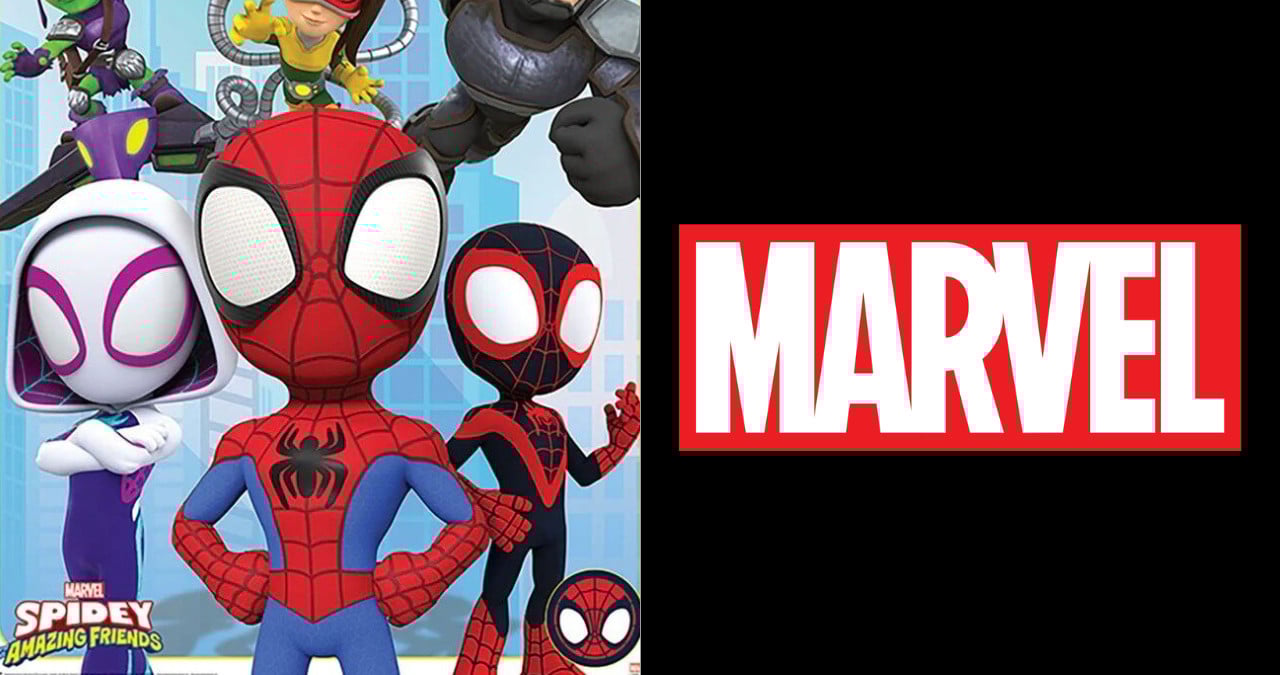
Spidey and His Amazing Friends, which premiered on Disney Junior and Disney+ in August 2021, quickly established itself as a significant player in children’s television. The series features Peter Parker (Spidey), Miles Morales (Spin), and Gwen Stacy (Ghost-Spider) as young superheroes learning the ropes of teamwork and problem-solving, often against a roster of classic Spider-Man villains reimagined for a younger audience. The show’s vibrant animation, catchy theme song, and focus on positive messages have resonated strongly with its target demographic, securing high viewership numbers for Disney Junior.
The importance of this show transcends simple entertainment value for Marvel. It represents a crucial entry point for new generations of fans. By introducing iconic characters like Spider-Man, Hulk, and Black Panther at a very young age, Marvel cultivates brand loyalty early on. Children who grow up watching Spidey and His Amazing Friends are more likely to develop an affinity for the characters and the broader Marvel universe, potentially transitioning into viewers of the MCU as they mature. This long-term fan cultivation strategy is invaluable, ensuring a continuous pipeline of engaged audiences for future films, series, merchandise, and theme park attractions.
From a commercial perspective, Spidey and His Amazing Friends is a merchandise juggernaut, driving sales of toys, apparel, books, and other consumer products specifically designed for preschoolers. This revenue stream further solidifies the economic importance of the series to the Marvel and Disney portfolio. Therefore, while its narrative is simplified, its strategic and financial significance is anything but trivial, necessitating careful integration into Marvel’s overarching IP management framework.
Navigating the Multiverse of Narratives: Avoiding Conflict
The concept of "conflict" in this context is nuanced. It’s not merely about preventing a direct contradiction in factual details, but about managing the emotional and thematic weight of characters and events. For instance, if the preschool show were to feature a simplified, resolution-driven storyline involving a multiversal threat, it could diminish the gravitas of similar themes explored in a more complex and high-stakes manner within the MCU, such as in Spider-Man: No Way Home or Doctor Strange in the Multiverse of Madness.
The MCU itself has embraced the concept of variants and alternate realities, particularly since the introduction of the multiverse. This narrative device, while offering immense creative freedom, also places a greater burden on maintaining a clear, albeit flexible, canon. The existence of a dedicated team for Spidey and His Amazing Friends suggests that Marvel is acutely aware of the potential for even tangential narratives to influence audience perception of the core MCU. The goal appears to be to allow the preschool show to tell its own stories while subtly ensuring these stories don’t close off future narrative avenues for the live-action franchise or create expectations that cannot be met.
Case Studies in Continuity: Symbiotes, Doc Ock, and Ultron
The original report provided specific examples that illuminate the practical implications of this continuity management strategy. The introduction of "Symbie," a new symbiote, in Spidey and His Amazing Friends, depicted as the prisoner of Xenozoologist Xanto Starblood, serves as a prime illustration. The appearance of Symbie in the preschool series strongly suggests that Marvel Studios currently has no immediate plans to introduce this specific symbiote character, or perhaps even a similar foundational symbiote origin story, into the live-action MCU in a significant capacity. Had Marvel intended to use a new, unique symbiote for a major upcoming film, it is highly probable that its debut would have been reserved for the more mature, higher-profile cinematic universe to maximize its impact and build anticipation.
Furthermore, the article referenced instances where Spidey and His Amazing Friends has featured simplified versions of iconic MCU antagonists. The show has presented Spider-Man facing off against a female Doctor Octopus (Doc Ock) and even Ultron. While these are classic Spider-Man and Avengers villains, their early and child-friendly portrayals in the preschool series likely indicate that Marvel Studios is not planning to feature a female Doc Ock as a major antagonist in future live-action Spider-Man films, nor is it likely to bring back Ultron as a primary, universe-threatening villain in the MCU anytime soon, at least not in a way that directly mirrors his Spidey counterpart.
This pattern suggests a deliberate strategy: characters or significant plot elements that are deemed crucial for future MCU development are kept "off-limits" for the preschool series, or at least their portrayal in Spidey is carefully managed to avoid direct conflict with potential live-action interpretations. Conversely, characters or concepts introduced in Spidey might be those that Marvel deems less critical for its immediate MCU roadmap, or those that can be adapted with sufficient differentiation should they eventually make their way to the big screen. This selective deployment of IP ensures that the MCU retains a fresh pool of narrative possibilities and maintains the exclusivity of certain character arcs for its core audience.
The Broader Implications for the MCU’s Future
This detailed level of cross-platform oversight has broader implications for the future trajectory of the MCU. It reinforces the notion that Marvel Studios operates with a long-term vision, meticulously charting out narrative arcs and character introductions years in advance. The "master plan" is not just a loose guide but a comprehensive framework that influences creative decisions across all Marvel-branded content.
For fans, this strategy provides a degree of reassurance that the MCU’s core continuity will remain robust and largely unblemished by external, less canonical narratives. It suggests that major character debuts or pivotal plot developments will always be handled with the gravitas and scope appropriate for the cinematic universe. It also highlights Marvel’s understanding of the unique challenges presented by a truly interconnected media empire, where every piece of content, no matter how small or niche, contributes to the overall brand perception.
The approach also implicitly informs speculation about future MCU projects. When a character appears prominently in Spidey and His Amazing Friends, it might, ironically, serve as a soft indicator of their unlikelihood to appear in the immediate future of the live-action MCU, or at least not in a capacity that would significantly overlap with their animated counterpart. This subtle form of narrative signaling provides an intriguing lens through which to analyze Marvel’s ongoing character and story development.
Marvel’s Unifying Vision: A Master Plan in Motion
In an era where major entertainment franchises strive for expansive universes, Marvel’s strategy with Spidey and His Amazing Friends stands out as a sophisticated example of integrated IP management. It transcends the simple cross-promotion of characters and delves into the careful orchestration of narrative elements across disparate platforms and target demographics. The reported "master plan" and the frequent communications between Marvel leadership and the Spidey team underscore a singular, unifying vision for the Marvel brand.
As Marvel continues to expand its cinematic universe with upcoming projects like the highly anticipated Spider-Man: Brand New Day, slated for release on July 31st, 2026, and a multitude of other films and Disney+ series, the importance of maintaining a cohesive narrative tapestry will only grow. This careful stewardship of even its preschool offerings demonstrates Marvel’s unwavering commitment to the integrity of its storytelling, ensuring that the legacy of its iconic characters remains vibrant and consistent for generations of fans, from the youngest viewers captivated by Spidey and His Amazing Friends to the dedicated followers of the epic MCU saga. The ultimate goal is clear: to maintain Marvel’s position as a dominant force in global entertainment by meticulously nurturing every facet of its extraordinary intellectual property.
Related posts:


