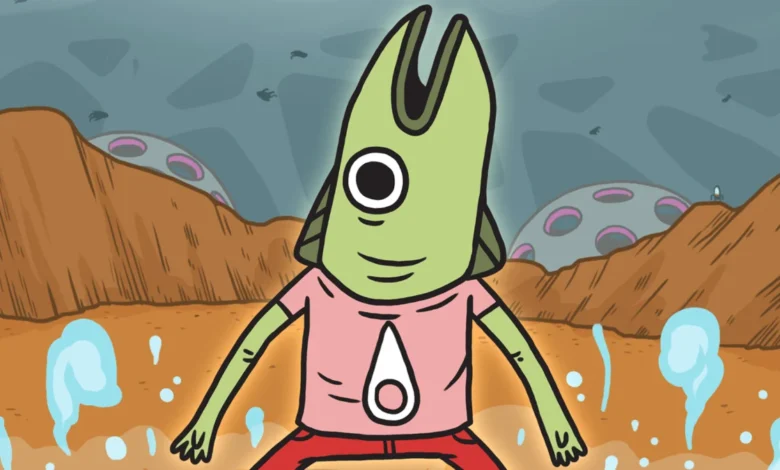
The landscape of tabletop gaming is undergoing a significant shift as independent developers seek to simplify the complex mechanics associated with traditional trading card games (TCGs) while maintaining the engagement and aesthetic appeal of the genre. Freak War, the latest project from cartoonist and designer Nate Galbraith—operating under the Sheltonshire Games label—has successfully secured its initial crowdfunding goal on Kickstarter, signaling a growing consumer appetite for "entry-level" competitive card games that prioritize accessibility and social interaction over steep learning curves.
Genesis and Conceptual Framework
The origins of Freak War can be traced back to an organic observation of youth engagement with card games. Galbraith, known professionally as "sketchnate," observed children attempting to replicate the thrill of Pokémon battles using standard playing cards. While the intent was to capture the competitive spirit of monster-based combat, the limitations of standard decks often led to frustration. Galbraith recognized an opportunity to formalize this dynamic by creating a hybrid system that utilized the foundational mechanics of the classic card game War—which relies on high-value comparisons—and the tactical depth of modern party games like Exploding Kittens.
The resulting game design removes the primary barrier to entry for many TCGs: the requirement for extensive deck-building knowledge. By allowing players to simply split a shuffled deck and engage in gameplay immediately, Freak War functions as a "pick-up-and-play" experience. However, the game retains a modularity that caters to more invested players, offering the option for custom deck construction for those seeking a more curated competitive experience.
Mechanics and Gameplay Dynamics
At its core, Freak War is a battle-centric game designed for up to four players. The mechanics are designed to be intuitive: each player deploys a creature simultaneously, with the highest attack value claiming victory in the engagement. This structure is augmented by a layer of "take-that" mechanics—a staple of the party game genre—which allows players to manipulate the battlefield.
Players have access to modifier cards that can either bolster their own creatures or impede opponents. These include traditional strength-buffing cards like the "Super Sword" or "Super Duper Sword," as well as more disruptive elements such as card-swapping mechanics or coin-flip events that introduce an element of risk-management. The evolution mechanic, which allows smaller creatures to transform into more powerful variants during the heat of a match, serves as a direct homage to the monster-raising subgenre popularized by franchises like Pokémon.
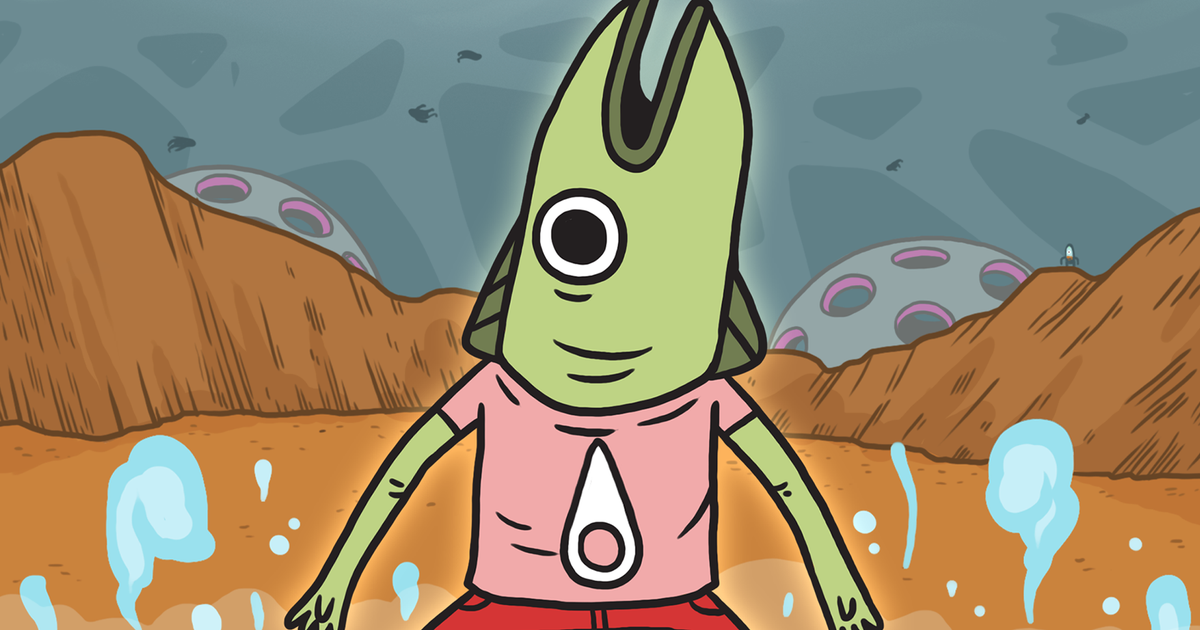
The game offers two primary modes: the chaotic, fast-paced "War" mode, and the more tactical "Battle" mode. These can be further customized through "King of the Hill" variants or team-based rulesets. In the event of an attack-level draw, players are required to discard a card and re-engage, creating a "pot" of cards that the eventual winner claims for their own deck. The objective is simple: the first player to successfully claim all cards from their opponents wins the session.
The Lore and Aesthetic Design
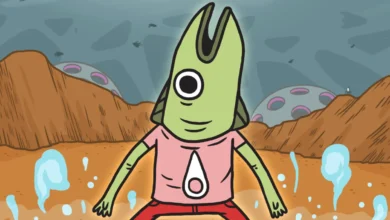
The thematic backdrop of Freak War is rooted in a fictional, catastrophic event: the emergence of a second sun. This celestial anomaly is credited with mutating Earth’s fauna into a variety of bizarre, often humorous, combatants. The roster of creatures includes entities such as the "Man Cat"—a humanoid figure in a feline suit—a time-traveling tiger, a partying platypus, and a dog with a goldfish bowl for a head.
The character design and card layout are explicitly inspired by the visual language of the 1990s and 2000s TCG era. This aesthetic choice is calculated to evoke nostalgia among older collectors while remaining accessible to younger players who are familiar with the "monster collector" trope. Furthermore, the game incorporates meta-humorous elements; for example, the "Fly Guy" creature receives an attack boost if the physical playing environment contains actual uneaten food. This integration of the physical world with the game state is a creative attempt to break the "fourth wall" of tabletop gaming.
Crowdfunding and Market Trajectory
The Kickstarter campaign for Freak War launched with a modest goal of $10,000, a threshold it has already surpassed. This financial milestone demonstrates a proof-of-concept that satisfies both the publisher and potential investors. With the campaign scheduled to conclude on June 13, the timeline for production and distribution is set for a June 2025 arrival for initial backers.
Priced at approximately $20 per deck, the game is positioned firmly within the "impulse buy" or "gift" category of tabletop products. This price point is critical for the game’s success, as it competes directly with established party game staples that dominate the retail shelf. By offering multiple expansion packs—ranging from buff penguins to peculiar snails—Sheltonshire Games is attempting to build a sustainable ecosystem of content without the predatory pricing or rarity-based scarcity often associated with high-end trading card games.
Broader Industry Implications
The success of projects like Freak War points to a broader trend within the hobbyist board game market. For years, the TCG industry has been dominated by "The Big Three"—Pokémon, Magic: The Gathering, and Yu-Gi-Oh!—which all require significant financial and intellectual investment. The "casualization" of these mechanics represents a reaction against the complexity of the current market.

Industry analysts suggest that the rise of "micro-games" and hybrid party-TCGs is a response to the "complexity fatigue" felt by many consumers. Players are increasingly looking for games that offer the dopamine hit of a tactical victory without the two-hour rule-book study or the hundreds of dollars in card-pack investment. Freak War’s emphasis on the "War" mechanic—a game known to almost every household—lowers the barrier to entry significantly, potentially attracting players who would never consider entering a local game store for a competitive tournament.
Furthermore, the game’s move toward "playful nonsense" serves as a counter-point to the often gritty or overly serious tone of competitive TCGs. By prioritizing humor, such as the "sad bee" or the "party-loving platypus," the game fosters a social environment that is less about professional-level optimization and more about shared amusement.
Challenges and Future Outlook
Despite the initial success of the crowdfunding campaign, the transition from a digital campaign to a physical product is fraught with supply chain and logistical challenges. Sheltonshire Games must manage the manufacturing of card stock, the quality control of artwork, and the complexities of international shipping. The game’s reliance on multiple "packs" suggests that future revenue will depend heavily on the developer’s ability to maintain a consistent release schedule and keep the community engaged during the year-long wait for the product’s release.
Additionally, the game must overcome the hurdle of market saturation. The party game segment is notoriously crowded, with new titles emerging on crowdfunding platforms weekly. To maintain longevity, Freak War will need to prove that its "breezy fun" is not just a passing novelty but a robust enough system to hold interest over repeated play sessions. The inclusion of team rules and "King of the Hill" variants is a positive step in this direction, as it provides the necessary depth to keep the game fresh for those who have mastered the basic mechanics.
Conclusion
Freak War stands as a testament to the power of remixing existing game design principles. By identifying the core appeal of monster-battling games and stripping away the layers of complexity that often alienate casual players, Nate Galbraith has created a product that is uniquely positioned for the current tabletop market. Whether it will achieve the long-term staying power of the games that inspired it remains to be seen, but the current momentum behind the project suggests that there is a clear, identifiable audience for games that value humor, simplicity, and accessibility. As the campaign nears its conclusion, all eyes will be on how the publisher scales this vision into a physical reality for its backers.