Netflix Unveils Official Trailer and Release Dates for Greta Gerwig’s Epic Fantasy Adaptation Narnia: The Magician’s Nephew

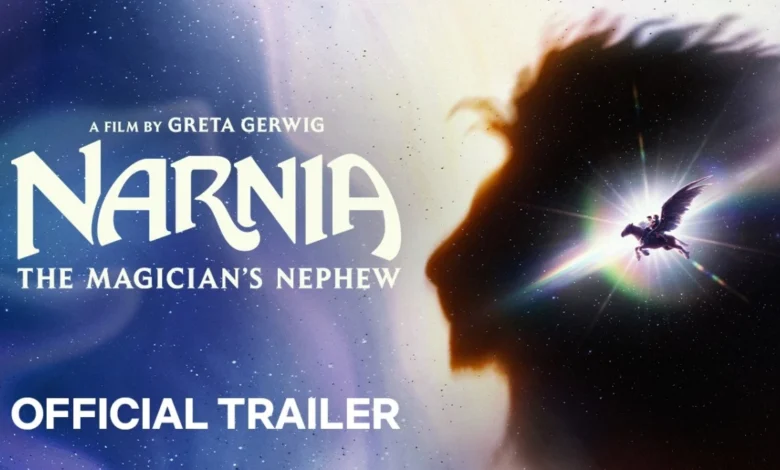
Long before the wardrobe opened to reveal a snowy wonderland, there was a song, a lion, and the dawn of a magical universe. Streaming giant Netflix has officially released the first teaser trailer and comprehensive release schedule for Narnia: The Magician’s Nephew, the highly anticipated cinematic adaptation directed by Academy Award-nominated filmmaker Greta Gerwig. Marking the first-ever film adaptation of C.S. Lewis’s foundational 1955 fantasy novel, the project serves as a prequel to the broader Chronicles of Narnia series, tracing the cosmic origins of the fictional realm.
The studio has confirmed a staggered release strategy designed to bridge the gap between traditional theatrical distribution and streaming availability. Audiences will first be able to experience the fantasy epic during exclusive sneak previews in IMAX starting on February 10, 2027. This will be followed by a wide global theatrical release in IMAX on February 12, 2027, giving moviegoers a premium cinematic window. Subsequently, the film will debut worldwide on Netflix on April 2, 2027, making it accessible to the platform’s massive subscriber base.
The production boasts a stellar ensemble cast featuring both celebrated veterans and acclaimed contemporary actors. The principal cast includes David McKenna, Beatrice Campbell, Emma Mackey, Carey Mulligan, Ciarán Hinds, Daniel Craig, Meryl Streep, Kobna Holdbrook-Smith, Denise Gough, and Susan Wokoma. Gerwig, widely celebrated for her critically acclaimed directorial work on Little Women and Barbie, has taken complete creative control of the project, penning the screenplay and stepping behind the camera to bring her singular artistic vision to Lewis’s cherished literary legacy.
Main Facts and Production Background
The development of a new cinematic adaptation of The Chronicles of Narnia has been among the most closely monitored projects in the entertainment industry since Netflix acquired the rights to the entire seven-book series through a multi-year agreement with the C.S. Lewis Company in 2018. The deal granted Netflix unprecedented access to develop both feature films and episodic series across the entire literary canon, marking the first time a single company has held the rights to adapt all seven books.
Greta Gerwig’s involvement was officially confirmed in mid-2023, instantly elevating industry expectations and transforming the project into a flagship priority for Netflix’s film division. For Gerwig, the undertaking is deeply personal. As a lifelong devotee of C.S. Lewis’s work, she has frequently spoken about the profound impact the Narnia books had on her childhood imagination. Translating The Magician’s Nephew rather than starting with the more famously adapted The Lion, the Witch and the Wardrobe represents a deliberate creative choice. By tackling the prequel first, Gerwig and her production team have opted to honor the chronological order of the universe’s creation rather than the publication order of the original series.
The Magician’s Nephew details the adventures of two children, Digory Kirke and Polly Plummer, whose magical rings transport them into alternate worlds. The narrative explores the dying world of Charn, the awakening of the wicked Queen Jadis—who later becomes the White Witch—and, most importantly, the creation of Narnia through the resonant, magical song of Aslan the lion. The story also provides the definitive backstory for the iconic wardrobe itself, explaining how the wood from a magical tree planted in Victorian London eventually found its way into the country house of the eccentric professor.
Chronology of the Narnia Franchise on Screen
The journey of C.S. Lewis’s beloved universe to the screen has spanned several decades and multiple studios, reflecting the enduring appeal and complex logistical challenges of adapting high fantasy.
In the late 1980s and early 1990s, the BBC produced a landmark television adaptation that covered several books in the series, earning a dedicated following for its faithful, albeit modest-budget, interpretation of the material. A major theatrical renaissance occurred in the 2000s when Walden Media, in partnership with Walt Disney Pictures and later 20th Century Fox, brought the franchise to blockbuster heights.
The chronological timeline of major Narnia screen adaptations illustrates the evolution of the property:
- 1988–1990: The BBC broadcasts its serialized television adaptations of The Lion, the Witch and the Wardrobe, Prince Caspian, The Voyage of the Dawn Treader, and The Silver Chair.
- December 2009: The Chronicles of Narnia: The Lion, the Witch and the Wardrobe is released by Walt Disney Pictures, grossing over $745 million worldwide and earning an Academy Award for Best Makeup.
- July 2008: The Chronicles of Narnia: Prince Caspian is released, continuing the cinematic franchise with a darker, more battle-heavy tone.
- December 2010: The Chronicles of Narnia: The Voyage of the Dawn Treader is released by 20th Century Fox, shifting to a 3D format and generating over $415 million globally.
- October 2018: Netflix announces a landmark agreement with the C.S. Lewis Company to develop series and film projects based on the entirety of The Chronicles of Narnia.
- July 2023: Media reports confirm that Greta Gerwig has signed on to write and direct at least two films in the Netflix Narnia franchise, beginning with The Magician’s Nephew.
- February 10, 2027: Exclusive IMAX sneak previews of Narnia: The Magician’s Nephew begin ahead of the official theatrical launch.
- February 12, 2027: The film opens globally in IMAX theaters.
- April 2, 2027: The movie becomes globally available for streaming on Netflix.
Supporting Data and Industry Context
The financial and cultural stakes surrounding Greta Gerwig’s Narnia adaptation are immense. The seven books of The Chronicles of Narnia have collectively sold over 100 million copies worldwide since the publication of the first volume in 1950, translating into one of the most successful literary properties in publishing history.
Netflix’s investment in the franchise represents a strategic shift toward acquiring and cultivating globally recognized intellectual property capable of competing with established giants like Disney’s Marvel and Star Wars universes, as well as Amazon’s Lord of the Rings television slate. Industry analysts estimate that the combined budgets for Gerwig’s planned Narnia entries will place them among the most expensive productions in streaming history. By securing an exclusive IMAX window prior to the Netflix streaming release, the studio is signaling its commitment to traditional theatrical prestige, acknowledging that high-end fantasy epics demand large-format exhibition to fully capture the scope of their visual effects.
The casting choices further underscore the production’s high-tier status. Bringing in esteemed dramatic actors such as Meryl Streep, Daniel Craig, Carey Mulligan, and Ciarán Hinds provides the film with an anchor of dramatic gravity that elevates it beyond standard youth-oriented fantasy fare. This casting strategy mirrors the approach taken by Peter Jackson in his Middle-earth adaptations, blending rising young talent with legendary performers to appeal to a broad, multigenerational demographic.
Official Responses and Creative Vision
While formal press statements from the cast remain limited during the early promotional rollout, industry insiders and studio executives have emphasized the unprecedented level of creative freedom granted to Gerwig. Netflix’s leadership has repeatedly expressed absolute confidence in the director’s ability to balance the whimsical, mythic qualities of Lewis’s universe with the emotional depth and character-driven storytelling that defined her previous work.
In prior interviews discussing her approach to literature adaptation, Gerwig has noted the importance of respecting the source material while finding a fresh, contemporary entry point for modern audiences. The decision to focus on the cosmic genesis of Narnia allows the filmmaker to bypass the immediate baggage of previous cinematic interpretations, offering a completely blank canvas. Rather than competing directly with the imagery established by Disney’s 2005 adaptation, Gerwig’s project is positioned as a mythic origin story that reinterprets the foundational lore for a new generation of viewers.
Broader Impact and Market Implications
The release of Narnia: The Magician’s Nephew arrives at a critical juncture for both the theatrical exhibition market and the streaming business model. As streaming services increasingly experiment with hybrid release models—balancing short theatrical windows with immediate home viewing—Netflix’s handling of the Narnia rollout will serve as a definitive case study for the industry.
For IMAX, the partnership represents a vital opportunity to secure premium family and fantasy content outside of the traditional summer blockbuster season. Releasing the film in February provides counter-programming to typical awards-season dramas and smaller indie releases, capturing high-end ticket sales during a traditionally quieter box office period.
Furthermore, the success of the film could unlock the remainder of the expansive Narnia catalog for future cinematic exploration. With six additional books waiting to be adapted—including fan favorites like The Horse and His Boy and The Silver Chair—the cultural and financial footprint of Netflix’s new franchise will depend heavily on how audiences respond to Gerwig’s inaugural vision. As the February 2027 premiere approaches, anticipation continues to build across global fandoms, eager to step once again through the veil of imagination into a world where lions sing worlds into existence.