The Legacy of the Dungeons and Dragons Red Box Warrior and the Evolving Nature of Iconic Fantasy Art

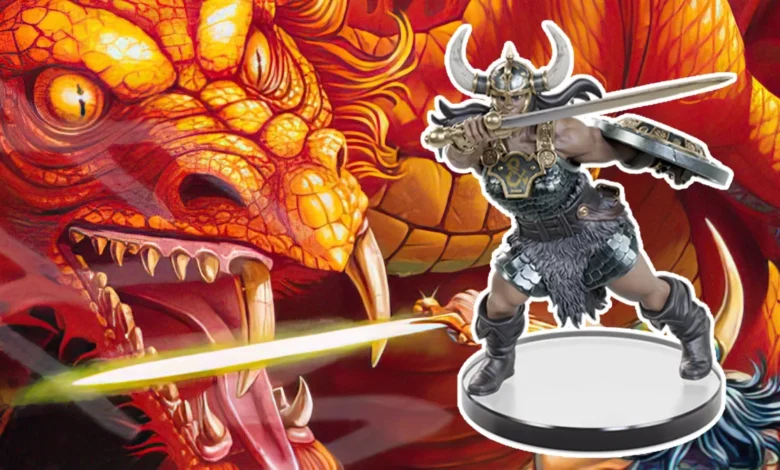
For over four decades, the anonymous warrior featured on the cover of the 1983 Dungeons and Dragons Basic Set—universally known as the Red Box—has stood as the definitive symbol of the tabletop role-playing game industry. The image, a dramatic confrontation between a solitary adventurer and a towering red dragon, was created by legendary artist Larry Elmore. Recently, this piece of gaming history was thrust back into the spotlight when WizKids, a manufacturer of miniatures and gaming accessories, unveiled a new figurine that explicitly interpreted the iconic, back-facing warrior as a woman. This creative decision sparked a heated debate within the Dungeons and Dragons community, ultimately prompting a public response from Elmore himself, who initially stood firm on his original intent before embracing the broader, inclusive spirit of the game.
Historical Context: The Birth of the Red Box
To understand the significance of this discourse, one must look back to the early 1980s. Dungeons and Dragons, created by Gary Gygax and Dave Arneson, was experiencing a cultural surge. In 1981, TSR (Tactical Studies Rules) hired Larry Elmore as its first in-house illustrator. Elmore’s tenure, which lasted until 1987, helped define the visual language of high fantasy. His work on the Dragonlance saga and various adventure modules cemented his reputation as a foundational figure in the hobby.
The 1983 Red Box, a revision of the Basic Set, served as the primary entry point for hundreds of thousands of new players. The cover art, titled "Ancient Red," depicts the protagonist viewed from the rear, wielding a sword against the looming presence of a dragon. Because the character’s face was obscured by the perspective, the identity of the warrior remained a blank canvas for forty years. Players across generations projected their own identities onto the figure, making it one of the most recognizable, yet mysterious, images in the medium of tabletop gaming.
The WizKids Interpretation and the Public Reaction
In celebration of the 50th anniversary of Dungeons and Dragons, Wizards of the Coast and its partners, including WizKids, launched various initiatives to honor the legacy of the brand. As part of this commemorative effort, WizKids developed a high-fidelity miniature recreation of the scene depicted on the Red Box cover. In a departure from the ambiguity that had characterized the original painting, the design team at WizKids rendered the warrior as a muscular woman.
The reveal was intended to be a celebratory nod to the game’s evolution, yet it triggered a sharp divide among fans. While many lauded the decision as a progressive and welcome expansion of the game’s iconic imagery, a vocal contingent of the community expressed significant pushback, citing a desire to preserve the "original intent" of the 1983 artwork. This tension quickly drew in the artist himself, Larry Elmore, who posted his initial thoughts on social media.
The Artist’s Stance: From Certainty to Interpretation
Elmore’s initial reaction was one of defensive clarity. Addressing the controversy on Facebook, he insisted that the figure was, without question, male. He noted that the commission from Gary Gygax had specifically requested a "simple" image featuring a male warrior that would catch the eye of potential buyers. Elmore was notably dismissive of those suggesting the character could be female, stating, "If it was a woman, you would know it, for I am pretty famous for painting women."
However, as the discourse continued to evolve, Elmore demonstrated a nuanced shift in his perspective. He later edited his original statements, acknowledging that his initial, sharp response was prompted by a lack of context regarding the question. He pivoted toward a more philosophical stance, suggesting that the ambiguity of the painting was, in itself, a form of artistic success. He emphasized that the "magic of art" lies in the viewer’s ability to engage with a piece on their own terms.
Furthermore, Elmore aligned his later comments with the core philosophy of tabletop role-playing games. He reflected on the nature of Dungeons and Dragons, noting that the game is fundamentally built on the premise of player agency. "The thing I love about D&D was that anyone can be anything in this game," Elmore wrote. "Male, female, both, neither, it does not discriminate. It’s a game of imagination and you can be and do whatever you want."
Analysis: The Evolution of Fantasy Tropes
The debate surrounding the Red Box warrior is emblematic of a broader shift in the fantasy gaming industry. In the 1980s, the visual representation of "the adventurer" was frequently coded as masculine, a reflection of the demographic trends and marketing strategies of the era. As the player base has diversified—with current data from Wizards of the Coast and industry analysts suggesting that the female and non-binary demographic in tabletop gaming has reached unprecedented levels—the industry has moved to reflect that reality in its official products.
From a sociological perspective, the "blank slate" nature of the original artwork serves as a case study in audience psychology. The fact that fans fought so hard to define the gender of a faceless character highlights the deep emotional attachment players have to these foundational images. When that silence is filled by a definitive design choice, it disrupts the internal narrative many players have maintained for decades.
Broader Implications for Intellectual Property
This incident underscores the challenges inherent in "legacy management" for long-running franchises. As Wizards of the Coast continues to celebrate the 50th anniversary of the brand, they are tasked with balancing the nostalgia of veteran players with the inclusive values of the modern era. The WizKids miniature represents a strategic effort to modernize a classic piece of intellectual property without erasing its history.
Critics of the change often argue that "revising" classic art diminishes the artist’s original vision. Conversely, proponents argue that such interpretations are a natural progression of the game’s ethos. The resolution of this specific dispute—with the original artist ultimately endorsing the spirit of open interpretation—may serve as a blueprint for how companies handle future updates to classic iconography.
Conclusion: A Legacy Reimagined
The story of the Red Box warrior is far more than a debate over a piece of plastic or a 40-year-old painting. It is a reflection of how gaming culture treats its own history. While the initial reaction to the WizKids miniature was marked by friction, the outcome has served to highlight a more inclusive interpretation of the game’s roots.
As the tabletop industry continues to grow, moving further away from the insular roots of the early 1980s into a global phenomenon, the images that once defined the hobby are being viewed through a more complex lens. Larry Elmore’s willingness to move from a rigid insistence on his original intent to an appreciation for the interpretive nature of his work marks a significant moment for the community. It suggests that even the most "fixed" points in gaming history can, and perhaps should, evolve to include a wider audience, ensuring that the next generation of players sees themselves reflected in the dragons, the dungeons, and the warriors that await them.