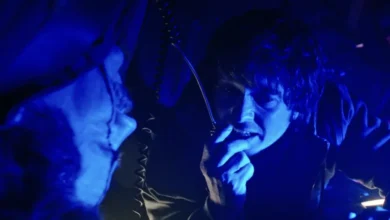
Mark Heyman Explores Vulnerability, Cults, and Reality-Bending Terror in Feature Directorial Debut Pendulum Set for January 2027 Release


Grief is a profound emotional disruptor, dismantling psychological defenses and leaving individuals in states of heightened vulnerability. This psychological vulnerability has long been recognized as a primary vector for predatory groups, particularly cults seeking to indoctrinate isolated minds. It is this unsettling premise that forms the core of Pendulum, the upcoming feature-length directorial debut of filmmaker Mark Heyman, best known for co-writing the psychologically punishing psychological thriller Black Swan. With Vertical scheduling a nationwide theatrical release for January 1, 2027, the newly debuted official trailer promises a slow-burn descent into paranoia, questioning whether the characters are losing their grip on reality or falling victim to calculated manipulation.

Written and directed by Heyman and produced by renowned filmmaker Darren Aronofsky, Pendulum features an acclaimed ensemble cast. Joseph Gordon-Levitt and Phoebe Dynevor star as Patrick and Abigail, a married couple attempting to navigate the harrowing aftermath of a shared tragedy. In search of a sanctuary to facilitate their emotional healing, the couple retreats to a secluded, new-age commune situated in the stark, unforgiving landscape of the New Mexico desert. However, as Abigail becomes increasingly receptive to the teachings and charisma of the compound’s enigmatic leader—portrayed by Academy Award nominee Jacki Weaver—Patrick’s initial relief turns into profound concern. As the narrative unfolds, the film asks a central, disquieting question: Is Patrick losing his wife to a predatory cult, or is his own grief fracturing his perception of reality?
Main Facts and Production Background

Pendulum marks a significant milestone in Mark Heyman’s career, transitioning from his celebrated screenwriting credits—which include not only Black Swan alongside Andrés Heinz and John McLaughlin, but also the television series Strange Angel—to the director’s chair. Heyman has frequently explored themes of obsession, psychological disintegration, and the fragile boundaries of identity, and Pendulum appears to extend these motifs into the realm of modern communal isolation and New Age exploitation.
Produced under Darren Aronofsky’s Protozoa Pictures banner, the film benefits from a creative partnership that previously yielded critical acclaim and commercial success. Aronofsky’s involvement signals a continuation of his interest in psychological horror and character studies driven to extremes, akin to films such as Requiem for a Dream, Black Swan, and Mother!

The production utilizes the stark, remote expanses of the New Mexico desert not merely as a backdrop, but as a thematic element. The vast, isolating geography serves to amplify the characters’ psychological entrapment, removing them from standard societal support structures and placing them entirely under the influence of the commune’s insular hierarchy.
Cast and Character Dynamics

The narrative tension of Pendulum is anchored by its principal cast, featuring a mix of dramatic heavyweights and genre icons. Joseph Gordon-Levitt, known for his versatile roles in films such as Inception, Looper, and The Trial of the Chicago 7, plays Patrick, a husband grappling with grief and a growing sense of helplessness. Phoebe Dynevor, who gained international prominence through her breakout role in Bridgerton and further showcased her dramatic range in Fair Play, portrays Abigail, whose emotional vulnerability makes her an ideal target for radical ideological realignment.
Jacki Weaver steps into the role of the compound’s charismatic and controlling leader. Weaver earned widespread critical acclaim and an Academy Award nomination for Best Supporting Actress for her chilling portrayal of a quietly monstrous matriarch in David Michôd’s 2010 Australian crime drama Animal Kingdom. Her casting brings a seasoned, understated menace to the antagonist role, avoiding overt villainy in favor of a calculated, insidious authority.

The supporting ensemble further elevates the project. The commune’s population includes veteran stage and screen actress Anna Deavere Smith, acclaimed character actor Jena Malone, and Norman Reedus, widely recognized for his long-running tenure in AMC’s The Walking Dead. This cross-section of seasoned performers populates the commune with figures who likely embody various stages of indoctrination, complicity, and ideological devotion.
Chronology of Releases and Promotional Rollout

The marketing campaign for Pendulum has been structured to build deliberate momentum leading up to its theatrical debut.
The initial promotional phase began with the release of a brief teaser trailer, which established the atmospheric tone, the desolate New Mexico setting, and the emotional baseline of Gordon-Levitt and Dynevor’s characters dealing with profound loss. This teaser was designed to introduce audiences to the aesthetic style and thematic weight of Heyman’s directorial vision without revealing the narrative escalation.

Following the teaser, Vertical released the official full-length trailer, offering deeper insight into the psychological friction between Patrick and Abigail. The trailer highlights Weaver’s character exerting influence over the compound members and depicts Patrick’s increasing alienation and paranoia as he attempts to extract his wife from the environment.
Vertical has slated Pendulum for a nationwide theatrical release on January 1, 2027. The film carries an R rating, indicating mature thematic elements, language, and psychological intensity, and has a confirmed runtime of 109 minutes.

Supporting Data and Industry Context
The psychological thriller and horror genres have experienced a notable resurgence in prestige filmmaking, frequently utilizing the backdrop of isolation to examine contemporary anxieties regarding trust, institutional corruption, and manipulation. Films centered around cults and insular communities—such as Ari Aster’s Midsommar, Sean Durkin’s Martha Marcy May Marlene, and Ben Wheatley’s Kill List—have demonstrated both critical viability and commercial success, appealing to audiences drawn to slow-burn narrative structures and character-driven dread.

The collaboration between Heyman and Aronofsky places Pendulum within a specific lineage of psychological cinema that prioritizes internal subjective experience over conventional jump scares. By examining how trauma creates cognitive vulnerabilities that are subsequently exploited by charismatic authorities, the film engages with sociological and psychological research surrounding high-control groups and destructive cult dynamics.
Sociological and Psychological Implications

While framed as a work of fiction, narratives focusing on new-age compounds and manipulative leadership reflect well-documented phenomena regarding how individuals navigate grief and trauma. Psychological studies on cult recruitment consistently indicate that periods of major life disruption—such as the loss of a child, the death of a spouse, or severe career failure—temporarily impair an individual’s critical evaluation mechanisms, increasing their receptivity to groups that offer absolute certainty, community, and structured meaning.
In Pendulum, this dynamic is externalized through the divergent paths of Patrick and Abigail. While Patrick resists the ideological framework of the compound, maintaining an outsider’s skepticism, Abigail finds a form of emotional refuge that gradually hardens into ideological capture. This divergence creates a wedge within the marriage, serving as a metaphor for the alienation experienced by family members attempting to reach loved ones trapped within high-control environments.

Broader Impact on the Careers of Key Collaborators
For Mark Heyman, Pendulum represents a critical professional transition. Having established his reputation as a formidable screenwriter with projects that delve into the dark recesses of ambition and identity, successfully executing a feature directorial debut under the scrutiny of a wide theatrical release will define his capabilities as an auteur capable of shaping tone both on the page and behind the lens.

For Vertical, the acquisition and distribution of Pendulum signal a continued commitment to mid-budget, star-driven genre cinema designed to capture adult audiences during the competitive post-holiday theatrical window. Releasing a psychologically intense thriller on January 1 positions the film as a stark counter-programming option against traditional holiday family fare, catering to viewers seeking darker, more intellectually challenging cinematic experiences as the new year begins.
As the theatrical release date approaches, audience anticipation remains high, driven by the pedigree of its creative team, the strength of its principal cast, and its timely exploration of vulnerability, manipulation, and the fragility of human perception.
Related posts: